Burry warned of risks in the fintech sector. What stock is he holding and what is he watching out for?

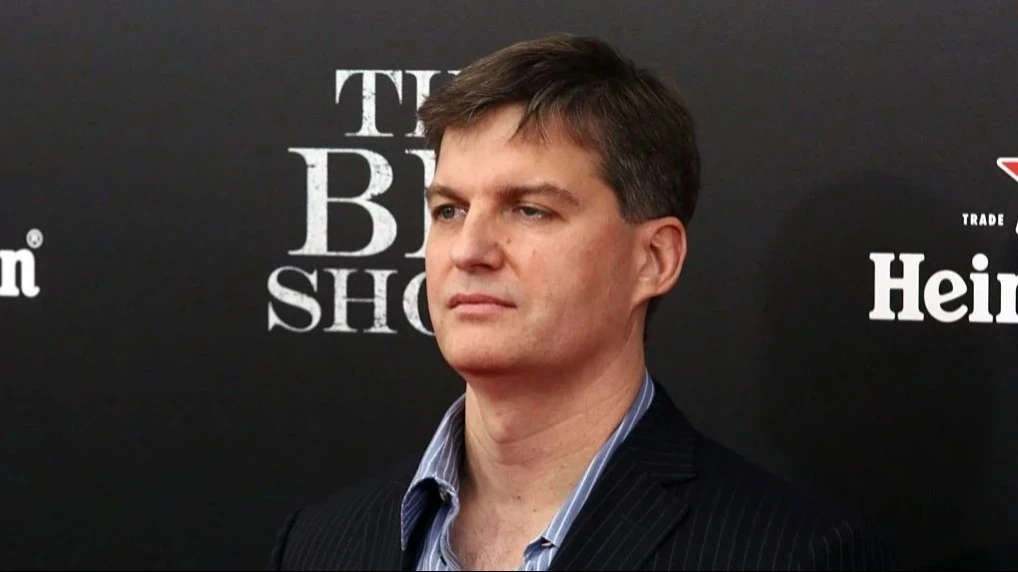
Burry calls for extreme patience and discipline in sector investment / Photo: Photo by Astrid Stawiarz/Getty Images
Investor Michael Burry, who predicted the collapse of the mortgage market in 2008, has released a review of the fintech sector on his blog: he accuses the industry of using aggressive accounting methods to artificially inflate profits and mask business stagnation.
Burry classifies most of the "cheap" issuers in the sector as a direct threat to investor capital: in his view, management hides a lack of real growth behind an endless string of takeovers. He warns that this model effectively replicates the scenario of the telecoms corporation collapse of WorldCom, which was found to be guilty of accounting manipulation, and leads to the destruction of shareholder value.
What Burry says.
"If you think you can't invest in a company that follows the WorldCom script in terms of accounting tricks, you should avoid the payments sector"
Burry's main claim is that management of mature fintech companies resort to "accounting engineering" through serial acquisitions (M&A) to mask the lack of organic growth. When the business stops growing on its own, management starts buying up other assets to maintain the appearance of expansion. According to the investor, the resulting reporting complexity gives managers the opportunity to "play with the numbers" by hiding real costs, while Wall Street analysts ignore these risks for the sake of transaction fees.
Here's what Burry says about specific cases
- Shift4 is an American company that provides payment technology and payment processing services for businesses. The investor estimates the company's actual organic growth at no more than 10%, while management claims 18%. That gap, Burry says, has arisen because Shift4 includes revenue from recent acquisitions in its measures of "natural" business growth. Burry calls the practice of buying out intermediaries suspicious: it allows the company to hide current customer acquisition costs by framing them as "long-lived assets" on the balance sheet. This maneuver artificially inflates net income in the reports. The investor considers Shift4's $2.6 billion purchase of tax-free shopping operator Global Blue to be an unjustified overpayment. The company's management expects to capitalize on the deal by raising fees for tax-free processing, but Burry is confident that Global Blue's powerful customers, including luxury companies LVMH, Richemont and Kering, won't let them dictate terms and Shift4 won't be able to raise service prices, making the management's revenue growth promises unrealistic.
- US-based Fiserv, which provides technology solutions for banks and financial institutions. Burry sees the company's 2024 growth figures as a "paper" illusion. Almost two-thirds of that growth (10% of 16%) came from Argentina, while the core business in the US and elsewhere grew at only 5%. Market algorithms mistook Fiserv for a fast-growing technology company, leading to an unwarranted rally, Burry writes. The investor cites the actions of past management as an additional risk factor: the former CEO artificially inflated profits by cutting development spending and completely got rid of $530 million worth of its stock before leaving.
- Fintech companies Global Payments and Fidelity National. Burry calls Global Payments' performance a classic case of masking weak growth: the company tries to appear dynamic, but its financial results are artificially inflated by accounting manipulations in the execution of transactions. The case of Fidelity National was a clear example of the failure of such a model. It bought WorldPay at the peak of prices for $43 billion, but was eventually forced to sell it off piecemeal, losing almost half of its investment.
- Toast, a fintech service for restaurants, and Block, a payment company. The investor considers the business model of Toast's cloud-based technology platform unsustainable because of the huge cost of attracting customers. The company spends $23,000 on each new restaurant, and such a high cost of attraction with a short "life cycle" of the client makes the payback questionable. Burry characterizes the creator of the Block ecosystem of financial and payment solutions as a buyer who is "price insensitive": the company systematically overpaid for its acquisitions, buying assets at the peak of their value without looking at the real payback. Burry sees the company's only upside as management's attempts to limit the issuance of shares to employees as bonuses, which used to devalue ordinary shareholders' stakes.
- Electronic payment system PayPal, fintech companies Adyen and Stripe. Burry said that PayPal shares are of no value to him, as the real profit of the company (free money, which actually remains with the owner after all necessary expenses) is much lower than the figures in official reports. Adyen and Stripe, according to Burry, act as "disruptors" of the market: due to more convenient interface and modern technologies they successfully intercept customers from traditional payment giants.
Tips for investors
Burry calls for extreme patience and discipline: "As they say, in investing, you can miss as many balls and strikes as you want while waiting for that 'sure shot'," he reminds us. The investor himself buys an asset only when its price falls to 2/3 of its intrinsic value.
Investor advice is to ignore revenue growth if it is accompanied by low profitability. "If a company is absorbing other firms into its business model and can't show economic returns, it is destroying capital and value," Burry explains. In his view, "a company's organic growth is intuitively tied to the return it can generate on invested capital," so a low ROIC (below 10%) makes an acquisition strategy pointless.
Burry recommends carefully assessing the quality of corporate governance and paying attention to whether shareholder money is being used for the personal interests of management. As a red flag, he cites the example of Shift4, where the company leases airplanes from entities owned by its founder. "All of this I am extremely disliked," the investor declares. For Burry, such spending, combined with the fact that the founder controls 75% of the voting rights, is a sign that the interests of management are above the interests of ordinary investors.
Burry advises against risking capital and not being afraid to walk away from deals if the financial statements and business structure look too confusing.
"I think the right thing to do would be to just consign the whole sector to the basket called 'too complicated' and move on"
Burry's fintech portfolio.
Burry himself holds a position in Fiserv shares. In the review he writes that he owns the securities despite their current valuation at 9-10x earnings (about $67 per share). Nevertheless, the investor does not consider the current price level "exciting" and does not plan to increase his stake in the company until the quotes fall to $37.
Burry is taking a wait-and-see stance on Shift4. He said he was interested in the asset in mid-2025 because he expected changes in corporate governance to be a catalyst for growth, but he doesn't own the stock now and intends to wait until the $30 price to re-evaluate the company.
The investor has completely excluded PayPal and Global Payments from his interest list, calling them unpromising due to misleading reporting. The position on Block remains neutral: Burry sympathizes with the management, but considers the uncertainty around the company too high to open a deal.
This article was AI-translated and verified by a human editor