Copper was not an expensive metal. Because of AI and energy transition, it has become the "new gold"

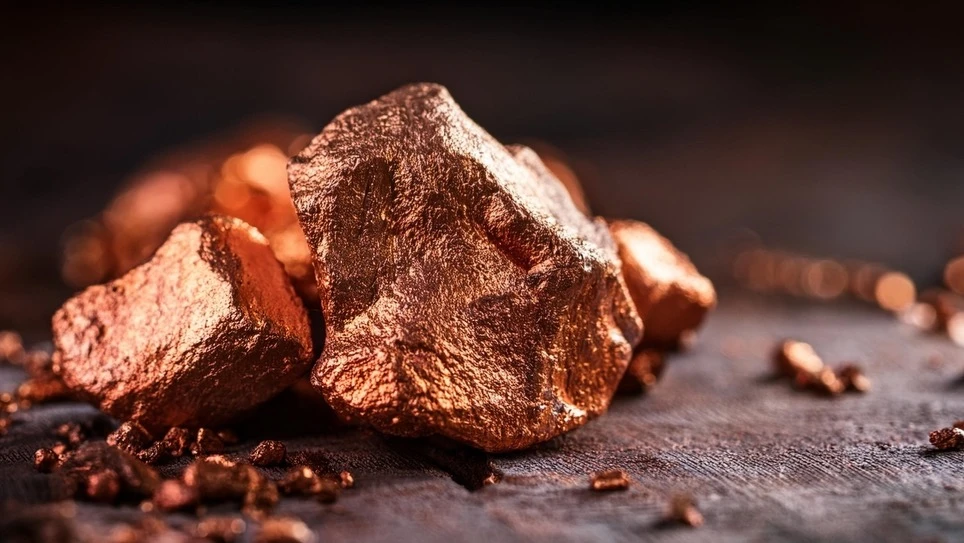
Copper prices, after four years of stagnation, began to rise in the last week and a half and reached record levels. Traditionally, demand for this metal, which is used in many items and sectors, from electrical wiring and batteries to construction, has been seen as an indication of the health of the global economy. Now it can also be used to judge the development of AI.
"Copper" nationalism
The price of three-month copper futures, the main contract on the London Stock Exchange (LME), topped $11,000 per tonne on November 28, and trading closed at $11,621 on Friday, December 5.
The price has not been able to overcome the $11,000 per tonne level since early 2021, notes Jon Treacy, publisher of investment newsletter Fuller Treacy Money. He lists the main fundamental factors that largely determine the price dynamics:
"The big global theme is electrification. Stalled Chinese infrastructure development is another. The competition between these two forces explains why the price has been moving sideways since 2021."
But now a new variable has emerged - US resource nationalism, continues Treacy. US President Donald Trump's actions have created a price premium on the US Comex exchange. "The US is vacuuming up the rest of the world, pulling refined copper out of it," he adds.
Since the U.S. lacks its own smelting capacity, it mainly exports ore and imports purified, refined copper. An additional risk factor for the U.S. is that half of the world's copper is processed by China, the United States' main trade adversary. Now the Trump administration is trying to incentivize its own processing, but "it's a multi-year process, if it ever comes to fruition," notes Treacy.
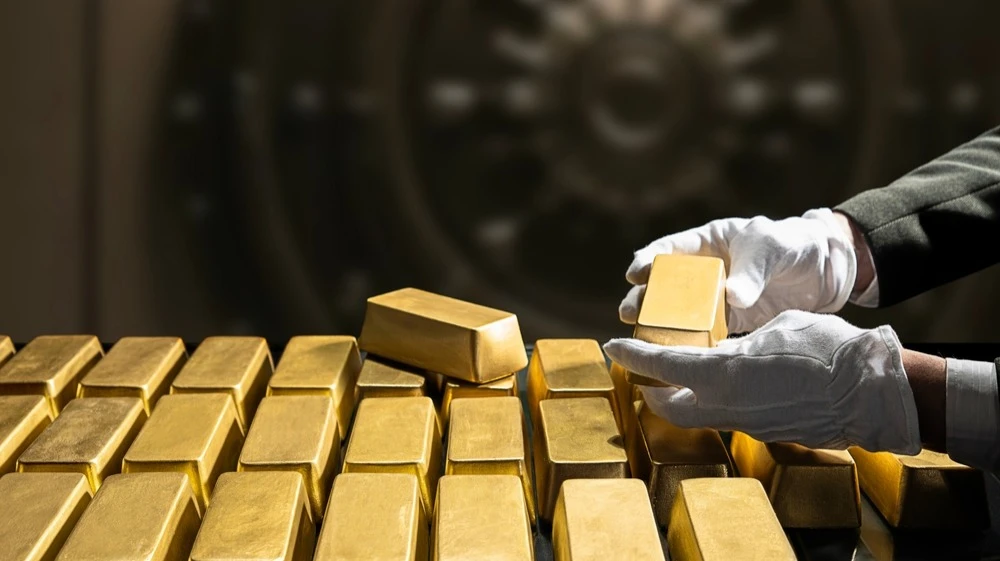
The price of copper in the U.S. began to rise in early 2025, when traders feared the introduction of import duties by Trump, notes Bloomberg. As a result, metal from other countries began to accumulate in the warehouses of the U.S. Comex (a similar story with price imbalance happened in the gold market, as a result, bankers began to transport ingots by airplanes from Britain). In July, copper on the Comex was 30% more expensive than on the LME.
The premium collapsed to 5% after Trump announced in late July that he would not impose duties. But since September it has been gradually rising again and is now close to 10%: the president promised to reassess the situation in the second half of 2026, and traders have started to accumulate stocks in the US again.
These operations will lead to a shortage of copper in markets outside the U.S., which will provide a further increase in the price of the metal, veteran metals trader Kostas Bintas, who heads the relevant department of commodity trader Mercuria Energy Group, told Bloomberg: "This is a big trend. If the situation continues like this, the rest of the world will be left without copper cathodes."
U.S. refined copper imports in Q1 2026 will be about the same as in the record Q2 2025, when they exceeded 500,000 tons, according to Mercuria.
Goldman Sachs analysts are not convinced that prices will continue to rise. They have lowered their forecast for a global market surplus, but believe there is enough copper on the market to meet demand. "Although with our much lower surplus forecast of 160,000 tons in 2026, the market is approaching balance, we do not expect it to face a deficit anytime soon," the bank's analysts wrote. In their opinion, in 2026 prices will fluctuate in the range of $10 thousand - 11 thousand per ton.
Artificial demand
But there are other important factors that can change the balance.
Demand for copper is being fueled by the construction of power grids as part of the green transition, which involves large-scale electrification of transportation infrastructure, as well as powering data centers that serve AI computing, the Financial Times writes. According to a January forecast by BHP, the world's largest mining company, the amount of copper used in data centers around the world will grow sixfold by 2050.
Meanwhile, mining company Grupo Mexico estimates that AI data centers require 27 to 33 tons of copper for every megawatt of power - more than twice as much as traditional data centers.
Additional demand is being generated by global rearmament. "Much of the demand for copper is hidden," the FT quoted mining entrepreneur Robert Friedland as saying. - Demand from the military is never disclosed."
World defense spending grew in 2024 at the fastest pace since the end of the Cold War - by 9.4% in real terms. They amounted to a record $2.72 trillion and will continue to increase further, the Stockholm Peace Research Institute wrote.
Meanwhile, the International Energy Agency (IEA) predicts that by 2035, production from existing and planned copper mines will meet only about 70% of global copper demand. Huge investments, innovations and possible demand correction will be required to avoid the formation of serious deficits caused by energy transition (electric vehicles, renewable energy sources) and the spread of AI, the IEA notes.
The supply problem
However, existing copper deposits are becoming less productive, some have been mined for over a hundred years, and no major new mines have been opened for a long time. The FT quotes Charles Cooper, director of copper sector analysis at Wood Mackenzie, as saying that "only a handful of new mines have come on stream in recent years.
Over the past three decades, the number of major new discoveries and their size have steadily declined, according to estimates by Arras Minerals, a Canadian company exploring for copper and gold deposits in Kazakhstan.
While there were between seven and 18 such discoveries per year from 1990 to 2008, thereafter, only in 2011 were there seven fields, and in other years there were five or fewer, with none in 2018 and from 2022 through 2024.
Wood Mackenzie, unlike Goldman Sachs analysts, expects a deficit in the global refined copper market already this year - in the amount of 304 thousand tons, and next year the shortage will continue to grow. The energy transition, according to Cooper, has a significant impact on the mining sector.
Shortages in the metal market cannot last very long, and in the past, price spikes have tended to result in either substitution or increased supply from other sources, such as scrap, he continues. But now, technology giants building data centers and with impressive budgets are less price-sensitive than many traditional industrial copper users, and their actions may support high quotes. They are already "outbidding suppliers to power grids for things like transformers," Cooper says.
"It is important to emphasize that copper is not a rare resource," notes Treacy. - Existing mines can be expanded to provide additional supply, and new deposits may be discovered.
But the deterrent to multi-billion-dollar investments is the price of metal, so it has to stay at higher levels for quite some time to increase supply in large volumes, Tricey points out.
Vineet Mehra, CEO of IRH Global Trading, calls copper "the new gold" (quoted in the FT) and predicts that given the looming supply-demand imbalance, prices will not fall.
This article was AI-translated and verified by a human editor