'Created using human intelligence': how Hollywood is embracing AI

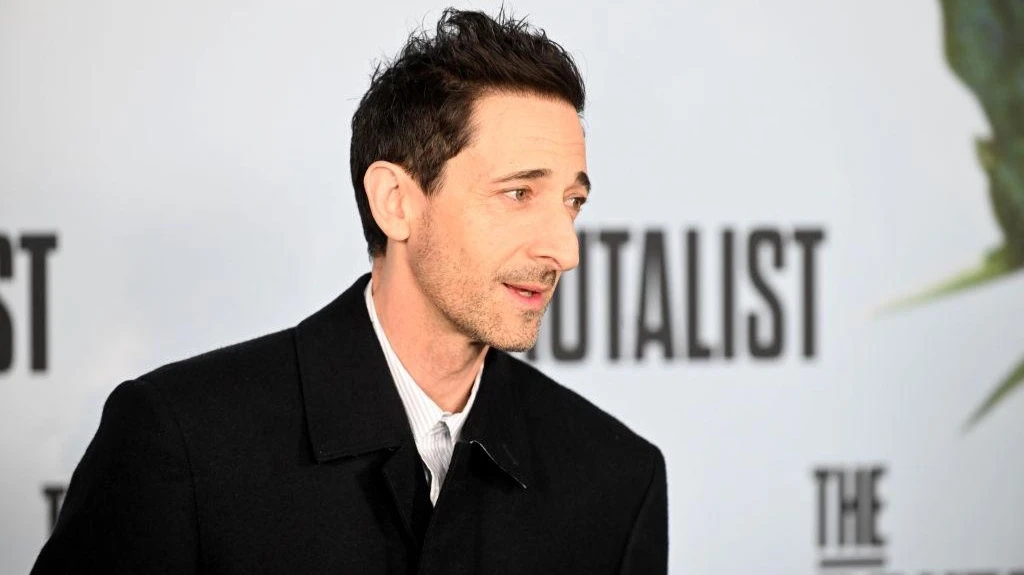
The Academy Awards will be held in Los Angeles on Sunday, March 2. This year, of the 10 films nominated in the Best Picture category, the creators of at least four said they used artificial intelligence in their work on them.
These include: "Brutalist," "Emilia Perez," "Dune: Part 2" and "Bob Dylan: Nobody Knows." In an interview with RedShark News, "Brutalist" editing director David Jancsó said that the team used AI for very narrow tasks in the post-production phase - to enhance certain sounds in the main characters' Hungarian-language dialogues and to finish architectural drawings and building layouts designed by the main character. The film was met with an avalanche of criticism, with The Guardian, Variety and Vanity Fair all writing about the use of AI in Brutalist. Social networks called for disqualification of the film.
The musical drama Emilia Perez used Respeecher to improve the singing range of actress Carl Sofia Gascon. In the movie "Bob Dylan: Nobody Knows" - Revize, a technology for making stuntmen resemble the actor. In this case, it was used for three short close-ups of a motorcycle ride, said a spokesman for Searchlight Pictures, a company involved in the film's production.
Despite the fact that AI is already being actively used in Hollywood, this year this topic has attracted so much attention that the American Film Academy wants to change the rules for accepting applications and regulate the use of AI in Oscar contenders, writes Variety. Now the Academy offers a voluntary form of report. Next year, the form may become mandatory, and film makers will have to provide detailed information on the use of AI, including the number of elements generated by neural networks.
A formal announcement of these changes is expected this spring.
The Academy attributes these changes to a desire to adapt to new realities and to provide an honest assessment of human creative achievement in the film industry.
How is Hollywood dealing with the arrival of AI technology in movies?
Industry vs. AI
Truth be told, every technological revolution in film has been accompanied by fear and misgivings, from the advent of sound pictures in the 1920s to the transition to digital in the 2000s. Today, artificial intelligence is another such frontier.
"We think AI is coming to destroy all of us. And that's the narrative that Hollywood has created," George Huang, a professor at UCLA's School of Theater, Film and Television, told Business Insider.
The first question that the AI revolution that has taken place in the movie industry raises is whether artificial intelligence is taking away jobs or creating them?
If, for example, it would be many times cheaper to produce special effects, it is logical that many computer graphics specialists would lose their salaries. If actors can be replaced by generated models, why not save on their fees? Screenwriters could also be out of work if large language models advance in screenwriting skill.
It was AI developments that became a stumbling block during the actors' and screenwriters' strikes in Hollywood in 2023, writes NBC news. And regulating the use of AI was one of the protesters' conditions to the studios and producers. In the end, the unions got their way. Studios are now required to negotiate the use of AI with actors, and for those already filming, when replacing a real performer with an AI doppelganger, actors are compensated at their fee as if they were working on the set. Also, the agreements include "guardrails" against the use of artificial intelligence to create scripts, The Guardian points out. There is no ban on the use of AI tools in this case, but there are restrictions designed to ensure that new technology remains under the control of screenwriters and creators.
As a result, it turns out that Hollywood studios will not be able to save money through the use of AI.
"... Studios are very happy to save money and lay off a bunch of people, but I think they forget that this has literally never worked in the history of mankind," showrunner Matt Nix said at Lot's May 2024 Artificial Intelligence Summit, writes IndieWire.
He gave an analogy to music. Before composers started using digital instruments with the ability to simulate any sound on a computer, scores for television were performed by session musicians. With the advent of new technology, they lost their jobs, as did those who transcribed the composer's scores.
However, creating music for movies and TV hasn't gotten any cheaper to produce. Even the smallest TV shows have entire orchestras working on them. Technology has made life easier, but the cost of creating music for movies and television has only increased - they began to make not cheaper, but cooler, add special effects, improve the depth of sound, and so on. Eventually, more advanced jobs replaced the ones that were lost.
According to Deadline, the use of AI in the making of Brutalist has led to job creation, not job elimination.
"Every part of the production process will be affected by AI, but that doesn't mean AI will replace humans. Rather, it will improve quality and save a lot of time," Renard Jenkins, president of the Society of Motion Picture and Television Engineers, said at the Lot summit. He believes that the generalized anxiety about AI is misplaced. And he suggested that studio executives estimate how much it would cost to integrate AI into a company's existing infrastructure and look at the numbers when scaling. It's expensive, so the idea that AI will replace anything and everything is unrealistic, he said.
As a result, studios are still in no hurry to invest large sums in AI. Deloitte estimates that in 2025, less than 3% of film and TV studios in the EU and the US will allocate money to AI implementation. At the same time, they will allocate 7% of their operating budgets to using AI to automate work with contracts and talent, planning, marketing and advertising, and dubbing.
Artists' rights
Another controversial issue is the rights to the materials on which AI models are trained. All of them use in training the accumulated cultural experience of mankind, a huge part of the rights to which belongs to specific people, companies or institutions.
Already, some artists are putting the label "created using human intelligence" on their work, Forbes writes.
Several artists have filed a class action lawsuit against Stability AI, DeviantArt, Midjourney and Runway in 2023, The Art Newspaper writes. They claim their work is being used without consent or compensation. In the US, writers including John Grisham and George R.R. Martin have sued OpenAI on similar grounds.
Last year, 40,000 creatives, including Thom Yorke and Julianne Moore, signed a one-sentence petition on the website raison d'être: "The unlicensed use of creative works to train generative AI is a serious, unfair threat to the people behind those works and should not be tolerated."
Companies training their AI models use content available online without asking its authors. But there is a more legal way - databases for training can be bought by paying the owners of the rights. But studios are also slow to share their licensed content with "big data hunters," Deloitte writes in its 2024 Technology, Media and Telecommunications report. They deny use, protecting their intellectual property, or ask for high royalties.
But Deloitte analysts do not rule out that this year the number of partnership contracts between studios and AI development companies may grow sharply. The latter will assume part of the cost of creating the generative AI needed by the movie industry.
Opportunities for low-budget projects
AI technology could play into the hands of independent content creators - by providing a powerful and affordable tool for creativity, Pika Labs CEO and co-founder Demi Guo told the BBC. Her company is developing technology to create videos based on text descriptions.
The production cost of the generated feature films, she said, will soon not exceed a couple thousand dollars.
PJ Accetturo, head of US-based FilmPort AI, says the cost of a short generated video with a timeline of a few minutes is already a couple hundred dollars.
Investor Francis Helliere writes in his column for The Rolling Stones that the introduction of AI tools will pave the way for low-budget projects and independent filmmakers. Good old-fashioned storytelling won't die with the advent of AI editors. Just in the arsenal of the author of the future will be not only relatively cheap ways to develop scripts, produce video and effects, but also AI-tools that optimize advertising campaigns or the cost of copyright clearance.
For example, Runway offers software that allows you to create visual effects. Adobe's Sensei platform allows filmmakers to label and organize footage using AI. Nvidia's Omniverse platform is another solution that makes it easy to collaborate on complex visual effects and animation in real time.
This article was AI-translated and verified by a human editor