Eli Lilly became the first pharma giant to be capitalized at $1 trillion. What's next?
The company is starting to resemble the tech giants from "The Magnificent Seven" again, analysts said

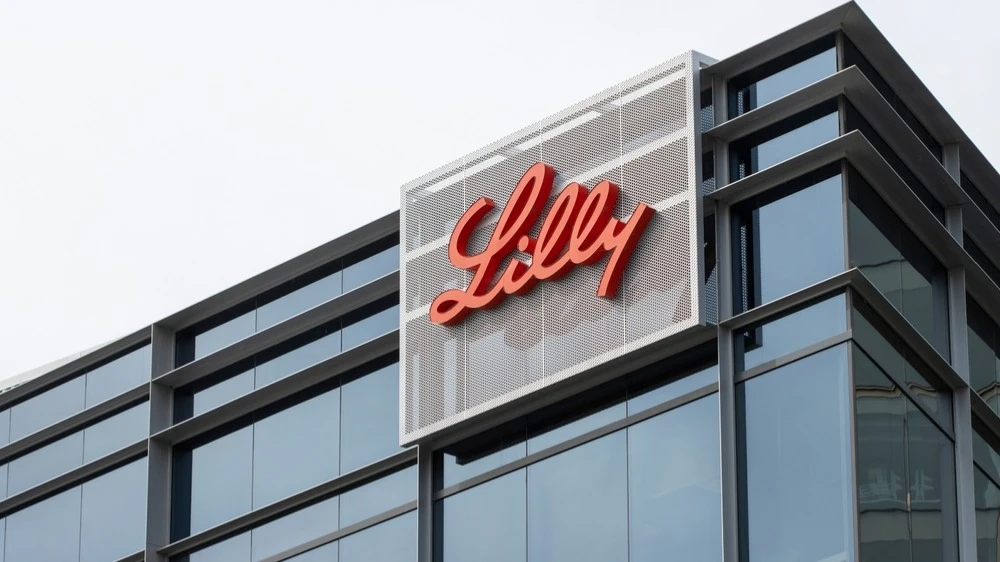
US-based Eli Lilly reached a market capitalization of $1 trillion in trading on November 21: the company became the first pharma maker to join this exclusive club, which previously consisted mainly of technology giants, Reuters reported.
Details
At trades on November 21 the company's securities set a new record for the whole time of circulation on the stock exchange: their price grew in the moment by 1.7% and reached $1061.17. As a result, Eli Lilly 's capitalization exceeded $1 trillion for the first time. However, then the securities slowed down a bit, and the market value of the company was again below this mark.
Eli Lilly shares are up more than 36% this year, helped mainly by the rapid expansion of the weight-loss market, Reuters notes. The stock's growth has also far outpaced the broader U.S. market. Since the launch of the drug Zepbound at the end of 2023, Lilly securities have risen more than 75%, while the S&P 500 index has added more than 50% over the same period, the agency calculated.
The U.S. drugmaker became the tenth company to cross the $1 trillion milestone. The list, according to Dow Jones Market Data cited by The Wall Street Journal, also includes Nvidia, Apple, Microsoft, Alphabet, Amazon, Broadcom, Meta, Tesla and Berkshire Hathaway.
What has helped Eli Lilly achieve these results
Obesity drugs, once considered a niche category, have now become one of the most lucrative segments of healthcare, with demand steadily increasing, Reuters notes.
Danish manufacturer Novo Nordisk, which produces Ozempiс, was the first to take the lead in this area. However, it is now behind Eli Lilly in terms of the number of prescriptions: the popularity of Mounjaro and Zepbound has rapidly increased and helped Lilly to overtake the competitor.
According to LSEG data cited by Reuters, Eli Lilly shares are now among the most expensive among large pharmaceutical companies: the ratio of share price to projected earnings (P/E ratio) is about 50. This reflects investor confidence that demand for weight-loss drugs will remain strong, the agency said.
"The company has many areas of focus beyond obesity treatment, but to say anything else is moving its stock right now would be untrue," Bahl and Gaynor Chief Operating Officer Kevin Gade said as quoted by Kugeuky.
"At a $1 trillion valuation, the company is twice the size of the second-largest player in healthcare (Johnson & Johnson is valued at about $500 billion - Oninvest). This is a truly incredible situation for them," Bloomberg quoted Mizuho Securities strategist Jared Holtz as saying.
What's next?
Wall Street estimates that the market for weight loss drugs will reach $150 billion by 2030, with Eli Lilly and Novo Nordisk accounting for themajority ofglobal sales, Reuters writes.
Lilly's annual sales in the GLP-1 class weight-loss drug category could exceed $100 billion by 2034, the WSJ noted, citing Morningstar analysts. That's well above the $63 billion the company is expected to earn this year from all of its drugs, including cancer and immune disease treatments.
Investors' attention is now focused on Lilly's oral obesity drug orforglipron, which is expected to be approved early next year, Reuters noted. Last week, Citi analysts noted that the new generation of GLP-1 drugs has already become a "selling phenomenon," while orforglipron, they said, will be able to capitalize on the strong demand base created by its injectable predecessors, Reuters reported.
Lilly's deal with the White House to lower prices on weight loss drugs, as well as planned investments in drug expansion, create a good environment for the company's future growth, the agency said.
"Lilly is starting to resemble the Magnificent Seven again," said James Shin, director of Biopharma Equity Research at Deutsche Bank, referring to tech giants like Nvidia and Microsoft, which have accounted for much of the market's growth this year. Investors had previously placed Lilly in this elite group, but the company lost favor after a string of bad news and reports.
Now, however, Shin says Lilly looks poised to re-enter that circle - perhaps even becoming an alternative for investors, especially given the recent waning of interest in a number of AI stocks.
This article was AI-translated and verified by a human editor