Endless travel: how much you can earn from the cruise boom

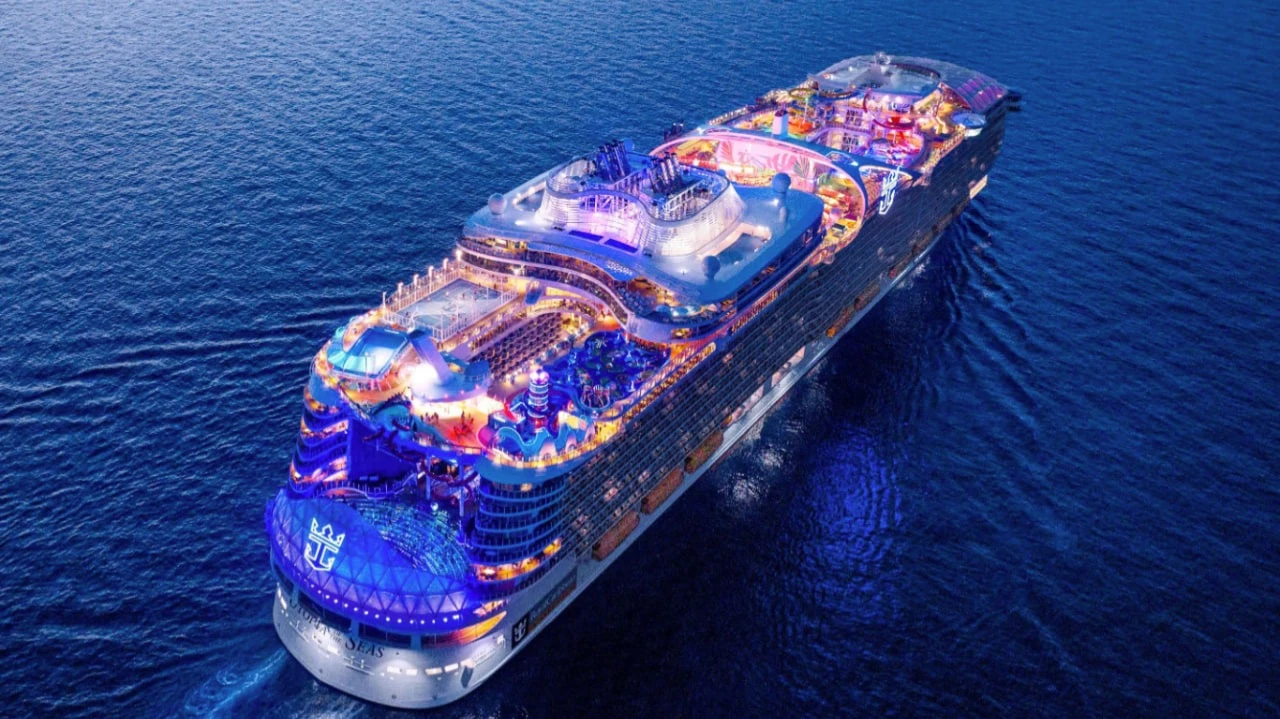
The demand for cruises has been growing rapidly over the last few years - companies offer luxury tours, expeditions, there is even the option of a multi-year voyage as an alternative to pension plans. Which companies in the sector should investors pay attention to?
Cruise boom
Although demand for travel in general has surged since the pandemic, few destinations have proved as popular as cruises, Barron's writes. Shares of the cruise sector's largest publicly traded companies have seen impressive gains over the past year. Quotes of Royal Caribbean have added more than 80%, Carnival Corporation - almost 70%, and Norwegian Cruise Line - more than 23%. By comparison, the S&P 500 index has grown by 15.6% over the past 12 months.
In July report Research and Markets indicates that the volume of the global cruise market by the end of 2025 will reach $8.74 billion, in 2024 it was $7.82 billion. And in the following years it will grow by 12% per year. And in 2029, according to the forecasts of Research and Markets, it will reach $13.8 billion.
Cruises accounted for less than 3% of international tourism last year, but the number of people taking such trips is steadily increasing. In 2024, 34.6 million passengers will sail on cruise ships - 16.5% more than in pre-pandemic 2019 - and that number grew by 9% over the year, the Cruise Lines International Association (CLIA) calculated. 82% of those who have already been on a cruise intend to do so again, and 68% of international travelers are considering taking their first cruise, CLIA's materials show.
Who's going where
The Caribbean, Bahamas and Bermuda remain the top destinations for cruise ships. The Mediterranean is the second most popular. Over half of cruise passengers are from the United States: 16.9 million, with a total economic impact of $65.4 billion in 2023. In second place is the European Union: 8.2 million passengers and €55.3 billion.
The traditional cruise ship audience is baby boomers and multi-generational families. The CLIA report shows that 28% of travelers are in the latter category. Of course, there are millennials and zoomers among the passengers - they are primarily attracted by the affordable price and simple logistics compared to hotel stays.
CLIA writes in the report that expeditions are gaining popularity in cruise travel. The first dedicated expedition cruise ship was built just 10 years ago. Today, there are already about 40 such ships on the market. The number of passengers willing to travel to extreme or unexpected locations grew by 22% last year.
Viking Cruises, for example, offers to sail on its liners to the shores of Antarctica or the coast of Patagonia, to tour the Great Lakes or the fjords of Chile. SilverSea, owned by Royal Caribbean, also offers such tours. Depending on the class of cabin and duration, the price can vary from $10,000 to $50,000 per person.
Such trips fall under the category of luxury tourism. By 2028, the number of travelers who choose luxury cruise vacations could reach 1.5 million per year - a 25% increase from 2025, according to the CLIA report. Hotel chains are also developing in this "territory." For example, The Ritz-Carlton with its yachts equipped as a five-star floating hotel.
The main advantages that attract premium customers are a small number of passengers (a few hundred people), spacious rooms, exclusive cuisine and unique locations.
Among luxury cruises, there is an increasing number of wellness-related offerings. These are tours where breathing exercises replace alcoholic binge drinking, smoothies replace cocktails on deck, and yoga, meditation and Pilates classes replace idleness. For those wishing to achieve enlightenment there is a trip on the liner of mindfulness from Deepak Chopra, a cult figure of new age culture of the 90's. Breathing practices, meditation and a balanced diet await tourists on board - for only a few thousand euros per person.
Solo travel is another trend in the industry. In 2024, 12% of cruise travelers preferred to vacation alone (up from 6% in 2023), and companies are trying to provide single-occupancy cabins for such customers.
There are also offers of an "endless" cruise - Forbes, for example, wrote about such a cruise in 2024. It includes 425 stops and traveling in a warm climate for 1301 days - that's more than three and a half years - on the liner Villa Vie Odyssey. On board are 485 cabins for 800 passengers, three restaurants, five bars, a library, swimming pool, gym, golf program and business center. A cabin on the liner can be rented, and you can buy it for the entire life of the ship - it is 15 years. Now it costs a minimum of $130 thousand, you will also have to pay a monthly fee for staying on board. But for $350 thousand you can get an unlimited opportunity to travel, the plan includes medical care, and the opportunity to play sports, etc. Forbes writes that this cruise is being promoted as an alternative retirement plan - because such a trip would be cheaper than living in a house in many places in the US. On the first cruise the magazine wrote about, half of the passengers were singles, 80% were from the U.S. (followed by Canadians). The average age of the travelers was 58.
Who's making money off of it
Carnival, the world's largest cruise operator, reported a record second-quarter operating profit of $934 million, up nearly 67% year over year. Revenue totaled $6.3 billion, up 9.5% from a year earlier. Net income rose more than six-fold to $565 million, and the report said advance bookings for 2026 reached a record 2025 level at historically high prices (in constant currency terms).
Zacks analysts have included Carnival in their list of profitable investments for the long term. They point out that while its earnings are impressive, it is undervalued - its projected P/E ratio (price-to-earnings ratio) is 15.1, compared to 21 for the entire leisure and entertainment industry. And its five-year PEG ratio (which tells you how fair its share price is given its earnings growth rate) is 0.7.
Norwegian Cruise Line also increased its revenue in the second quarter by 6% year-on-year, to $2.5 billion, and its adjusted operating profit grew by 23%, to $450.3 billion. But its net income fell more than fivefold, to nearly $30 million. And for the first half of the year, the company posted a $10.3 million loss. It attributed the drop to a currency revaluation of euro-denominated debt, which gave it a paper loss of $121.9 million, and a currency revaluation of advance ticket sales. Its forward-looking P/E multiple is 10 and its five-year PEG ratio is 0.55.
Among the big three, Royal Caribbean led the way. It is the only one of the big three companies to exceed its pre-pandemic targets this year, Barron's wrote. In its second-quarter report, Royal Caribbean reported passenger traffic growth of about 10 percent for both the quarter and half-year. In the second quarter, it reported revenue of $4.53 billion (c currency-adjusted) - up about 10%. Net income rose nearly 42% to $1.21 billion. Its forward-looking P/E multiple is 17.76 and its five-year PEG ratio is 0.99. This indicates that the company's share price is close to fair value.
This spring, Royal Caribbean announced its entry into the river cruise market, which is dominated by Viking Holdings, writes Barron's. A river cruise on the Rhine and Danube can now be booked for 2027.
The publication quotes Melius Research analyst Connor Cunningham, who believes that Royal Caribbean is able to reinvest in the business and provide high long-term profits. Earlier this month, he reiterated a "buy" rating and a $385 target price for the company (which implies an upside of more than 18% from current quote levels). He wrote that "the path to earnings growth for Royal may be the clearest in a decade."
Royal Caribbean was also listed as a favorite by Jim Cramer, host of the Mad Money show on CNBC. In general, he considers the shares of cruise companies promising, despite concerns about the deterioration of the U.S. economy and rising unemployment. He believes demand for cruises is driven not by employment levels, but by their value to customers. "Cruises are great value for money. They're much cheaper than staying in a hotel, and they're also really, really fun," he was quoted as saying by investment portal Insider Monkey.
What happens next
It is difficult to say how long cruise companies' business growth will continue. But, judging by analysts' forecasts, in the future companies will have fewer opportunities to maintain such growth rates - demand for cruises will begin to decline.
CLIA forecasts that cruise companies will carry 37.7 million passengers this year, a 9% increase. But from 2026 onwards, growth will slow down - in 2026 it could be as low as 5%, and by 2028 it could be as low as 2%. At that time, almost 42 million people will go on cruises.
In a July interview with Barron's, Cunningham said Melius Research forecast "double-digit growth" in earnings per share for four cruise operators in 2025 (including Viking Holdings). But he also said he expects a "slight" slowdown in growth as early as next year.
This article was AI-translated and verified by a human editor