'Falling apart before our eyes': Wall Street veteran warns against OpenAI-related stocks
ChatGPT developer 'falling apart in real time', says ex-Fidelity executive George Noble

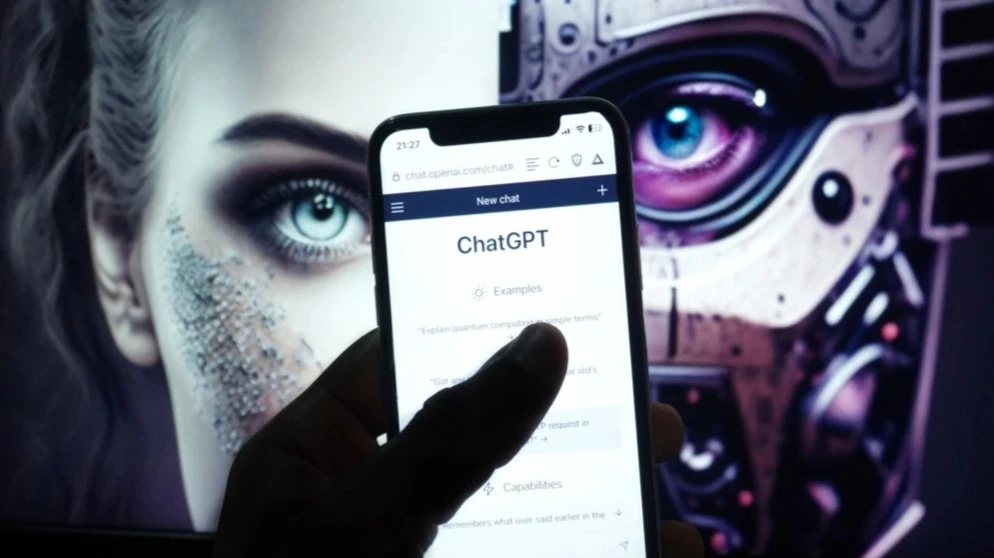
Deutsche Bank estimates that OpenAI's total attributable cash flow for 2024-2029 will be $143 billion / Photo: PatrickAssale/Shutterstock.com
Former Fidelity star manager George Noble warned of the "astronomical" risk profile of investment strategies that overlap with OpenAI. The gloomy forecast was echoed by legendary short-seller Michael Burry, who noted that the collapse would not be limited to a single company.
Details
"I've been watching companies collapse for decades. This one has all the warning signs," Noble wrote in X about OpenAI. Fidelity's first international fund, the Fidelity Overseas Fund, was considered the No. 1 fund in the U.S. for years under his leadership, MarketWatch points out. In a post at X titled "OpenAI falls apart in real time," he noted the startup's unprecedented losses, exodus, growing competition, falling ChatGPT traffic and the failed GPT-5 launch. According to the financier, "the low-hanging fruit has already been harvested" and each successive improvement requires more and more energy and expense. "I don't touch bets adjacent to OpenAI at current valuations. The risk profile is astronomical," Noble said.
His post was responded to by financier Michael Burry, who was one of the first to predict the 2007 U.S. mortgage crisis. "It's not surprising and it won't end with OpenAI," suggested Burry, who became the prototypical character in the movie "The Downgrade Game." According to him, the authorities will utilize all resources to save from the AI bubble to prevent the market and economy from collapsing. However, even these actions may not be enough in a stock market mania, Burry warned.
Noble advised reducing positions in the securities of infrastructure players and the Magnificent Seven. "If you have exposure to the Magnificent Seven through AI infrastructure bets, consider reducing positions. The gap between the promised revolution and reality has never been wider," says the financier. "The smart money," according to Noble, is now rotating into gold, silver and small- and mid-cap stocks, which are trading near decade lows relative to the bigtechs but have seen comparable earnings growth.
Context
OpenAI and tech giants such as Microsoft and Nvidia are actually funding each other's promises in a "circular economy": developer ChatGPT spends the money it receives from investors on their own cloud capacity and chips, CTech writes. While the startup's revenue remains tiny compared to its investments, it has already signed contracts worth hundreds of billions of dollars with Oracle, AMD and Amazon, the publication notes.
S&P Global stated in a January 21 review that the "current landscape" of the AI market is defined by "a unique capital-intensive paradox: a cyclical funding model that has stabilized the ecosystem in the short term." Unlike previous IT cycles, the current one has required huge investments in physical infrastructure, leading to a temporary symbiosis between neural network developers and technology giants.
Companies like Microsoft and Amazon have simultaneously provided AI startups with liquidity and computing power, effectively reinvesting capital in their own platforms. However, as the industry develops, the era of "competitive cooperation" will inevitably end: partnership will be replaced by fierce competition, vertical integration and market consolidation, S&P warned.
This article was AI-translated and verified by a human editor