Fighting AI Compliance: what to do if a neobank in the EU has closed your business account?

The downside of the use of AI in banking compliance is mass sudden blocking of accounts, which hits entrepreneurs. Photo: Vitaly Gariev / Unsplash.com
Sudden account blocking has become a parable not only for private but also for business clients of neobanks. Entrepreneurs complain of funds freezing, paralyzing their business, and forced account closure without explanation. Automated compliance using AI that neobanks employ is partly to blame. What should an entrepreneur do if his account is blocked; Oninvest found out.
"A real live nightmare."
AI is increasingly penetrating the routine processes of European banks. Statista estimates that in 2025, 58% of European banks will integrate AI into their operations, and 19% will use it for external tasks, such as communicating with customers via chatbots. According to Nvidia, the largest deployment of AI-based technologies is in banking compliance.
The downside of using AI in compliance is the sudden blocking of accounts. This is especially painful for clients of neobanks, as they have no opportunity to come to a branch and resolve the issue, as such banks simply do not have offices. In 2025-2026 in the EU, cases of blocking accounts of SMEs and private entrepreneurs have become more frequent, says Alexander Matveev, head of the international practice of law firm ANP Zenit. The reason is stricter compliance, increased regulatory pressure and aggressive risk management on the part of neobanks.
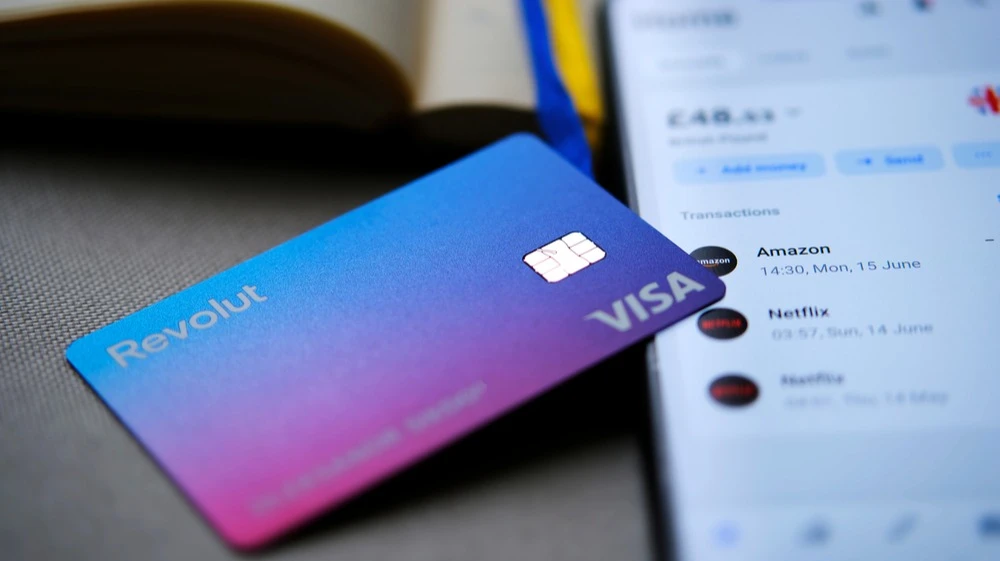
Oninvest studied the feedback left by SME owners and individual entrepreneurs who faced sudden blocking in the second half of 2025 and early 2026 to understand the typical patterns of actions of financial institutions. These mainly concerned the neobanks Finom, Revolut and Qonto.
In all the cases studied, the scenario was similar. A neobank froze funds on a business account without warning, asked the client to send additional documents and then forcibly severed the relationship without a detailed explanation of the reasons. At the same time, the money passing through the account was "clean" and the transactions made economic sense, the businessmen insisted.
"In the beginning, Finom was great. Transfers were fast, the interface was clear - everything worked like clockwork. In three months we processed about $500k through this account without a single problem," wrote TrustPilot forum user Luca Wolvend from Switzerland in February 2026.
Then, he said, he received a standard letter from the bank asking for supporting documents and invoices and sent them within an hour. "That same evening the account was blocked. No intelligible explanation. No meaningful communication... Funds were frozen," he described.
In March 2026, a Reddit user under the nickname Top_Candle_8123, who introduced himself on the forum as the founder of JoJo Solutions, a small IT company that provides AI automation services, described the blocking of a merchant account (used to process card payments for customers) and a business account at Revolut Business.
According to him, it all started with the sudden blocking of a trading account, which the bank unblocked after checking the documents. But almost immediately Revolut changed its decision: the company's trading account was closed forever, and the business account was blocked. According to the entrepreneur, he is now experiencing "a real nightmare in real life": the company's operating funds are frozen, cash flow is paralyzed, and support service responses are standardized and uninformative.
In January 2026, user Mohammadin from the Netherlands found himself in the same situation: after his Finom business account was blocked, he had €84 thousand hanging on his account.
"Checks are understandable, but withholding business funds without a clear timeline or meaningful communication is unacceptable," complains an entrepreneur on the TrustPilot forum.
Ilaria Pirti from France, who had been using a business account with Qonto for two years without any problems, told the TrustPilot forum that in February 2026 she had it frozen. This caused trouble for Pirti's business: the company was unable to pay suppliers or receive money for its services, salaries were jeopardized, and the company's customers began to question its sustainability.
Fines and penalties accumulate for entrepreneurs due to lack of access to funds. This is what happened to the SCI (Société Civile Immobilière, a non-profit company in France that is created specifically for the joint ownership and management of real estate) of Max Luarn from France.
The company had been serviced with Qonto for five years without any problems, with no changes in the shareholder structure for 20 years and only one building in the asset structure, he shared on the TrustPilot forum. But the bank suddenly blocked the business account after a standard "verification" procedure - Luarn took selfies for the bank with his ID. Because the verification failed (the bank didn't recognize him), he lost access to the account. His company used the account to pay taxes on rental property income. By December 2025, it had already accumulated a €500 fine for non-payment.
Oninvest sent inquiries to Finom, Revolut and Qonto. At the time of publication, none of the neobanks had responded to the questions. It was not possible to contact the listed businessmen.
Neobanks use the same scripts in their official communications with customers. For example, in a response to Luca Wolwend of Switzerland, Finom writes: "As a regulated financial institution, we strictly comply with all applicable legal and security standards. We want to assure you that we never withhold funds without a valid legal reason. The decision to deactivate an account is a serious measure that we never take lightly."
This is almost verbatim the bank's response to Mohammadin of the Netherlands.
In addition, neobanks rarely explain to the client the specific reasons for closing the account. For example, in its response to Max Luarn, Qonto states that "for regulatory reasons specific to our organization" the bank will not disclose any details of its decision.
The reason for this situation is that the initial communication with customers is handled by a chatbot that gives short and standardized answers.
"It's the model that decides the fate of a business."
European banks and fintechs are recognizing that a significant portion of case investigations and case resolution is handled by AI. A survey of 125 banks, neobanks and fintech companies from Europe conducted by Chartis Research and Hawk AI in 2025 found that AI performs 75% of anti-money laundering investigations and 51% of sanctions compliance checks
AI is an umbrella concept, explains AI researcher and lecturer at the Holon Institute of Technology Mikael Gorsky. First, it refers to machine learning (ML), i.e. analyzing large data sets, on the basis of which banks conduct compliance. They need it to study customers' behavioral patterns and detect fraud. According to him, 99% of procedures related to fraud detection have long been automated, and the quality of such analysis is constantly increasing.
And secondly, AI is also generative artificial intelligence and its special case - large language models (LLM), on the basis of which chatbots or automatic program writing systems like Claude Code work. As a rule, they are not involved in compliance. But they are used for document flow, they can replace a bank's team of lawyers, marketers, programmers, salespeople, or manage those models that help track fraud.
The fate of any bank's client has long been decided by ML models, agrees Stepan Gershuni, AI researcher, investor in the cyber.fund venture fund, and author of the e/acc Telegram channel. It is now profitable for banks to invest in AI: "humans do not have such precise thinking" and cannot process information as quickly as a model, besides, AI is "more efficient, profitable and cheaper" than the labor of a live employee, he says.
According to Gershuny, as AI models evolve, blocking will become faster, but the frequency of unfair blocking will also decrease.
In compliance issues, AI is already more effective than live humans, Revolut head Nikolay Storonsky told Elizaveta Osetinskaya in an interview. "There are clear laws that are sometimes unclear, there are regulators' expectations that are sometimes not very clear either. In those environments, people make mistakes, and as a result they put the organization at risk. When it's all based on code, on models, there's a smaller percentage of error there," he said in December 2025.
He said Revolut has a department whose staff analyzes the results of compliance audits, but after reviewing all the facts provided by compliance, they agree with AI's conclusions 90% of the time, and regulators are fine with AI in compliance.
Legal advice
So, what should a business do if its account is blocked by a neobank?
- If you are faced with frozen funds, you should contact the bank and try to solve the problem through the support service.
- It is important to respond to the bank in a timely manner and give detailed explanations, reminds Denis Khloptsov, senior associate in Delcredere's sanctions practice.
- If the result of communication with the bank is not satisfactory, you can appeal to the Financial Ombudsman or the national regulator. The timeframe for consideration of appeals varies. For example, Banco de España (Spanish regulator) can take two months, while Lietuvos bankas (Lithuanian regulator) can take up to 20 working days, but with the right to extend it for the same period if the case is complicated.
It is important to remember that the decisions of ombudsmen in the EU are advisory in nature, and European regulators do not interfere in individual compliance decisions of banks, Alexander Matveev says.
- It is necessary to provide additional documents, as well as explanations and legal position when the bank refers to automated monitoring systems to explain the decision to block.
For example, there is Article 22 of the General Data Protection Regulation (GDPR), which provides that a data subject has the right to have a legally relevant decision passed and human oversight, recalls Roman Kuzmin, Counsel at the Pen & Paper law firm. Referring to this article can increase the chance of human review of the decision, and will also allow to record that the client cooperated in good faith, provided explanations on the origin of funds, counterparties and disputed transactions, reminds Kuzmin.
What's important to consider?
- Restoring a closed account through the court is problematic, says Khloptsov. Unlike individuals, business entities cannot invoke the right to have a "basic payment account" under Directive 2014/92/EU.
But there are still successful cases in the courts, he says. In 2024, a Dutch court ordered Rabobank to restore a corporate client's access to an account that it had previously blocked due to allegedly non-transparent transactions and insufficient explanations for them. The court concluded that the bank had failed to conduct a detailed and individualized risk assessment and, as a result, the decision to block the account was unjustified. Of no small importance to the court was the fact that the client had always responded promptly and in detail to the bank's requests.
- An EU bank is in principle entitled to refuse service to a customer without giving reasons. This complicates both the challenge of damages and the reimbursement of expenses. For example, the court in Frankfurt am Main decided in 2025 that the bank was not obliged to reimburse the client for attorney's fees. The court pointed to the bank's immunity from such claims, citing the provisions of the German Anti-Money Laundering and Counter-Terrorist Financing Act, Khloptsov says.
Matveev estimates the probability that it is possible to recover losses incurred from the bank through the court as low - 10-25%.
- With the introduction of AI-based technologies in banking compliance, increased regulation and sanctions pressure, the European banking system is becoming more risk-oriented and less open to dialog. Legal mechanisms to protect customers, although they exist, are severely limited in their effectiveness. The responsibility for the sustainability of operations will be borne by the business itself, not by the banks that froze its account.
This article was AI-translated and verified by a human editor