Fragile rally: a record low number of stocks drove the market up from the March lows
The S&P 500 has already hit an all-time record several times in April and May

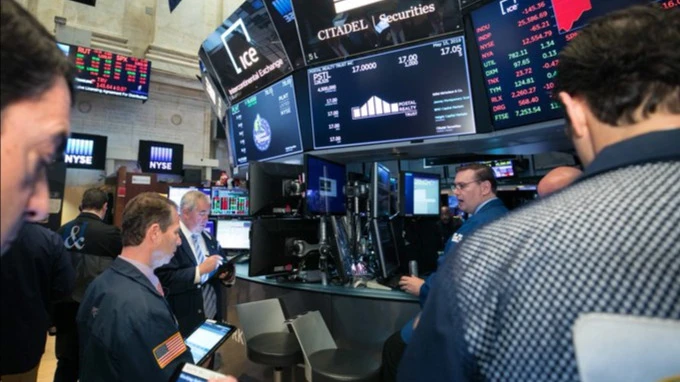
Only a little more than 40 stocks have contributed to the S&P 500's rise since April, although in the past it has typically been helped by about 100 securities / Photo: X/NYSE
The growth of major U.S. indices from the lows of late March was provided by a record low number of stocks, which indicates the "fragility" of the rally, writes the Financial Times. The S&P 500 index has added more than 12% since early April following news of a ceasefire between the US, Israel and Iran.
Details
The powerful rally was provided mainly by only a few shares of technology companies, the edition notes. The indicator of the number of securities that contributed significantly to the index dynamics, the so-called "effective components", last week fell to a record low of 42, according to UBS data. At the same time, the typical level in recent decades has been about 100 securities, the FT explains.
"What looks like broad market resilience is largely the rise of a small group of tech companies and AI-related stocks pulling the index up, while much of the rest of the market has had a much tougher time," the FT quoted Valerie Noel, head of trading at Syz Bank, as saying. - This raises the risk of fragility." She emphasizes that if sentiment towards AI-related companies reverses, "downside risk could be significant."
Just five technology stocks - Alphabet, Nvidia, Amazon, Broadcom and Apple - have accounted for more than half of the S&P 500's recent growth, the FT notes. This ended a period when investors expected the stock market to broaden its growth base, the FT states. Global investors were entering 2026 with a bet that the earnings of companies that had lagged the market this decade - such as supermarkets, property developers and mining companies - would start to converge with those of Big Tech giants. This was supposed to support a rotation on Wall Street in favor of "everything but technology," the FT writes.
The conflict in the Middle East has "definitely hit" the investment idea of market expansion: soaring energy prices have worsened the prospects for higher returns in non-tech sectors, notes DWS portfolio manager Madeleine Ronner. "It looks like this could be a year where [the stock market] is much more concentrated again," she said, adding that the longer this war continues, "the worse the prospects for growth expansion" in the market.
Before the conflict, the equal-weighted version of the S&P 500 outperformed the more mainstream index, where the largest companies have a greater weighting. But during the market rebound, this picture changed: the S&P 500, dominated by Silicon Valley technology megacompanies, performed markedly better than its equal-weighted counterpart, the FT notes. Meanwhile, the PHLX Semiconductor Sector Index is up more than 40% since the start of the war, with shares in chip maker Intel jumping more than 130% and memory maker Sandisk 's stock up 100%.
The investment idea of expanding market growth at the start of the year was built on the bet that 2026 could be a "boom year" for the US economy as a whole, Pictet Asset Management strategist Arun Sai explained to the FT. But the energy shock has undermined that assumption, he said, and investors now prefer the "predictability" of earnings in Big Tech to "macroeconomic uncertainty in the fog of war". According to FactSet, earnings in the S&P 500's technology sector rose more than 40% in the first quarter, while the financial sector rose only a little more than 1% and health care companies' profits declined.
Some analysts are warning: the fewer stocks pulling the market up, the greater the risk of a sharp pullback if the tech sector starts to decline. Goldman Sachs chief U.S. equity strategist Ben Snyder wrote to clients last week that "the sharp narrowing of market breadth signals near-term drawdown risk" for the S&P 500 after the recent rally "helped drive U.S. stock market breadth to one of the narrowest levels in decades," the FT writes.
This article was AI-translated and verified by a human editor