From $12.5 billion to $2.6 trillion: How to calculate Greenland's fair value


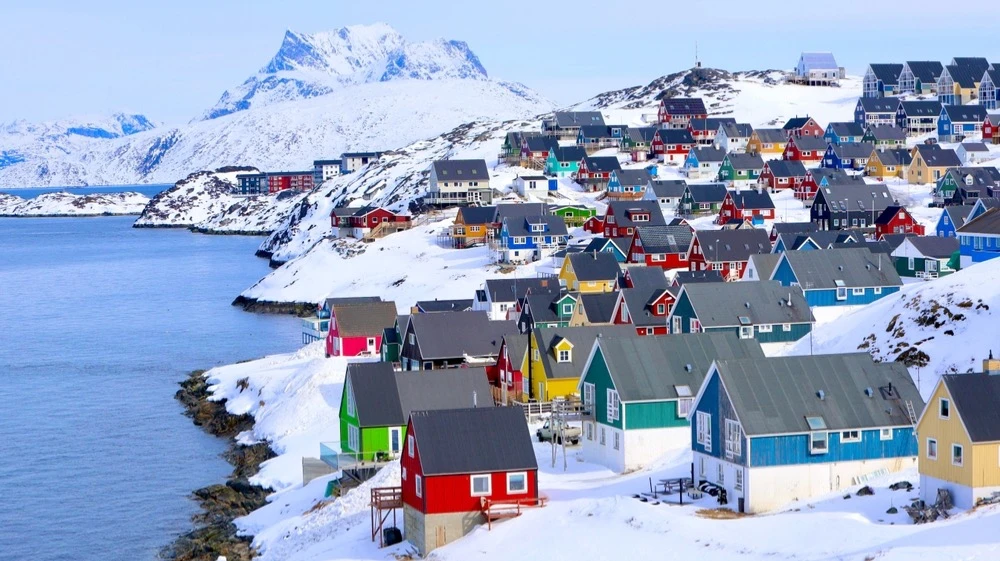
80% of Greenland is covered by ice, with about 57,000 people living on the island / Photo: Chris Christophersen / Shutterstock.com
Arbat Capital Advisory Services Limited (UK) analyst Alexey Golubovich and Arbat Capital Managing Director Alexander Orlov - on possible methods of valuation of Greenland, the "takeover" of which is sought by US President Donald Trump.
When the media cite a "fair price" for Greenland that the U.S. could pay for the island, there is usually no justification given for these amounts. For example, the $700 billion estimate from NBC News was widely circulated. The Financial Times likely cited a value of $1.1 trillion without any justification (ironically referring to the territory as Greenland LLS and U.S. President Donald Trump as the founder of America Corp.), the New York Times cited $12.5-$77 billion, and the American Action Forum cited values ranging from $200 billion (based on natural resources) to $2.76 trillion (based on geography).
There is a growing probability (at least, bets on this are increasing, including on the Polymarket platform) that Denmark will hand over control over Greenland to the US voluntarily, i.e. not as a result of a "deal" under the threat of troops, but as an exchange of ownership or perpetual management rights for cash.
Therefore, it is interesting to compare expert estimates of the value of all extractable minerals on the island (this is the main thing, with justification from the point of view of economic feasibility of extraction and theoretical assessment of all mineral reserves), as well as all real estate in Greenland (the price of land is, however, practically impossible to determine) and all registered Greenlandic companies. The latter is necessary in case the condition for the "sale" of this territory would be compensation for the fair value of the property and businesses located in Greenland and owned by citizens and companies.
Economic methods for estimating the value of Greenland
Estimating the value of the world's largest island in a hypothetical purchase scenario is difficult. The territory is not a commodity on the market, and its value depends on both its resources and its strategic location in the Arctic - in terms of "U.S. national security," control of routes, "countering China's influence," and potential access to new reserves that could open up as the climate changes.
Experts use a variety of approaches:
- Natural resource-based. This method involves estimating known mineral and hydrocarbon reserves taking into account their economic recoverability, i.e., their availability at the current level of technology and prices minus increased infrastructure costs in Arctic conditions.
- Based on economic potential. Taking into account the island's GDP (roughly $3.5-4billion, depending on the valuation method), tax revenues, fishing, which is a major export, and tourism, The Economist estimates that Greenland's entire private sector could be worth $50 billion (that's GDP over 12-15 years).
- On the basis of comparative analysis - it is possible only in terms of the same GDP and "property value" estimates. Only Iceland (in terms of property value and strategic value) can be a comparable island, apparently.
- Taking into account strategic value. It cannot be measured in money, but it can be taken into account in relation to Greenland only in theoretical assessments of the increase of defense potential in the placement of military bases, i.e., taking into account the military budget of the United States or NATO for many years ahead.
The purchase of the island by another state is unlikely, as Denmark and autonomous Greenland have so far rejected the idea. But alternatives are also being put forward, such as a "free association" treaty with the United States, which is not entirely clear.
In calculating a "fair" amount of payments for the right to use the entire territory of the island indefinitely (even if Greenland remains formally part of Denmark or "independent"), one must proceed from:
- Estimates of the value of all recoverable minerals (very controversial)
Greenland's reserves of rare earth elements, uranium, zinc, lead, gold, iron, copper, oil and gas are difficult to extract. After all, 80% of the island is covered with ice and logistics are extremely difficult. Mining costs can be on average five times or more higher than in other regions.
American Action Forum estimated known resources at $4.4 trillion, including rare earth metals, as well as oil and gas worth $1.7 trillion. But of these, "recoverable" reserves are estimated at only $186 billion, and the rest is unprofitable to extract.
The US Geological Survey estimates rare earth reserves at 1.5 million tons (eighth in the world) and hydrocarbons in the northeast of the island at 31 billion barrels of oil equivalent (comparable to US reserves), but the real market value of the reserves.
The Geological Survey of Denmark and Greenland estimated rare earth reserves an order of magnitude higher (up to 36 million tons), including such rare earth metals as dysprosium and neodymium, covering 25% of future global demand.
CSIS in January 2026 estimated reserves of large deposits of rare earth metals Kvanefjeld (11 million tons, including 370 thousand tons of heavy) and Tanbreez (28.2 million tons, including 27% heavy). The Kvanefjeld deposit also contains 270 thousand tons of uranium (8th place in the world).
The U.S. Brookings Institution noted that of the potential for reserves of 55 types of rare earth metals, only one deposit is being developed, but mining development will take many decades.
At the same time, high (up to $2.5 trillion) resource estimates are "rising due to ice melt," which opens up new development zones in the future.
Environmental restrictions on production (which Trump will have to reckon with) must also be taken into account. Since 2021, Greenland has stopped issuing new licenses for oil and gas exploration. In addition, a law banning uranium mining came into force in December 2021.
Greenland's infrastructure and climate result in very high capital costs for transportation, energy and logistics, as well as a limited labor force and a short construction season. The industrial base is therefore small: as of January 2026, there are two active mines in Greenland, for gold and anorthosite respectively.
- Real estate valuations and the value of Greenlandic companies (they are very low)
The population of the island - almost 57 thousand people - and all real estate is concentrated in the coastal towns of Nuuk (the capital of Greenland), Sisimiut and Ilulissat. The overall cost of real estate here is very low compared to resources.
In a theoretical compensation scenario, the market price for residents and businesses can be taken into account. But foreigners in Greenland since the beginning of 2026 can no longer buy real estate (only through residence permit registration). The land on the island belongs to the state, and therefore it could not be bought before.
Real estate in Greenland at the end of 2025 was offered at average prices, close to not the richest countries of northern Europe (the price of a square meter of housing in Nuuk reached $6 thousand).
There is no total valuation of all real estate, but by analogy with Iceland we can say that while all commercial and residential real estate in Iceland is worth $131 billion with a population of about 400,000 people, all Greenlandic real estate is worth no more than $35 billion.
At the same time, extrapolating the price of Icelandic land to the area of Greenland(about 2.1 million square kilometers) it is possible to get a value of $2 trillion, but it will be a fantasy, because at extremely low population density this land is not needed for development.
In reality, taking into account the outflow of population, housing in remote areas of the island can cost from a hundred to a thousand dollars per square meter. meter. The market is regulated, and so far prices are high due to the import of building materials.
There are 5-6 thousand companies registered in Greenland, mostly small businesses in fishing and trade. Their total turnover in 2025 amounted to $4.3 billion. About one third of the added value of all businesses on the island is created in fishing.
The largest companies in 2025 were RoyalGreenland A/S ($875 million in annual revenue), Naalakkersuisut ($424 million), and Air Greenland ($199 million).
Bank of Greenland has a market capitalization of approximately DKK 2 billion or $317 million.
In general, the island's economy is very dependent on Danish grants. Therefore, in the case of a "purchase", compensation to the Danish government for such support could amount to $40-50 billion, based on how many years the Danish contribution to Greenland's GDP would be accounted for.
For an economically meaningful justification, it is necessary to agree on valuation criteria and the composition of the property. The very fact of such negotiations would mean that Denmark and the EU as a whole are "giving up", which is still hard to imagine. However, it can be concluded from all of the above that the real and even the "fairest" compensation for the transfer of land and resources under the control of another state could be in the range of $200 billion, including payments to Denmark and businesses, as well as "gifts" to the population.
This article was AI-translated and verified by a human editor