From Ethereum to Wall Street: the story of Shane Coplan, creator of the prediction crypto market


Shane Coplan, the 27-year-old founder and CEO of event betting platform Polymarket, has become the youngest self-made billionaire, Bloomberg wrote Oct. 8.
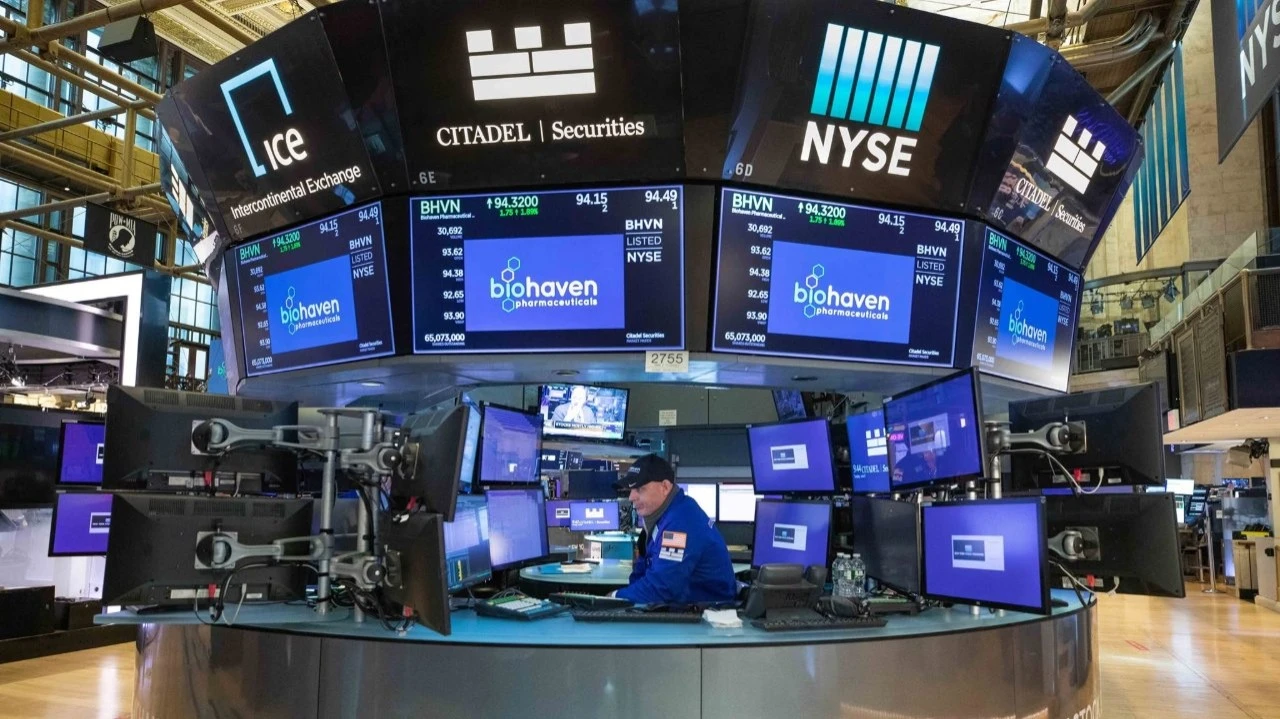
This comes a day after Intercontinental Exchange, which owns the New York Stock Exchange, announced an investment of up to $2 billion in the platform. Polymarket for the deal was valued at about $8 billion before the fundraising and $9 billion after. Koplan's stake in Polymarket is 11%, Forbes said.
A few years ago, he had to sell furniture to scrape together enough to rent an apartment, and the first lines of code for his brainchild the current billionaire wrote on his knees in his bathroom.
Now Wall Street is taking its platform's data into account for calculations. For example, Goldman Sach used them for its oil market forecasts this summer during the escalating Israel-Iran conflict.
How did he monetize the idea of a decentralized prediction world?
A boy from a good family
Coplan grew up on New York City's Upper West Side with his mother, a professor of film studies at New York University. He attended The Beacon School, one of Manhattan's prestigious public schools. As a teenager, Coplan learned to program and became interested in blockchain, Fortune Crypto writes. He became the youngest participant in Ethereum's initial public offering in 2014 - at $0.3. Koplan was 16 years old that year.
In 2015, he interned at music service genius.com and worked on a project for Spotify, and in 2016, he interned at chronicled.com, which develops blockchain solutions for the natural sciences industry, according to niche publication Bee.com. At the same time, Koplan enrolled at New York University, where he planned to study computer science, but eventually dropped out in order to fully engage in crypto projects.
He first created the startup Union Marketplace, "amarketplace on blockchain for delegating stakes." And in June 2020, Koplan launched Polymarket.
"As the pandemic began, I literally had nothing to lose: I was 21 years old, running out of money, it had been 2.5 years since I had dropped out of school, and I had nothing left. But I realized that we were entering an era where the search for truth would be more important than ever, and Polymarket could play a crucial role in that."
In a podcast with American statistical scientist Nate Silver in October 2024, Coplan said that in creating Polymarket he was inspired by the work of Robin Hanson, an economist at George Mason University and the Institute for the Future of Humanity at Oxford University. He was attracted to his idea of futarchy as a form of governance where politicians would rely on prediction markets to make decisions.
He also mentions one of his favorite essays, Frederick Hayek's The Use of Knowledge in Society from 1945. His basic idea is that knowledge held by large numbers of people is a more accurate reflection of reality than any centralized source of information.
The theory behind prediction markets is essentially the same as Hanson's, only the desire to get closer to the truth is backed by real money from users. And Coplan became a billionaire thanks to the commercialization of this idea.
He himself gives the impression of a keen geek.
"He wants to talk about it forever. It's his life. He lives it," Rob Hedick, a partner at venture capital firm Dragonfly, one of Polymarket's investors, tells Fortune Crypto.
He added that at the first meeting, Coplan eschewed a formal presentation and instead suggested a walk, which turned into a two-hour stroll through New York City, during which Coplan talked nonstop to Hedick about prediction markets.
Fortune Crypto recounts another incident: he showed up to a dinner party in Manhattan wearing jeans and a leather jacket.
"Coplan was easily recognizable by his unruly hair and laid-back demeanor that set him apart from the other founders."
How does it work?
Polymarket has become the new "oracle" of the modern information market. A study by Dune and data scientist Alex McCullough published in March this year indicated that the platform's prediction accuracy exceeds 95% four hours before an event, 90% 12 hours, 89% a day before the outcome. In his interview with CNBC, Shane Coplan jokes that Polymarket has already become a verb like Google, implying that it is used when one needs to understand what the outcome of an event might be.
On Polymarket, you can find bets on the outcome of the New York mayoral election, the Fed's actions, when the conflict in Gaza will resume, or whether Taylor Swift is pregnant before marriage. Manager David Tawil wrote in X in August that sports betting accounts for about 40% of sales volume on the platform, and another 40% is betting on cryptocurrency movements.
A "yes" or "no" bet is valued at $1. If a bet with a "yes" answer, for example, is trading at $0.66, this implies a 66% probability that the event will occur. Bets can be traded before the event is resolved. This allows you to withdraw funds or sell your bets at a higher price if the probability of the event increases.
Trading volume on the platform has totaled $2.2 billion in the past 30 days and exceeded $20 billion for the entire period, according to DeFiLlama.
The platform is based on Ethereum and Polygon's scaling tool on the MATIC koins - a kind of "gas pedal" for the Ethereum-based blockchain, Benzinga writes, which enables faster and cheaper transactions.
At this stage, the company is still not profitable, Coplan told CNBC . It's unclear to the end how the platform makes money. It doesn't have fees for bets, subscriptions and so on. It charges a USDC fee to cover transaction costs and reward liquidity providers, writes cryptocurrency market analysis service provider AiCoin. Liquidity providers also get a portion of the turnover, ValueWalk writes.
So far, the platform has mainly lived on venture capital funding. According to Crunchbase, since its foundation it has raised a total of about $2.3 billion from investors. Excluding the deal with ICE, the volume of investments amounted to at least $255 million. Among the first investors Forbes names Polychain Olaf Carlson-Wee. In addition, the company managed to raise funds from General Catalyst and Peter Thiel's Founders Fund. Coindesk points out that among the investors of the project in 2024 was the creator of Etherium Vitalik Buterin.
Betting on Trump
Most of the hype surrounding the platform came before the U.S. election last November 5.
In October 2024, the Polymarket application was downloaded 50 thousand times daily. The volume of bets on the winner of the presidential election on Polymarket exceeded $3.6 billion. Since then, no other event has been able to raise so much money on the platform.
On November 4, Polymarket gave Trump the edge - his chances of winning were estimated at about 57%, compared to 43% for Harris, while classic polls showed equal chances of success. The platform has been plagued by accusations of political bias, especially after news of a $28 million bet from four accounts linked to a French user. Such activity could have affected the rating of the bet itself and the perception of the outcome of the election by other users.
Polymarket conducted an independent investigation with the firm Nardello & Company, which found no attempt at market manipulation, The New York Times wrote.
But nearly two weeks after the election, on Nov. 13, at 6 a.m., FBI agents came to Coplan's home in New York's Soho to search it - he himself was not detained, the agents seized his phone and other gadgets.
The reason was an open investigation by the Ministry of Justice and the U.S. Commodity Futures Trading Commission (CFTC) after the election about the platform's compliance with the law. The fact is that since 2022, Polymarket has been banned from conducting operations in the States. Three years ago, the CFTC accused it of violating the law on commodity futures - the Commission considered bets on the outcome of events as derivatives that were not registered. Polymarket was ordered to pay a $1.4 million fine and block access for U.S. users. But the service continued to promote itself in the U.S. market and "turned a blind eye" to the use of VPNs in trading. This, Fortune wrote, led to a new investigation and searches at Koplan's home.
But in the end, everything was resolved in the best way for Polymarket and Coplan himself - in July 2025, he announced that the case was closed. In the same month, Polymarket announced the purchase of QCEX, a U.S.-registered derivatives exchange and related clearing unit, for $112 million.
Already in August, Shane Coplan wrote in X that Donald Trump Jr.'s venture capital fund 1789 Capital had invested in the platform. He also became a member of the platform's advisory board.
The exact amount of the investment was not disclosed, a Reuters source said it was several tens of millions of dollars.
Bloomberg writes that Trump Jr. has invested in the platform ahead of the 2024 election as well. The president's son is also an advisor to Polymarket's competitor Kalshi. The president's family's interests in the prediction market don't end there: On October 27, Bloomberg reported that Trump Media & Technology Group plans to launch its own Truth Predict service for betting on events on its Truth Social network.
Already in September, the CFTC issued a no-action letter against the platform, essentially giving Polymarket the green light to return to the U.S. markets.
The company plans to relaunch in the U.S. soon, CoinDesk wrote .
Oracles, arbitration and future plans
Despite the triumphant return to the US, questions remain about the platform.
An October 30, 2024 Fortune Crypto investigation based on blockchain data found that about a third or more of bets on Polymarket are actually wash trades, or "dummy trades." That is, someone is secretly betting on both forecast resolution options. Such actions can be regarded as manipulation - they artificially inflate trading volumes and distort the perception of the probability of the outcome of events. Polymarket declined to comment to Fortune Crypto on the results of the investigation.
An August 2025 study by Oriola Saguillo, Vahid Ghafouri, Lucianna Kieffer and Guillermo Suarez-Tanguil of the IMDEA Networks Institute and Oxford Internet Institute was published. They studied how arbitrage trades work within the platform and found that the profits generated from them amounted to $40 million from April 2024 to April 2025.
Arbitrage opportunities arise when a user bets on both outcomes of a single event or on related events at once, and the prices of those bets go up or down because they are traded. The researchers parsed 86 million bets, trying to find instances of arbitrage within a single prediction market, in related markets, and within single-condition predictions. They found hundreds of users who used undervalued or overvalued bets to make profits.
Owners of the three largest wallets studied by the researchers made a total of more than 10,000 bets over the course of a year, generating $4.2 million. Most of the bets were made through automated programs. "We see some very large players behaving like bots, judging by the number of bids they are involved in," the study said.
In addition, CoinDesk wrote about another vulnerability in March. Polymarket uses an "optimistic oracle" based on UMA tokens to resolve disputes when the result of a forecast is ambiguous. Holders of these tokens vote for one or another resolution of the dispute.
In the spring of 2025, this system came under attack - BornTooLate.Eth user BornTooLate, who owns 1.3 million UMA tokens, making him one of the five largest holders of them, voted in favor in a controversial situation concerning Ukraine's signing of a rare earth metals deal.
What are investors waiting for?
Despite the media and social media hype, it's still unclear exactly how the company will make money, Fortune writes.
The most obvious model is to charge commissions, Fortune points out. Polymarket's competitor, Kalshi, already charges about 1% commission on customer bets. Polymarket alone could easily make several hundred million dollars a year, according to Robert Hadik, general partner at Dragonfly Capital, one of the platform's investors.
But the question arises, Fortune writes, can sites like Kalshi and Polymarket generate sustained user interest - and revenue - beyond presidential election cycles?
Of course, Polymarket's aggregated data on market sentiment covering politics, economics, sports and other areas are also valuable. ICE head Jeffrey Sprecher said in an interview with CNBC that the company plans to distribute Polymarket market data through its network.
Another source of profit could be cryptocurrency. Polymarket may release its token in 2026, CoinMarketCap wrote, citing sources. The release of POLY token was also confirmed by Polymarket's chief marketing officer Matthew Modabber. But he did not give a specific timeline.
This article was AI-translated and verified by a human editor