Highlights for this morning: Middle East rushes into AI, Google creates glasses, Nvidia goes to China
The Middle East, in Ray Dalio's estimation, is turning into a "Silicon Valley of capital", attracting talent and billions of investments in AI infrastructure. Google has announced the launch of its first AI glasses in 2026, competing with Meta in the AI-wearables segment. About these and other topics - in our review of key events by the morning of December 9.
Trump has authorized the sale of powerful Nvidia H200 chips to China
Donald Trump has authorized the sale of more powerful Nvidia H200 AI chips to China, a move that was previously blocked due to export restrictions, Yahoo Finance reports.
In response, Beijing has responded "positively", according to Trump, and Nvidia has agreed to increase its US sales royalties to 25%. Nvidia CEO Jensen Huang insists that the presence of US technology in China is a strategic advantage, as the country is "home" to half of the world's AI developers, the publication notes.
However, critics warn that supplying high-performance chips could strengthen the capabilities of Chinese corporations and the military. For example, Senator Elizabeth Warren accused the Trump administration of undermining national security and linked the decision to donations to the construction of the new East Wing of the White House made by Nvidia and other tech giants.
Google will return to the smart glasses market in 2026
Google has announced that its first AI glasses will come out in 2026, through partnerships with Samsung, Gentle Monster and Warby Parker, CNBC reports. The company is preparing two lines: audio glasses to communicate with the Gemini assistant and models with a mini-display in the lens that will show navigation and translations. The devices will run on Android XR.
The AI eyewear market is growing rapidly, the channel notes, with Meta leading the way thanks to the successful Ray-Ban Meta and its own display glasses. Snap and Alibaba are also working on devices. In returning to the market, Google is betting on more mature AI technologies and improved production chains - lessons, as Sergey Brin noted, learned from the failure of the first Google Glass.
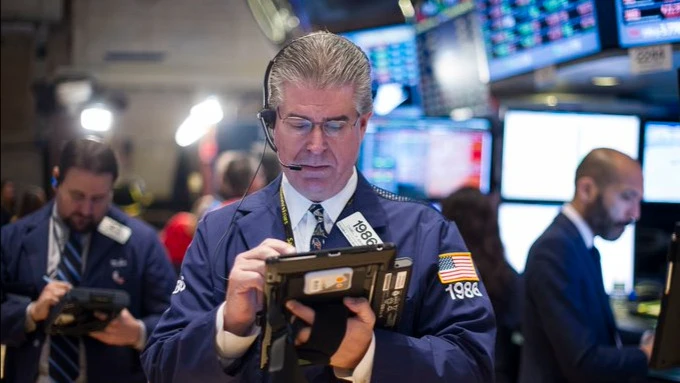
Carvana, CRH and Comfort Systems rose sharply after being included in the S&P 500
Shares of Carvana and two other companies - CRH and Comfort Systems USA - soared on Monday, Dec. 8, following the announcement that they will join the S&P 500 index as part of a quarterly rebalancing, The Wall Street Journal reports. Carvana's stock rose 12% and hit an intraday record, approaching $450.
CRH and Comfort Systems also posted gains, up about 6% and 1%, respectively. Adding to the S&P 500 usually strengthens demand for company stocks thanks to inflows from index funds and institutional investors.
Dalio: The Middle East is becoming the "Silicon Valley of capital"
Bridgewater founder Ray Dalio said the Middle East is rapidly becoming one of the world's leading centers for artificial intelligence, comparing the region to Silicon Valley, CNBC reported. He said the UAE, Saudi Arabia and Qatar are attracting huge capital and talent, building infrastructure for AI - from data centers to billion-dollar deals with Google Cloud, Nvidia, OpenAI and other partners.
Dalio said the region has become a "magnet" for investors and engineers, and its development is the result of a long-term government strategy. At the same time, he warned that the global economy as a whole faces a difficult period in the next year or two. Dalio sees signs of a bubble in the markets, reminiscent of the situation in 2000. According to the analyst, this is indicated by the growth of debts, political polarization in the U.S. and geopolitical risks.
What's in the markets
- Japan's broad Topix index was little changed, with the Nikkei 225 up 0.2 percent in Dec. 9 trading.
- Hong Kong's Hang Seng index lost 1.38%, while mainland China's CSI 300 index fell 0.75%.
- In South Korea, the Kospi index was down 0.26%, while the Kosdaq added 0.32%.
- Australia's S&P/ASX 200 was falling 0.45 percent.
- S&P 500 futures, Nasdaq Composite futures and Dow Jones Industrial Average exchange-traded contracts were little changed.
This article was AI-translated and verified by a human editor