Highlights of the week: US-Russia summit, White House and Intel stake, buyer for Chrome

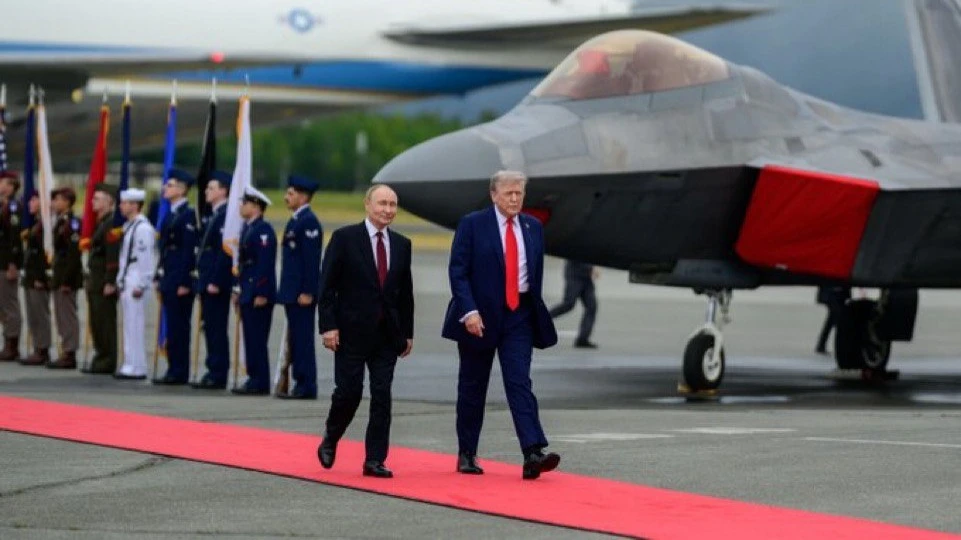
US and Russian Presidents Donald Trump and Vladimir Putin held talks on Ukraine in Alaska on Friday. On his way to Anchorage, Trump told reporters that duties on chip imports could reach 300%. Earlier in the week, USA stock markets rose to new records amid expectations of a Fed rate cut. Perplexity unexpectedly offered to buy Google's Chrome browser, and the US administration is exploring buying a stake in Intel. Sam Altman is preparing to launch a startup that will become a competitor of Elon Musk's Neuralink - the rivalry between them is intensifying. The main events of August 11-15 are in our review.
Trump and Putin have not reached an agreement
The heads of the USA and the Russian Federation met in Alaska in a three-on-three format - in addition to the presidents, the foreign ministers of both countries and their aides participated in the meeting. The meeting was held without the participation of Ukrainian officials. The talks lasted almost three hours. Both leaders called the meeting productive, but Trump made it clear that the path to ending the conflict between Russia and Ukraine has not yet been determined.
"We had an extremely productive meeting and there was agreement on a lot of issues, most of them. I would say there are a couple of big ones that we haven't reached full agreement on yet, but we've moved forward. There's no deal, there's no deal yet," the US president said without revealing details.
After meeting in Alaska, Trump spoke with Ukrainian President Vladimir Zelensky and also spoke with European and NATO leaders early Saturday morning, according to the Associated Press. Zelensky confirmed in his Telegram feed that there was a "long, meaningful conversation with President Trump, first one-on-one and then also with the participation of European leaders." He added that he will meet Trump on Monday, August 18 in the United States.
Trump threatened 300% duties on chips
Trump told reporters on Friday that duties on U.S. semiconductor imports could rise by up to 300%, Bloomberg wrote. He said he would impose duties on chips and steel within the next two weeks. However, Bloomberg doesn't rule out that Trump may have misspoke on steel duties: in June, he already raised duties on steel and aluminum imports to 50%. The rates will be "lower in the beginning ... and very high after a certain time". "I will have a rate that will be 200%, 300%?" - the US president said. He gave no other details.
Following the news, shares of chip makers Advanced Micro Devices, Broadcom and Nvidia fell 1-2%. The VIX volatility index, known as the fear index, soared 0.6%. Last week, Trump talked about 100 percent levies on semiconductor imports. Companies that move production to the U.S. would be exempt from that tax, he clarified.
US may buy a stake in Intel
Donald Trump's administration is in talks with Intel about a possible acquisition of a stake in the company, Bloomberg reported, citing sources. It is not known about which stake we are talking about. After this news, Intel shares rose more than 7% on Thursday, August 14. During the week, quotes added more than 23%. The deal will allow the chipmaker, which is trying to overcome the crisis, to finance the project to build an Intel plant in Ohio. According to the company's idea, the plant was to become the world's largest chip production center, but its launch has been repeatedly postponed. The idea of a possible deal appeared soon after Trump met with Intel head Lip-Bu Tan, whom the president previously accused of ties with China and called for his resignation, Bloomberg noted.
Intel is the only U.S. manufacturer capable of producing the fastest chips, making it a strategic asset for Trump's plans to boost domestic high-tech manufacturing. However, the company is losing technological leadership and market share, and a potential deal would strengthen its position. Intel is cutting costs, laying off employees and delaying the startup of new capacity, hoping to attract big customers to develop next-generation chips.
What else should I read about Intel?
- In the second quarter of 2025, Intel's net loss grew by 80%, but revenue was better than analysts' expectations. What revenue forecast the company has given for the current third quarter - in the article by correspondent Vladislav Osipov "Intel's revenue forecast exceeded expectations. Why did its shares fall?".
Berkshire Hathaway has invested in UnitedHealth
Warren Buffett's Berkshire Hathaway bought more than 5 million shares of insurance company UnitedHealth for about $1.6 billion in the second quarter, making it the 18th most heavily weighted position in the company's portfolio, CNBC noted. The investment came as a surprise to the market because of the company's reputational problems, but is in line with Buffett's strategy of buying undervalued assets. UnitedHealth shares rose 10.5% after Berkshire's earnings release, while losing about 50% of their value since the beginning of the year. The insurer's securities, which fell in price, attracted other investors. Among them Michael Burry (Scion Asset Management) and David Tepper (Appaloosa Management).
The largest private health insurer is going through a series of problems. In December, the CEO of UnitedHealthcare, Brian Thompson, the division that handles the Medicare program, was shot dead in the heart of New York City. Luigi Mangione was charged with murder. UnitedHealth is now under investigation by the U.S. Justice Department over its Medicare billing practices. In the spring, the company withdrew its full-year outlook and CEO Andrew Whitty resigned. In July, UnitedHealth issued a new forecast that was noticeably weaker than Wall Street's expectations, adding pressure to the stock.
What else is there to read about it?
- What other deals reported Berkshire wrote in the material "Unexpected deal: Buffett's Berkshire revealed a new investment for $1.6 billion".
- How UnitedHealthcare used artificial intelligence in its business and faced a class action lawsuit from its clients - in the material by Oninvest columnist Roman Kutuzov "Money, bullets and AI: why the CEO of UnitedHealthcare was killed".
S&P 500 and Nasdaq hit records on expectations of Fed rate cuts
On August 12, the S&P 500 and Nasdaq hit all-time highs on the back of lower-than-expected U.S. inflation data. This reinforced market expectations that the Fed will cut rates as early as September. The S&P 500 exceeded 6400 points for the first time, the Nasdaq added almost 1.4% and also closed at an all-time high, the Dow Jones rose 1.1%. The Russell 2000 index of small-capitalization companies, which benefit most from lower short-term borrowing rates, is up 3%. Markets are laying out three rounds of easing before the end of the year.
July's Consumer Price Index (CPI) rose 2.7% year-over-year, less than Wall Street had expected. The core CPI rose 3.1% on a year-over-year basis. "Those who expected a noticeable impact of duties on consumer prices in July were mostly chasing ghosts," said Jason Pride, director of investment strategy and research at Glenmede. - This is another additional argument in favor of a rate cut in September."
Lower yields and the prospect of Fed policy easing are supporting the technology sector and growth companies, but analysts warn: new duties coming into effect in August could boost inflation over time, and the trigger for a market correction will be either a sharp price shock or a recession.
What else is there to read about it?
- Read more about what reaction on Wall Street caused the publication of inflation data in Oninvest's piece "S&P 500 and Nasdaq Composite set records after encouraging inflation data".
U.S. stocks at peak value in more than 20 years - BofA
More than 90% of fund managers believe U.S. stocks are overvalued - a high since 2001, a Bank of America survey of 169 managers with $413 billion under management showed, Bloomberg wrote. Despite that, optimism persists: the share of cash in portfolios fell to 3.9%, and equity investments rose to their highest level since February - a level historically considered a sell signal.
Capital is leaving Europe for emerging markets, as well as the utilities, energy and financial sectors. The leading strategy is longing the "Magnificent Seven" of major tech companies. Most participants are confident that AI is already boosting productivity and not creating a bubble.
Nevertheless, BofA strategist Michael Hartnett warns: if the US eases monetary policy and regulation, the current rally could turn into a bubble.
White House adds new names to list of nominees to head the Fed
The White House has added new names to the list of candidates for the position of Fed chief, who will succeed Jerome Powell in May 2026. Among the candidates are two current deputy heads of the regulator Michelle Bowman and Philip Jefferson, as well as the president of the FRB Dallas Laurie Logan, wrote Bloomberg. Treasury Secretary Scott Bessent will talk to them in the coming weeks and present a shortlist to U.S. President Donald Trump. A final decision is expected to be made in the fall.
Bowman was appointed to the Fed's Board of Governors in 2018 by Trump himself; in July, she was one of two members of the Federal Open Market Committee (FOMC) who favored a rate cut. Jefferson and Logan favored keeping the rate on hold, emphasizing the inflation risks associated with trade duties. Christopher Waller, whom Bloomberg called the favorite to head the Fed, was the second FOMC member to vote for a rate cut at the July meeting.
What else is there to read about it?
- What is known about the new contenders for the post of head of the Fed and who else in the list of potential heads of the regulator - in the material "The White House expanded the list of candidates for the post of head of the U.S. Federal Reserve instead of Powell - Bloomberg".
Perplexity offered Google $34.5 billion for Chrome
AI developer Perplexity has unexpectedly offered to buy out Google's Chrome browser for $34.5 billion - almost double the startup's valuation. The deal is ready to be financed by large venture capital funds, The Wall Street Journal wrote with reference to Perplexity.
Estimates of Chrome's value range from $20 billion to $50 billion, but Google has not previously expressed a willingness to sell the browser. The initiative coincides with a pending court ruling that could order Alphabet to sell Chrome to restore competition after an antitrust lawsuit by the U.S. Justice Department. Perplexity's offer could be a signal to the judge that there is an interested buyer who could force a sale, the WSJ said.
Chrome accounts for more than 60% of the global browser market and is used by about 3.5 billion people. Analysts believe that a forced sale is unlikely, but in case of its realization, Alphabet's shares may fall by 15-25%. Barclays warned: this would be a "black swan" for the company, which could dramatically change its market position.
What else is there to read about it?
- How Google is adapting to the growing number of AI search users - in the material of journalist Roman Moguchy "To break its search before competitors do it": how Google confronts AI".
Sam Altman is preparing a new competitor to Elon Musk's Neuralink
OpenAI CEO Sam Altman is preparing to launch a new startup, Merge Labs, which will develop brain-computer interfaces. According to Financial Times sources, the company's preliminary valuation is about $850 million, most of the funding will come from OpenAI's venture capital arm. Alex Blania, head of Tools for Humanity, a company known for its eye-scanning digital identification system, which Altman also backs, may become a partner in the project. There has been no official announcement yet, but Altman described the idea of "The Merge" back in 2017.
Merge Labs will be a direct competitor to Elon Musk's Neuralink, which is developing implantable chips to control devices with the power of thought. Neuralink is already testing the technology on patients with severe paralysis and has raised $600m this year at a valuation of $9bn, the FT writes. Its investors include Sequoia Capital, Thrive Capital and Vy Capital. Altman has also previously invested in Neuralink.
Musk and Altman were co-founders of OpenAI. Musk left the company in 2018 and since then, relations between the two have cooled considerably. This week, they exchanged harsh remarks again on social network X. Musk accused Apple of giving OpenAI an advantage in the App Store and threatened antitrust proceedings. He believes this is the reason why his chatbot Grok and social network X are not in the top charts. Altman responded by claiming that Musk is using X for personal gain and to disadvantage competitors. The conflict unfolds against the backdrop of Apple's partnership with OpenAI, which integrates ChatGPT technology into the company's new iPhones and other devices.
What else is there to read about OpenAI?
- Last week, OpenAI, which created the ChatGPT chatbot, released a new artificial intelligence model, GPT-5. Alman called it an important step toward general artificial intelligence (AGI) that will equal or surpass human intelligence. To learn more about what GPT-5 can do, see Team of experts with PhDs: OpenAI reveals new AI model GPT-5.
This article was AI-translated and verified by a human editor