How investors can protect themselves when things fall apart: tips from Ray Dalio
The legendary investor explained in a new interview why fiat currencies are inevitably losing to gold, what the threat of the yuan is and how to protect your capital
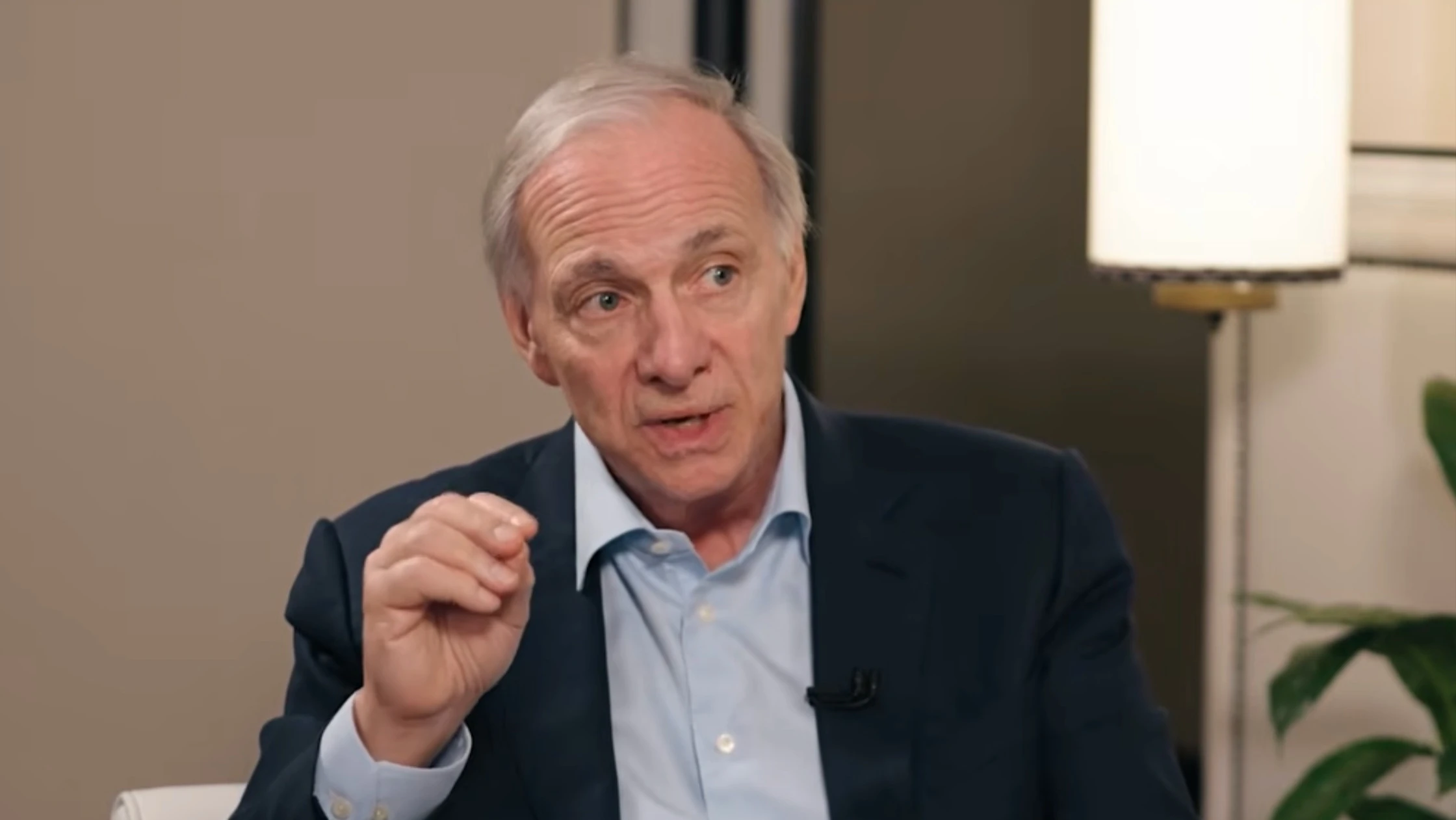
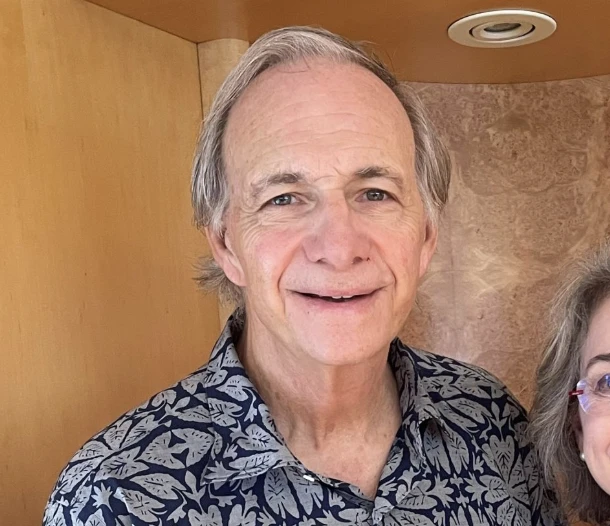
According to Dalio, only one asset can protect investors in the face of global currency depreciation / Photo: screenshot of Ray Dalio's interview with Tucker Carlson
Ray Dalio, founder of hedge fund Bridgewater Associates, in an interview with Tucker Carlson, warned about the risks of the current monetary system and questioned the reliability of the dollar. What he advises investors seeking to protect capital in the context of global currency depreciation - in Oninvest's material.
The mechanics of "slippage": why the system stops working
Dalio is convinced that we are at a moment when the usual financial mechanisms are no longer working. In his opinion, this process does not always look like an instant collapse - more often it is a gradual "slide", the scale of which people realize only after a while. Dalio sees the core of the problem in a critical imbalance of supply and demand in the government debt market: when the government spends more than it earns and there are not enough buyers for its bonds, the central bank is forced to print money to keep rates low.
"Eventually the central bank buys that debt and becomes the owner of the government bonds. It starts losing money because it is holding these securities while market rates on them are rising. The authorities have to create even more money and debt to keep rates low, and as a result they lose more and more money," Dalio explains. Such dynamics, he says, inevitably change capital flows and force investors to seek refuge in assets that cannot be devalued by printing.
Here's what he advises investors:
Gold
Dalio is betting on gold: it is not someone else's obligation and does not depend on someone else's solvency. As long as investors actually hold government receipts, the holder of the metal is protected from the risk of someone else's default.
At the same time, he admits that many people ignore the metal because they have become accustomed to measuring wealth in dollars alone over decades of peace. They see currency as a reliable measure of value and simply do not believe that paper money can depreciate.
"People look at it through the prism of the dollar and see gold going up. But you can look at the world through the prism of gold and see money falling. All I'm saying is: because of their experience, people think currency depreciation is impossible. But it's like the Tooth Fairy or Santa Claus - you believe in these things and then you realize the reality - and that's why surprises happen"
For Dalio, gold is first and foremost the second most important form of world money, a status confirmed by central bank reserves. It becomes the real measure of value when the usual paper systems stop working.
Digital currencies
Dalio urges not to look for salvation in central bank digital currencies (CBDCs). He sees their introduction as inevitable, but does not believe they will solve the problem of money devaluation. According to the investor, central bank digital currencies will resemble money market funds without interest, making them ineffective for saving capital. But the main consequence of the transition to digital, Dalio says, will be the transformation of currency into an instrument of absolute power of the state over the transactions of the population.
"There will be no privacy, and this is a very effective control mechanism by the state. All transactions made in digital currencies will be known. And states will have enormous power, for example, they'll be able to levy taxes that way. They'll be able to take your money, they'll be able to impose currency controls"
In such a system, the investor said, the risk of a complete asset lockup becomes a reality for anyone who finds themselves in political disgrace or under sanctions. "For these reasons, and because the share of central bank digital currencies is negligible right now, I don't think they will grow to the scale to become something truly epochal. That's not to say that this trend won't grow, but I don't think it will become something huge," Dalio said confidently.
Yuan
Dalio broadcasts the same skepticism about the yuan as an alternative to the dollar. Despite China's leadership in global trade, Dalio is skeptical about the yuan's chances of becoming a full-fledged reserve currency. He divides the currency's functions into a medium of exchange and a store of value. While the yuan will strengthen as a payment instrument, it loses out as a savings asset due to the lack of private capital protection.
"Who would trust China with their wealth under their currency controls? China has a history of measures against private capital. It's not the best reputation for 'I'll protect your wealth' style..... You can't fully own land or real estate. It will be very difficult for them to "sell" the value preservation function to the world"
Financial Survival Strategy by Ray Dalio
In the face of increasing economic instability, Ray Dalio recommends that private investors shift their focus from global forecasts to concrete steps to protect capital and personal safety.
Central to his approach is the principle of "gold balance", where the metal serves not as a means of making money, but as insurance against the drawdown of all other assets.
"The optimal proportion for a private investor, depending on the composition of their assets, can be between 5 and 15% of a portfolio. When traditional money is doing badly, gold feels good"
But Dalio believes that financial diversification is only the first layer of defense. In times of global turmoil, long-term sustainability depends on adherence to what he considers basic principles.
"Earn more than you spend, try to save, diversify your portfolio..... And most importantly, raise your children well so they are well educated so they can be productive. Go to places where there is order, productivity and opportunity, and stay away from civil and international wars"
This article was AI-translated and verified by a human editor