How much could SpaceX be worth? Cathie Wood's Analyst Prediction
ARK Invest describes three scenarios for Elon Musk's space company - and based on them assesses its potential value

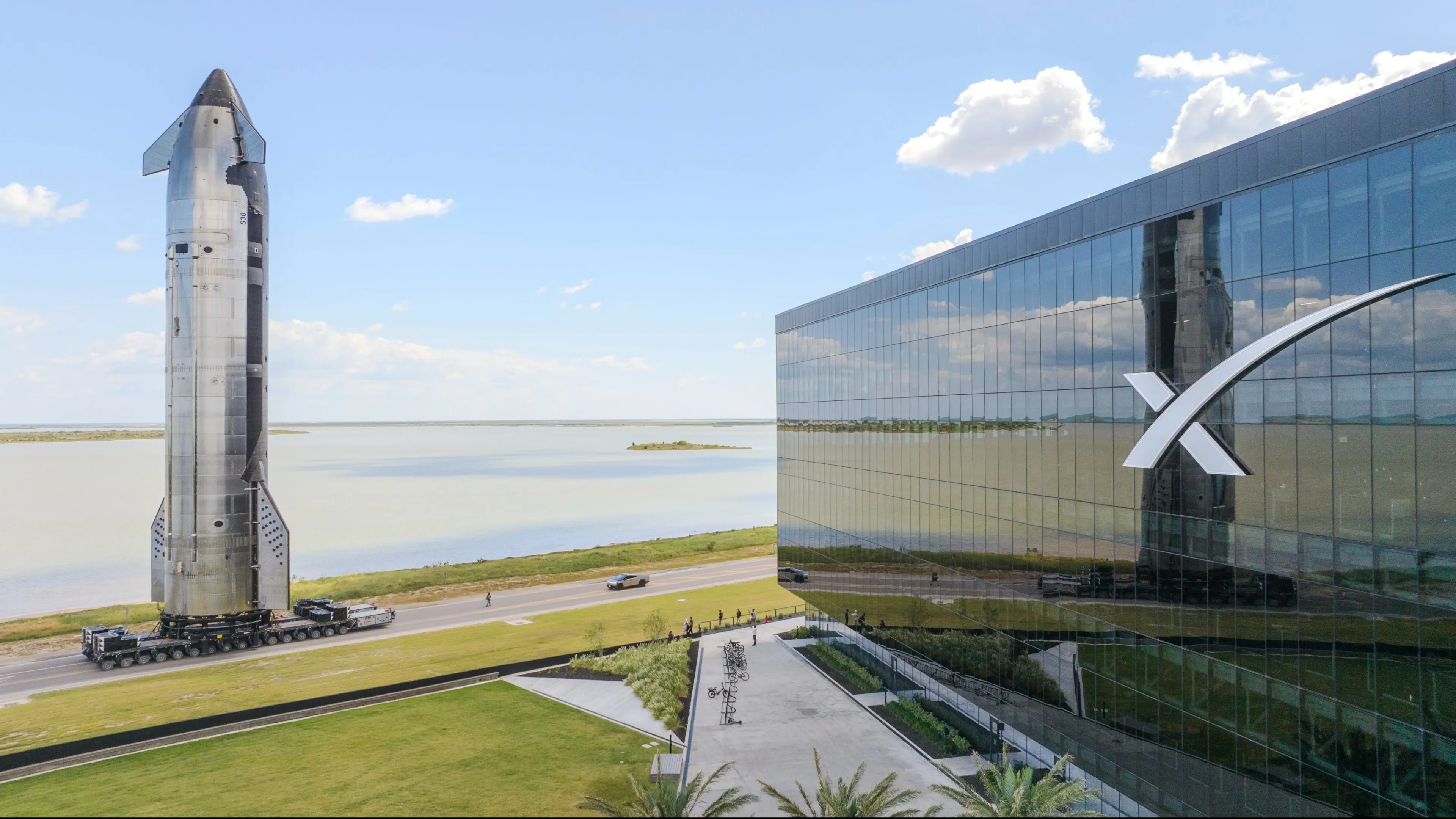
Elon Musk's space company SpaceX is going to hold the largest IPO in history, sources told Bloomberg on December 9. According to them, the company hopes for a valuation of about $1.5 trillion and may float shares on the stock exchange in mid or late 2026.
Now SpaceX is preparing a major secondary deal, in which it could be valued at more than $800 billion, according to Bloomberg's interlocutors. The Wall Street Journal wrote about the deal a few days ago, but its sources said that the SpaceX valuation would only reach $800 billion. After the WSJ article was published, Musk called it "inaccurate", but clarified that the value of SpaceX is growing thanks to the development of the Starlink satellite internet and Starship spacecraft projects.
SpaceX has not confirmed either preparations for a secondary stock sale or plans for an IPO. Musk has previously allowed a public offering, but said that the first candidate for listing should be the spun-off Starlink after reaching a sustainable cash flow.
How much SpaceX could be worth in 2030
For the potential valuation of SpaceX, analysts at ARK Invest used computer simulations to analyze thousands of plausible scenarios. The basis of their analysis is the thesis that the value of SpaceX will be determined not by experimental projects, but by the economics of the satellite Internet Starlink. According to ARK estimates, once the network reaches full capacity, Starlink can bring up to $300 billion in annual revenue and take about 15% of the global communications market. This makes the project the largest in the history of commercial telecom initiatives and forms the basis of the baseline scenario.
The second pillar is the dynamics of Starship development, designed for cost-effective delivery of cargo and people to Earth orbits and for interplanetary missions to the Moon and Mars. ARK applies Wright's Law to it: as experience and the number of launches accumulate, the cost of each subsequent launch decreases inevitably and quite rapidly. If Starship achieves a high flight frequency and stable reusability, the cost of launching satellites will drop dramatically and the pace of network deployment will accelerate. It is this bundle that forms the "flywheel" that determines the upper limit of the possible valuation.
SpaceX's Martian program and Optimus humanoid robots, which are supposed to build infrastructure there, are taken into account in the model, but ARK admits: they are unlikely to bring significant cash flow until 2030. Right now, it is an investment, not a source of profit.
Here's what ARK Invest predicts the company will be worth by 2030:
- Baseline scenario
The value of SpaceX in 2030 is about $2.5 trillion. This scenario reflects the trajectory that ARK considers most realistic: stable expansion of the Starlink network, gradual decline in the cost of data and building up the customer base. The forecast assumes average annual growth in value of about 38% from the valuation of the last private round.
- Optimistic scenario
The value of SpaceX in 2030 is about $3.1 trillion. The scenario is based on the rapid progress of Starship, increasing satellite capacity, launching at a level that will allow SpaceX to grow faster than competitors. Starlink becomes a telecom-scale infrastructure and SpaceX becomes a next-generation global communications platform.
- Pessimistic scenario
SpaceX's value in 2030 is about $1.7 trillion. This scenario assumes that the rate of constellation upgrades and satellite performance is lower than expected, and Starship will ramp up launch frequency more slowly. In this case, Starlink's economics remain profitable, but its growth would be limited.
ARK Invest strategists emphasize that the modeling results are not an attempt to guess a specific valuation, but a reflection of the range of possible development trajectories. The company's value may be affected by technological delays, difficulties with Starship reusability, regulatory restrictions, competition in the satellite communications market and any external events that could change the growth rate of the industry. ARK Invest believes that SpaceX has a unique scaling potential, but does not rule out that its realization will require more time than optimists currently assume.
What investors should do
Retail investors cannot invest directly in SpaceX right now. But ARK has selected several public companies that may be of interest to investors looking to capitalize on space. In early December, Cathie Wood's fund launched the ARK Space & Defense Innovation ETF (ARKX), an exchange-traded fund that invests in companies working in aerospace, defense, autonomous systems and satellite infrastructure. Here are the companies the fund is betting on:
- Kratos is a military-industrial company with a focus on the development and production of jet-powered unmanned aerial vehicles, space and satellite communications systems, cybersecurity and missile defense. Since the beginning of the year, Kratos shares have added almost 200%. Such dynamics is largely due to the modernization programs of the U.S. Army and the lifting of restrictions on the export of attack drones.
- Rocket Lab is a private space company, which is called a competitor of SpaceX. Rocket Lab produces ultralight Electron launch vehicles, develops a reusable medium-class rocket Neutron, develops Space Systems (satellite platforms, components, solar panels, etc.). Despite the postponement of Neutron's debut flight, the company's stock is up nearly 12% in November 2025. Rocket Lab's quarterly revenue beat Wall Street forecasts, while its net loss was smaller than expected.
- Archer Aviation is developing urban eVTOL cabs, focusing on short hauls and partnerships with airlines and automakers. The company is still unprofitable, but Motley Fool considers it promising: more than $2 billion in liquidity will provide the company with many years of active development.
In addition, ARKX's top ten positions include automated test equipment manufacturer Teradyne; L3Harris Technologies, a company that makes control systems, radio communications equipment, and antennas for ground and space applications; defense and aerospace company AeroVironment; agricultural equipment manufacturer Deere & Co; military software developer Palantir; commercial GPS pioneer Trimble; and microprocessor manufacturer Advanced Micro Devices.
This article was AI-translated and verified by a human editor