How not to invest in autocracy: a guide to working in emerging markets
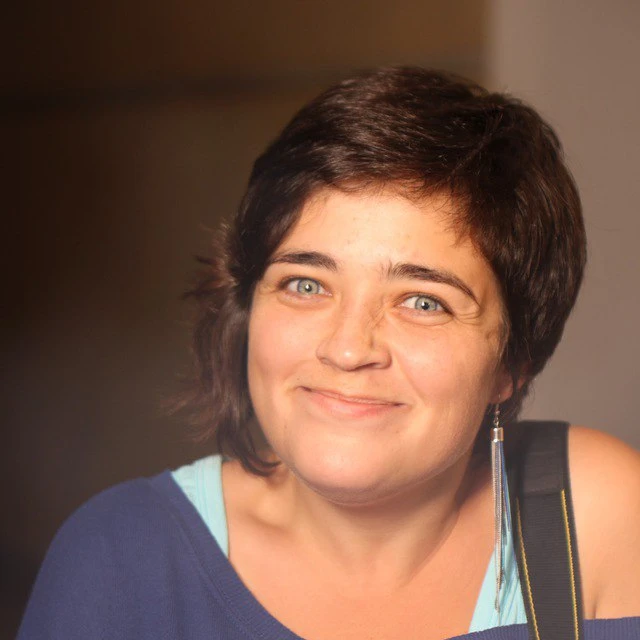
Selecting countries for the portfolio by level of freedoms helps manage specific risks, says Perth Toll, founder of Life + Liberty Indexes / Photo: Shutterstock.com
The traditional method of compiling emerging market (EM) indices, which ties a country's weighting to its stock market capitalization, results in the quality of government and political regime not being taken into account, says Perth Toll, founder and CEO of Life + Liberty Indexes. In practice, she says, it turns out that huge investments are directed to countries with authoritarian governance.
"The largest autocracies in the emerging market segment - such as China, Russia and Saudi Arabia - have historically received the most weighting. Prior to the war (in Ukraine - Oninvest), all three nations were in the top 10 of most emerging market indices. At the height of the pandemic, China accounted for 41% of the MSCI Emerging Markets index, and even now that figure is almost 30%," Toll said on Barry Rietholtz's recent podcast.
Toll has developed a different approach: determining country shares in a portfolio based on the level of civil and economic liberties. How can investors in emerging markets use her methodology to avoid political risk?
Why do we need economic pragmatism?
Toll's approach is based on the idea that filtering countries by level of freedoms helps manage specific risks. In autocracies, she argues, the regime's goals often do not coincide with the interests of minority shareholders, and investors actually pay for state objectives that may be at odds with their own.
Toll cites the case of Tencent as an example: the Chinese company is forced to adapt its messenger WeChat to meet government oversight requirements, spending resources at the expense of business. Long-term threats include authoritarian solutions, such as China's "one family, one child" policy. She estimates that the resulting demographic crisis will hold back the country's economic growth potential for decades.
At the same time, qualitative indicators of freedoms are seen as a leading indicator of institutional crisis. It was this filter that led to the exclusion of Russian assets from the Toll-managed index - several years before their value went to zero in 2022. While traditional MSCI indices kept Russia in the top 10 because market capitalization did not reflect such risks in the moment.
Selection algorithm: three levels of protection
Toll lays out his selection algorithm in three steps, from analyzing a country's political climate to vetting specific issuers.
1. technical selection. Before assessing the level of freedom in a country, it is worth analyzing the technical accessibility of the market for capital: its volume and liquidity. In the Toll Index, six countries were eliminated from the initial group of 24 developing countries, where capitalization is too Ma or trading turnover is insufficient. For example, the Czech Republic failed due to market size and Peru failed due to low equity liquidity.
2. institutional risk analysis. Instead of financial reports, Toll uses Human Freedom Index data as a basis: this index is compiled by the Cato and Fraser Institutes, independent think tanks that do not accept government funding as a matter of principle, which, according to Toll, guarantees the objectivity of the data.
The methodology evaluates countries in three categories:
- civil liberties: personal security, freedom from torture, forced labor and the threat of terrorism;
- political freedoms: level of media censorship, right to assembly and transparency of judicial procedures;
- economic freedoms: protection of private property, tax levels, freedom of international trade and currency stability.
Only those states whose "freedom score" is above the average among the applicant countries get a place in the portfolio. In the Toll Index, Taiwan, Chile, Poland and South Korea received the maximum weighting, while China, Saudi Arabia, Egypt and Turkey were excluded.
3. Corporate filter. At the final stage, the 10 largest and most liquid companies, excluding state-owned enterprises, are selected in each of the "free" countries. According to Toll, such a filter is the only way to insure capital from direct interference of bureaucrats in business affairs: "The less government interferes in the private sector, the better". Within their country shares, the selected assets are weighted by market capitalization.
How you can use the "free approach"
Toll believes that as long as capital is automatically allocated to the largest emerging markets, assets in freer economies remain undervalued. This method allows us to focus on markets with functioning institutions and secure property rights.
Shifting the focus from the size of an economy to the quality of its institutions allows you to see markets that normally remain in the shadows, Toll says. The focus on Taiwan and South Korea allows you to capitalize on their growth, which is virtually invisible in conventional indexes because of China's huge weighting. "People are fixated on the BRICS simply because of the sounding acronym. But there are countries like Chile and Poland - they have a lot of liquidity and market size, but their weighting is negligible in capitalization indices. That's where the growth stories of the future are being created - and that's where capital should be," says Toll.
This article was AI-translated and verified by a human editor