Hyperscalers are hiding some debt in reporting, Moody's has found out. What are the risks of this?
U.S. accounting rules are such that tech giants can hide tens of billions of dollars in lease obligations

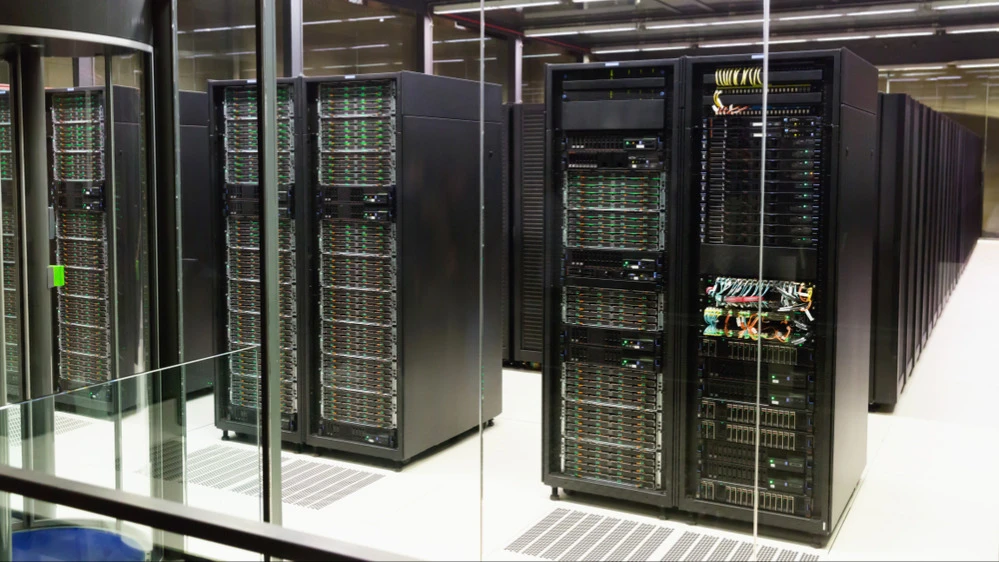
Owners of large data centers do not report all planned expenses / Photo: BearFotos / Shutterstock.com
Ratings agency Moody's has warned that a loophole in U.S. accounting rules allows major technology companies to hide tens of billions of dollars in potential liabilities related to their data centers.
Details
The current norms of publishing reports on the accounting standard GAAP allows high-tech companies to specify neither the cost of extending the lease of data centers, nor the costs in the case of refusal to extend, say analysts Moody's, whose report quotes FT. That said, either of these amounts could be significant and have a material impact on their forecasts. "The disclosures may not reflect the full picture," the agency warned, adding that those liabilities that are accounted for are "unlikely to show some plausible future scenarios".
More and more companies, including Meta and Oracle, are using their own special project vehicles (SPVs), which are largely funded by third-party investors, to build data centers. Hyperscalers then lease data centers from these SPVs. The cost of leasing such facilities, from the rating agencies' point of view, is equivalent to debt, the FT explains.
In some cases, companies enter into short-term lease agreements, guaranteeing compensation if the lease is not renewed and the value of the data center decreases as a result. According to Moody's estimates, such a scheme may result in liabilities not being recognized at all.
Under US GAAP, lease renewal payments can be recognized if they are "reasonably likely to occur" - usually interpreted as a probability of at least 70%. Planned payments for residual value guarantees are also recognized only if there is a greater than 50% chance of actually having to pay, Moody's points out.
"The decision to extend leases will depend in part on hyperscalers' willingness to make additional investments in equipment, as key technology components installed in data centers typically have useful lives of four to six years," Moody's analysts David Gonzalez and Alastair Drake said in a report. - Strict application of current clarifications could result in many lease renewals not meeting the "reasonably likely" criterion.
Why it's important
The largest deal in the data center private credit market serves as a telling illustration, Moody's notes. Meta's planned Hyperion facility in Louisiana has been placed in a special purpose structure by Beignet Investor, funded by Blue Owl Capital. Meta will lease it for an initial term of four years with an option to extend to 20 years. At the same time, the tech giant will guarantee compensation of up to $28 billion if the value of the facility declines. These details are disclosed in the notes to Meta's latest annual report, while the corresponding liabilities are not reflected in the company's balance sheet, Moody's emphasizes.
"As of December 31, 2025, payments under the residual value guarantee are not probable and, accordingly, no liability has been recognized," Meta pointed out.
As a result, Moody's decided that it will independently assess the likelihood of such obligations when determining the credit rating of technology companies. "Quantitative debt adjustments are likely to be made where we believe the recorded lease obligation understates expected cash outflows," the agency said, as quoted by the FT.
This article was AI-translated and verified by a human editor