'I got the ridiculously long straw': highlights from Buffett's farewell letter

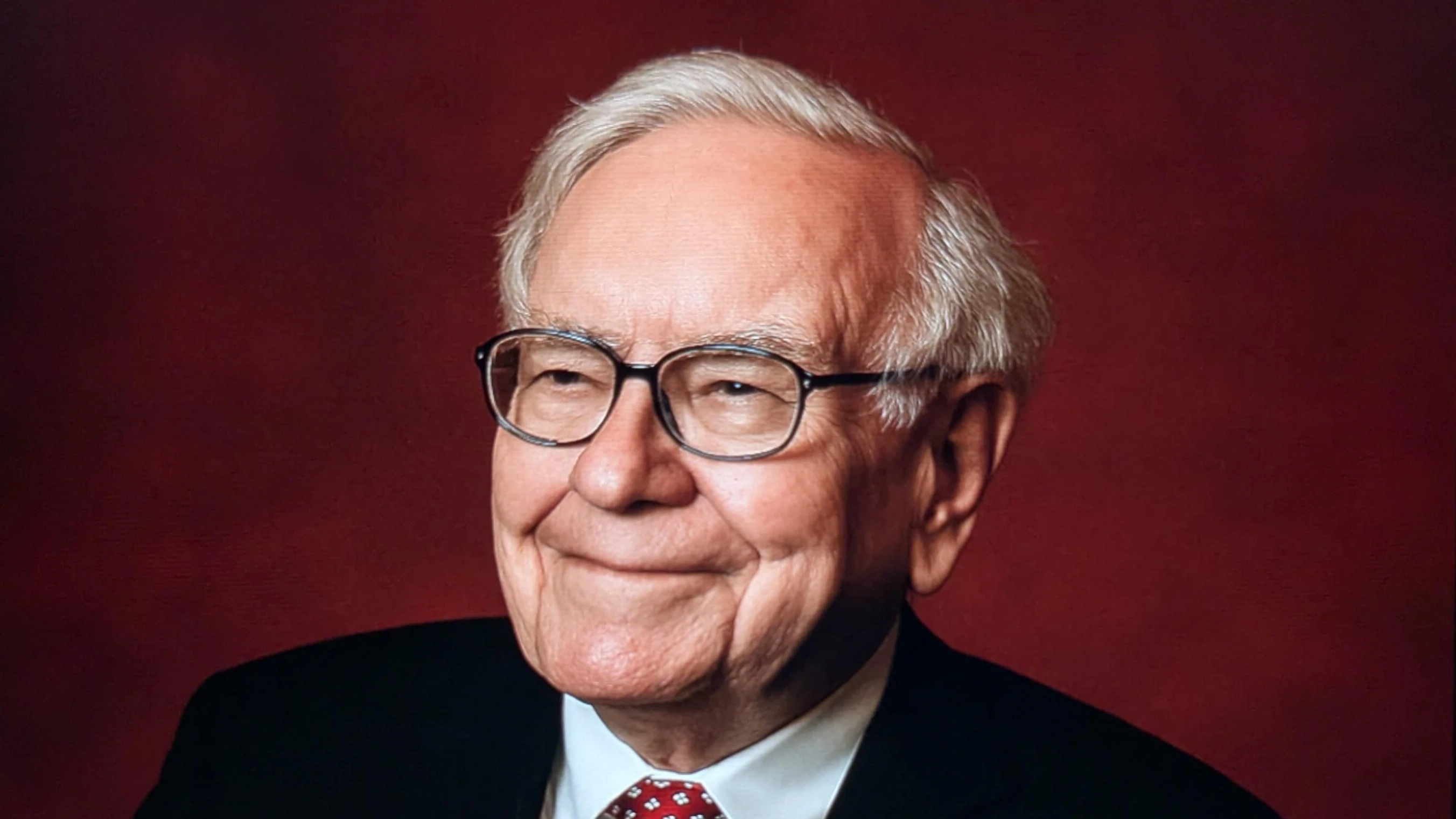
Warren Buffett has published his farewell letter as CEO of Berkshire Hathaway, a position he has held for 60 years. In less than two months, he will hand over the CEO powers to his deputy Greg Abel, but will remain on the board of directors. In the eight-page letter, Buffett describes several occasions when he was lucky, shares the advice he gave to his children, and assesses Berkshire's prospects for investors. Oninvest publishes a translation of the letter with abbreviations.
- As Thanksgiving approaches, I feel gratitude and amazement at how lucky I am to be alive at age 95. When I was young, such an outcome did not seem likely. In the beginning, I almost died. It was in 1938 when I got a severe stomach ache. Our family doctor, Dr. Harley Hotz, after examining me a little, said I would be better in the morning. He then went home and had dinner and played a little bridge. However, Dr. Hotz could not get my somewhat strange symptoms out of his mind and later that night sent me to [Catholic] St. Catherine's Hospital for an emergency appendix removal.
The highlight of my stay at the hospital was a gift from my wonderful Aunt Edie. She brought me a very professional-looking fingerprinting kit, and I immediately fingerprinted all the nuns who looked after me. My theory - completely insane, of course - was that someday some nun would "go bad" and the FBI would discover that they hadn't fingerprinted the nuns. I imagined the FBI director himself coming to Omaha to examine my priceless collection, and we would quickly identify and catch the errant nun. National fame seemed inevitable. Obviously, my fantasy never materialized.
- I lived in Washington, D.C. for a few teenage years (when my father was in Congress), and in 1954 I got what I thought was a permanent job in Manhattan. Ben Graham and Jerry Newman (founders of the Graham-Newman investment company where Buffett worked. - Oninvest) treated me wonderfully there, and I made many lifelong friends. New York had unique advantages - and still does. Nevertheless, in 1956, after only a year and a half, I returned to Omaha and never left again. Looking back, I feel that both Berkshire and I have succeeded more because of our Omaha base than if I had lived anywhere else. The center of the US was a very good place to be born, raise a family, and build a business. By pure luck, I was dealt a ridiculously long straw at birth.
- Now for my advanced age. My genes weren't particularly helpful - in our family, the longevity record (of course, family records get more vague as you delve into them) was 92 until I came along. But I had wise, friendly and dedicated Omaha doctors, starting with Harley Hotz. At least three times my life was saved by doctors, each only a few miles from my home. But I stopped fingerprinting the nurses. At 95, you can afford a lot of quirks - but there are limits.
- Those who live to a ripe old age need a huge dose of luck, daily avoiding banana skins, natural disasters, drunk or inattentive drivers, lightning strikes - anything. But Lady Luck is capricious and - no other term fits - incredibly unfair. In many cases, our leaders and the wealthy have received far more than their share of good fortune - and too often, those who have received it prefer not to admit it. The heirs to dynasties gained lifelong financial independence the moment they were born, while others were born facing hellish conditions in their early years, or worse, with limiting physical or mental disabilities that robbed them of what I took for granted. In many densely populated parts of the world, my life would probably have been miserable. I was born in 1930 healthy, reasonably intelligent, white, male, and in America. Wow! Thank you, Lady Luck. She's been looking out for me most of my life, but she has better things to do than deal with those over 90.
- Daddy Time, on the other hand, is now showing more and more interest in me as I get older. And he is invincible: everyone ends up on his list of "wins". As balance, sight, hearing and memory fade away, you realize that Daddy Time is right around the corner. I have belatedly become old. The timing of the onset of this condition varies greatly - but when it appears, it cannot be denied.
- To my surprise, I feel good overall. Although I move slowly and read with increasing difficulty, I am in an office five days a week where I work with wonderful people. Sometimes I get a useful idea or am approached with a suggestion that we might not otherwise have gotten. Because of Berkshire's size and because of current market levels, ideas are few - but not zero.
- However, my unexpected longevity has inevitable consequences for my family and my charitable goals. My children are past normal retirement age: they are 72, 70 and 67. To increase the likelihood that they will dispose of essentially my entire inheritance before they are replaced by other trustees, I need to accelerate the pace of lifetime giving to their foundations. All three children have the maturity, intelligence, energy and intuition to distribute a large fortune. They will likely have to adapt to a world that is changing significantly. Fortunately, all three children received a major dose of their genes from their mother.
- I assured the children that they don't need to work miracles or fear mistakes or disappointments. They are inevitable, and I have made my share of mistakes myself. They just need to achieve an outcome only slightly better than public or private charitable programs usually achieve.
- There is another factor to consider: I would like to retain a significant amount of Berkshire Class A shares until shareholders have the same confidence in Greg Abel that Charlie Munger and I have had for a long time. It shouldn't take long to achieve that level of trust.
- The acceleration of my lifetime giving to children's funds does not reflect a change in my views on Berkshire's prospects. Greg Abel has more than lived up to the high expectations I had for him when I first thought he should be the next CEO. I can't think of any CEO, management consultant, academic, member of government - anyone - who I would prefer to Greg for managing your and my savings. I hope his health remains good for a few more decades. With some luck, Berkshire should require only five or six CEOs over the next century. But it's important to avoid those whose goal is to retire at 65, become "insanely rich," or start a dynasty.
- Overall, Berkshire companies have moderately better than average prospects. However, in 1-2 decades, there will be many companies that will perform better than Berkshire. Our size makes a difference. But Berkshire is less likely to have a catastrophic disaster than any other business I know. Our stock price will move capriciously, sometimes falling by about 50%, as it has three times in 60 years under current management. Don't despair: America will recover, and so will Berkshire stock.
- I will no longer write Berkshire's annual report or chatter away at annual meetings. I'm shutting up. Greg Abel will become CEO at the end of this year. He is a great manager, a tireless worker and an honest conversationalist. I wish him many years of service. I will continue to tell you and my children about Berkshire in my annual Thanksgiving message. Berkshire's individual shareholders are a very special group who are extraordinarily generous in sharing their profits with those less fortunate. I am delighted to have the opportunity to keep in touch with you.
At the end of the letter, Buffett also shared his personal recommendations for investors. You can read about them in this article: "It's never too late to get better": Buffett's five tips from his farewell letter
This article was AI-translated and verified by a human editor