"Berkshire wannabes": are companies that copy Buffett's strategy successful?
They include billionaire Bill Ackman's Howard Hughes Holdings and Fairfax Financial Holdings, which is controlled by "Canada's Warren Buffett" Prem Vats

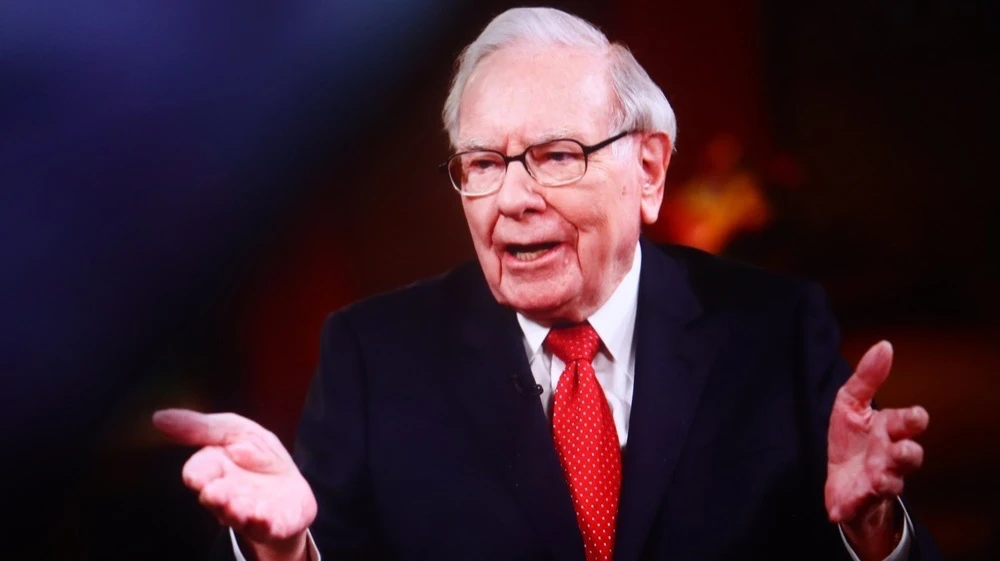
As Warren Buffett prepares to step down as CEO of Berkshire Hathaway at the end of the year, investor attention is shifting to companies that use - or plan to use - the "Oracle of Omaha" strategy, MarketWatch wrote. The publication cites Barron's calculations, which examined the performance of six companies that echo Buffett's approach to investing. They share an important advantage: Each is significantly smaller than Berkshire, leaving them more room to grow.
Details
Barron's researched six investment companies that are building their strategy following billionaire Warren Buffett's lead - at its core, a combination of insurance business and investments. Insurance premiums tend to be paid out on claims after a significant amount of time, making it possible to use them and profits from the insurance business to buy stocks or acquire new companies entirely, explains MarketWatch. Over the past 60 years, thanks to Berkshire's strategy, its stock has delivered an average annualized return of 20% - with the S&P 500 index returning 10%, Barron's notes.
Successfully replicating Buffett's investment model is not easy: "If it were easy, the market would be crowded with companies like Berkshire Hathaway," says Piper Sandler analyst Alexander Goldfarb.
"It's a three-engine strategy," notes Andrew Kligerman of TD Cowen, referring to the investment, insurance and other businesses owned by the investment company. - For this model to work, all three elements must work together effectively," Kligerman says. Berkshire has a number of advantages over its competitors: including an unshakable balance sheet and a diversified earnings structure that is expected to total $45 billion this year.
At the same time, the six companies Barron's studied have an important advantage over Berkshire: size. Each is significantly smaller than Buffett's company, giving them much more room for growth, the publication noted.
Who is emulating Berkshire's strategy
- Fairfax Financial Holdings. Since going public in 1985, the stock has grown at an average annualized return of 19.2%, which is comparable to Berkshire's growth rate, Barron's notes. Founder, chairman and controlling shareholder Prem Vats, dubbed the "Canadian Warren Buffett," has amassed an impressive portfolio of insurance companies: their combined premiums exceed $30 billion a year - roughly a third of Berkshire's volume. For the past six years, the company has successfully achieved its goal of growing its book value by 15%. Berkshire will be able to deliver about 10% growth per year in the future, Barron's predicts.
Shares of Fairfax, traded mainly in Toronto, as well as in the U.S. on over-the-counter exchanges, have risen more than 45% over the past year. Since Buffett announced his decision to leave, Fairfax shares have risen 6%, while Berkshire's shares have fallen 9%. That said, Fairfax shares still look attractive, Barron's believes: they trade at a ratio of about 1.6 to book value and 11 to projected 2025 earnings. Raymond James analyst Stephen Boland gave the stock an Outperform rating (buy advice) with a target price of CAD2,600 (about $1900), nearly 13% up from its June 5 closing level.
- Markel Group runs insurance companies and owns a $12 billion equity investment portfolio, most heavily weighted toward Berkshire's own securities. Markel also has what it calls its Ventures division, a portfolio of businesses ranging from luxury handbag makers to river-bottom cleaning equipment and harbors. Ventures generated $500 million in pretax operating profit in 2024, Barron's noted.
For 34 years, Markel has "followed Berkshire," holding a brunch in Omaha the day after the Buffett investment firm's annual shareholder meeting, MarketWatch writes. Markel has had an excellent long-term performance: since its IPO in 1986, its stock has risen from $8.33 to $1950, which translates to an average annualized return of 15% - versus 11.7% for the S&P 500 index over the same period. Markel's shares now trade at multiples of 20 to expected 2025 earnings and 1.5 to book value - a "discount" compared to Berkshire, which has those multiples of 25 and 1.6, respectively.
- The Loews strategy outlined by CEO Ben Tisch will appeal to Berkshire fans: "Increase the numerator, reduce the denominator." As Tisch himself explains, this means building up the intrinsic value of the company (intrinsic value) while reducing the number of shares outstanding, thereby raising intrinsic value per share. Since 2018, the company has reduced its shares outstanding by a third, Barron's notes.
Loews has three main assets: the gas pipeline business Boardwalk Pipelines, a 91 percent stake in insurer CNA Financial and the Loews Hotels chain with its flagship Regency, a well-known breakfast destination in Manhattan. In addition, Loews Hotels owns 50 percent in 11 hotels located at Universal theme park. Meanwhile, the company has nearly $2 billion in cash piled up on its balance sheet. With a market capitalization of $18 billion, it may be the largest contributor to the S&P 500 index, which is virtually not tracked by Wall Street analysts, notes Barron's.
- White Mountains Insurance Group has performed impressively since its IPO in 1985 - its capitalization has grown 77 times. The company's largest division is the Ark, Kudu Investment Management and Bamboo insurance businesses. It also owns a quarter of publicly traded MediaAlpha, a digital platform that connects insurers with potential customers.
White Mountains has grown book value by an average of 10% per year over the past 10 years and 9% over the past 20 years. Despite the successful results, the stock is only slightly higher -$1,752 as of March 31. However, Barron's believes they could rise 15% and right now the risk/return ratio looks very attractive.
- The market value of Howard Hughes Holdings is about $4 billion. It was a small real estate developer at the beginning of the year, but then Pershing Square, the investment company of Warren Buffett's admirer and disciple, billionaire Bill Ackman, took a majority stake in it. He plans to make Howard Hughes a "new Berkshire" - with an insurance business and control of growth-oriented companies. For now, Howard Hughes shares are under pressure: investors see it as an unfinished project, explains Barron's.
Piper Sandler analyst Alex Goldfarb gave the company's securities an Overweight rating with a target price of $85, which implies a 26% upside from the level opening of trading on June 5. "We believe the potential for Howard Hughes to transform into a holding company is something investors should pay attention to", he wrote in a note quoted by Barron's.
- Greenlight Capital Re, managed by David Einhorn, is a small reinsurance company with a market capitalization of just $575 million. It has performed poorly since going public in 2007: since then, its shares have lost 22%. But therein lies the opportunity - they can be bought for 75% of book value, Barron's points out. It is rare to find a profitable insurer at such a discount, says the publication.
As of the end of May, Greenlight's investments have yielded about 5% YTD. Einhorn's portfolio includes gold, insurance company Brighthouse Financial, coal producer Core Natural Resources, and a bet on a declining dollar. If Greenlight can consistently show a return on equity (ROE) of at least 10-12%, the stock could exceed $20, Barron's writes.