'I lack optimism': Wall Street guru on AI's ability to take away jobs
AI could quickly put people out of work and society is unlikely to have time to adapt, says Howard Marks
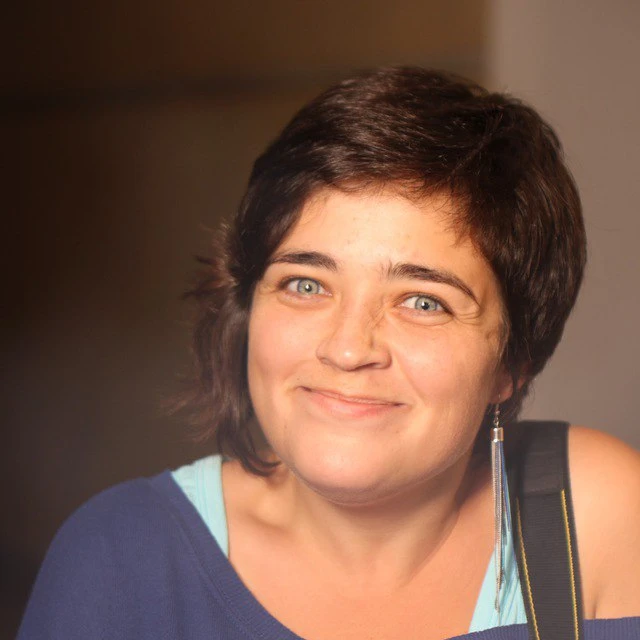
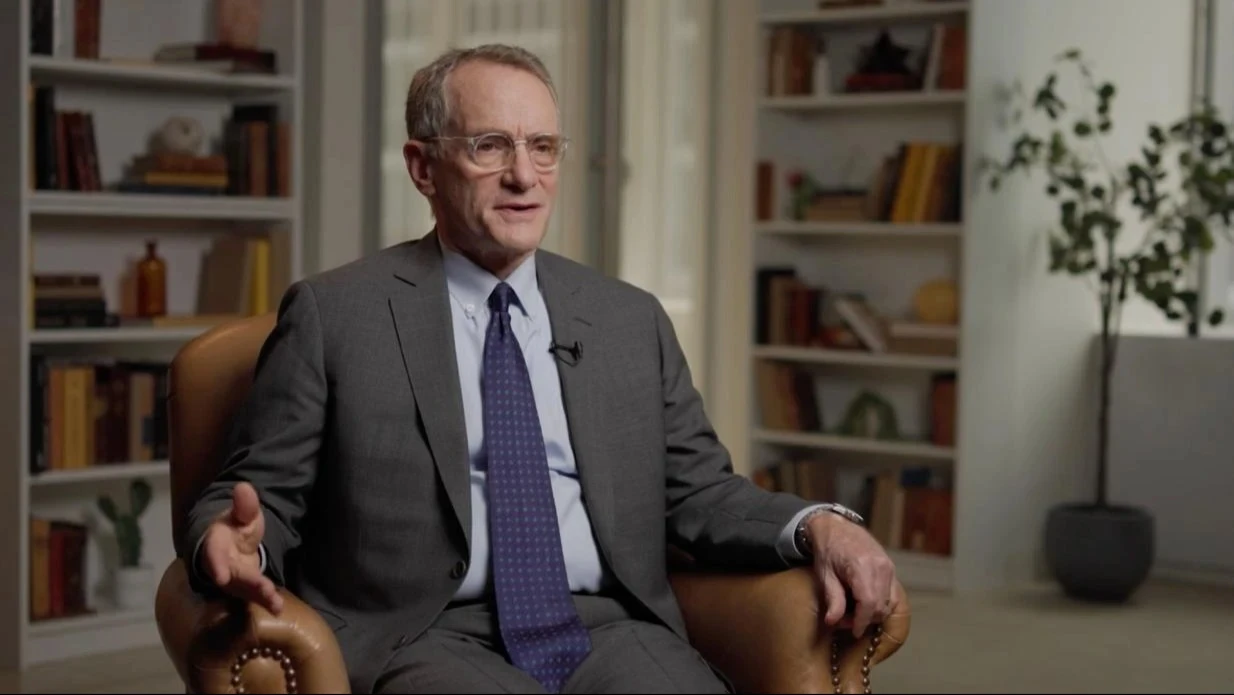
A famous investor doubts that there will be new vacancies for all the people fired because of AI / Photo: www.oaktreecapital.com
One of the most in-demand professions in America is driver: you have to drive cabs, limousines, buses and trucks. But what are drivers to do when every fifth cab ride in San Francisco is already performed by an unmanned car, and there are more and more of them?
That's the question billionaire Howard Marks, founder of investment firm Oaktree Capital, is asking. In a new note, "AI Flying Forward," co-written with chatbot Claude, Marks looks at how artificial intelligence is evolving from a supporting tool into a force in its own right, capable of reshaping the economy and the labor market. He concludes that the times when robots will be able to replace human labor are approaching much faster than many may realize. Oninvest has studied Marks' note and publishes key excerpts from his discussion with Claude.
From human helper to replacement
The Ma is not that we are incapable of understanding the AI's abilities and what it will do for us (or to us). The point is that it thinks and evolves faster than we do. If you feel like raising the alarm, read Matt Schumer's blog.
AI could quickly put people out of work. It is unlikely that society will have time to adapt to this speed of change. It will take years for people to find or learn new jobs. Consider the damage that outsourcing has done to manufacturing jobs in the US and other developed countries; AI will affect more jobs - and faster.
"If a tool only speeds up an employee - it's worth a fraction of their salary, but if it fully performs a task - it's worth the entire cost of that labor. On a market scale, that's trillions of dollars. AI has evolved from a fast horse (assistant) to a machine (labor substitute): it no longer just speeds up work, it does it"

On the disappearance of professions
Back in December, I wrote that the topic of the AI bubble was inextricably linked to the consequences for society in terms of unemployment and loss of meaning in life, about which I am terribly concerned. I have not changed my mind.
Many readers, like me, don't understand where enough jobs will come from to replace the "thinking" and "performing" professions that AI and the machines it controls will take away. For example, it's hard to imagine that companies will need the same kind of staff to manage Claude that has so far been required to write software code.
If Claude takes on even 30-50% of typical tasks in software development, the $150 to $250 billion that used to go to human salaries will flow into budgets to pay for AI server capacity

About optimists and pessimists
I've talked to people - mostly from the technology sector - who are optimistic. They say that in every technological innovation - the mechanization of agriculture 200 years ago; the industrial revolution that turned factory jobs over to machines 100 years ago; the transfer of information retrieval and analysis tasks to the Internet 25 years ago - they saw the threat of mass unemployment. But each time, new jobs appeared and people kept working. And so it will be this time.
First, I admit: attempts to judge by historical analogies are quite justified. Secondly, it is impossible to prove that something will not happen in principle. Third, I lack either the vision of a futurist to imagine new professions or the optimism to believe that they will inevitably emerge. Which, of course, does not mean that they will not arise.
The same optimists rush to present as "good news" the fact that in the future people will not have to work. I simply cannot imagine that this would be good for society.
"A friend of mine recently wrote that he would rather be optimistic and be wrong than pessimistic and be right. So would I. I wish I could be sure that my fears are unfounded."
This article was AI-translated and verified by a human editor