On fragile ice: why isn't anyone ready for AI to replace white-collar workers?
AI's most serious problem may not be a threat to jobs at all, but to the unpreparedness of the political system, argues a writer for The Atlantic


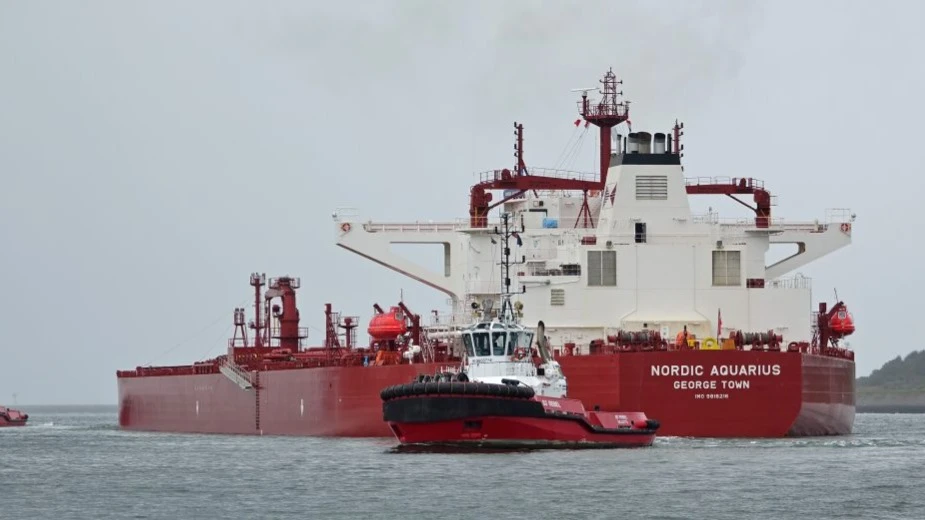
Solving the AI problem will require a collective effort, says the article / Photo: Unsplash / Jonny Rothwell
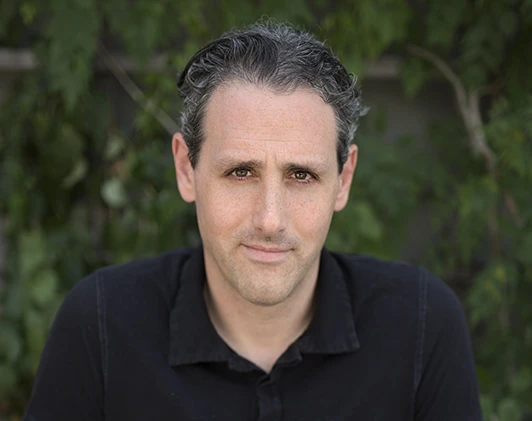
Has Artificial Intelligence already started to undermine the labor market or not? Will it really replace millions of office workers? Is the government ready for it? Is anyone even in control of the situation? The Atlantic's author Josh Tyrangle spoke to economists, politicians and entrepreneurs for the March issue's cover story and came to some disappointing conclusions. His article is 45,000 characters long and Oninvest summarizes it.
* * *
Artificial intelligence is already so pervasive that any enterprising intellectual worker can delegate some tasks to it, writes Tyrangle. But anyone who does so is able to imagine how it might end: productivity gains will turn into automation, and they'll have to find work at a food truck or dog beauty parlor - at least until robots get there.
Many economists insist that things won't be so dire. Capitalism will endure. The advent of ATMs has increased the number of bank clerks, the introduction of Excel has swelled the ranks of accountants, and Photoshop has skyrocketed the demand for graphic designers. In each case, technology automated old tasks, increased productivity and created new jobs with higher wages. The official forecast calls for U.S. employment to grow 3.1 percent over the next 10 years. That's down from the previous decade, but creating 5 million new jobs still wouldn't be called a disaster.
Some things are harder to package into statistics. Americans tend to draw identity from what they do. Most wouldn't want to do something else, even if they were sure they could find a new occupation. And there is no such certainty. In a Reuters/Ipsos poll last year, 71% of respondents worried that too many would lose their jobs permanently.
This alarm would be easier to ignore if businesses didn't blow it out of proportion at every corner, writes the author of The Atlantic. Anthropic CEO Dario Amodei said AI could increase unemployment by 10-20% within one to five years and destroy 50% of entry-level jobs. Ford CEO Jim Farley estimated that "literally half of all office workers" would be laid off within 10 years. OpenAI CEO Sam Altman said that he and his entrepreneur friends "in a small group chat" made a bet about exactly when a "unicorn" (i.e., a $1 billion startup) with a one-person team would emerge. Major companies, including Meta and Amazon, conducted layoffs, cheerfully reporting to investors on the rise of automation and the "downsizing trend."
"Together, these statements are striking: the owners of capital are warning workers that the ice beneath them is about to crack - and at the same time they continue to tread on it"
The main question is whether this means that soon everyone will go under the ice, i.e. out of a job, and how quickly will this happen? Perhaps not as quickly as the most stubborn AI supporters expect, says The Atlantic journalist.
The slower the rate of AI adoption, the more time society will have to adapt, say Nobel laureate Daron Acemoglu and his MIT colleague David Otor. The labor market has a natural rate of adaptation. If only 3% of workers in a certain profession retire or lose their jobs each year for 30 years, the economy will hardly notice. But within a decade, a third of the jobs in those occupations will be gone. "When this process moves faster, problems arise," Otor emphasizes. The economist described this in his most famous paper on the so-called China shock: 13% of US manufacturing jobs disappeared six years after China joined the WTO in 2001, triggering a boom in imports of cheap goods.
What definitely leads economists to believe that ubiquitous AI is at least 10 years away is people's dislike of software - as well as change, Tyrangle writes.
"Technology leaders want to convince us that automation is predetermined and that everything will go smoothly. History tells us that in reality, things will go much slower"

When the first power plants appeared in the 1880s, no one debated whether they were superior to steam engines, the journalist writes. But the main economic benefits of electrification did not become apparent until 40 years later. Plants needed more than just electric motors to transform themselves - they needed to demolish and rebuild all their production facilities. Most preferred to wait for their infrastructure to wear out before replacing it.
AI is already transforming work - but so far in the form of delegating one task at a time, concludes a journalist for The Atlantic. If the transformation happens slowly enough and the economy adapts quickly enough, economists may be right: everything will be fine, he writes. But if AI triggers a rapid reorganization of work - compressing years of labor into months and affecting, as the IMF predicts, about 40% of the world's workforce - the consequences will be more than just economic: they will test the strength of political institutions that have already shown themselves to be fragile.
Massive job losses mean more than just unemployment - they mean missed loan payments, cascading defaults, shrinking consumer demand and spiraling recession, according to University of Virginia economist Anton Korinek. The expert, who was named by Time magazine as one of the most influential people in AI, is convinced that his colleagues underestimate AI's ability to develop itself, comparing it to "stupid" machines: "This time it may be different.
If AI develops as fast as Korinek expects, many workers will suffer before social institutions can adapt. According to the economist, a significant number of jobs in America will disappear as early as this year. Economists need to do more scenario planning so that policymakers are not caught off guard by this shock, Korinek insists.
Downsizing is inevitable, says LinkedIn co-founder and Microsoft board member Reid Hoffman. According to him, CEOs are convinced that investors, after long talks about the prospects of AI, have lost tolerance for dreams and now expect results. And the quickest way for a CEO to show results is to downsize.
The very CEOs the author tried to talk to declined to discuss AI's impact on employment. Some of them feel trapped, said Gina Raimondo, former U.S. Commerce Secretary and co-founder of a venture capital firm. Wall Street expects them to expect AI to replace human labor - and if they don't achieve that, they'll be out of work themselves. But the companies realize that if they all conduct mass layoffs, the consequences will be enormous - for employees, the country, and the world.
Artificial intelligence can change lives for the better, but it also raises questions about security, inequality and the viability of the wage labor system, Tyrangle writes. He says there is no sign that the political system is ready to deal with these challenges - meaning that the biggest problem AI presents may not be employment at all.
"America would be better off if its elites could act responsibly without falling into anxiety. If CEOs remembered that citizens are also, in a sense, shareholders. If economists tried to model the future before it was in the rearview mirror. If politicians would choose their constituents' jobs over their own. None of this requires revolution. It only requires that everyone just do a better job of doing the jobs they already have."
This article was AI-translated and verified by a human editor