Investor battle: how billionaire Oleg Boyko became Oleg Tinkov's rival in Mexico
Boyko has become an investor in Plata and Revolut's rival startup, Oninvest sources said
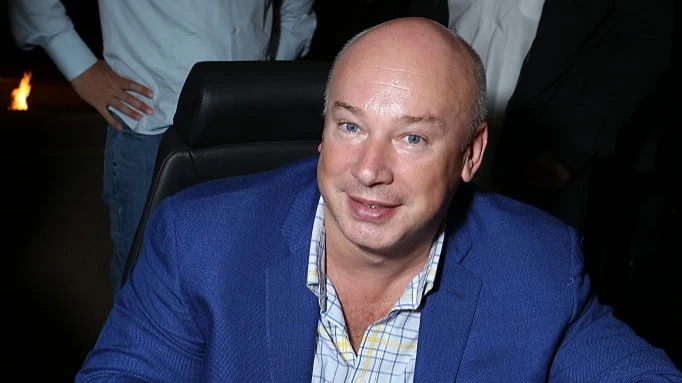
Billionaire Oleg Boyko has invested in Mexico's growing fintech sector. Photo: Eric Charbonneau/WireImage
The Mexican fintech market attracts not only Oleg Tinkov and Nikolay Storonsky. Another Russian native with a billion-dollar fortune, Oleg Boiko, has invested in the Mexican startup Novacard, a competitor of Plata and Revolut, three sources told Oninvest. It offers credit cards with cashback to Mexicans. Mexico is a hot market for fintech because of the lack of red tape and high demand for credit. But the existing problems make it very risky.
Russian roots in Mexico
The fintech market in Mexico reached $22.5 billion in 2025 and could grow to $67.2 billion by 2034, forecasts analyst group IMARC. The reason for the explosive growth is the realization of pent-up demand for leverage. Mexico is home to 130 million people, but according to official data, more than half of the population (54.3%) work in the informal sector and do not have access to classic bank loans. Finnovista, which invests in fintech in Latin America, calls lending the "dominant segment" of fintech in Mexico.
Russian natives are actively participating in the division of this pie. Revolut, a neobank co-founded by Nikolay Storonsky, now a British citizen, has come to Mexico. In addition, the startup Plata, whose early investor was Tinkoff founder Oleg Tinkov, now a Cypriot citizen, is actively developing here.
Plata and Revolut have another competitor in the card business. This is Novacard, a startup founded in 2023. As Oninvest found out, its investor is Russian billionaire Oleg Boiko: a source close to the company told us about this and a businessman's acquaintance confirmed it. A third source in the Mexican fintech market, speaking to Oninvest, described Novacard as a structure that is part of the Finstar investment group, which belongs to Boyko.
So far, these investments have not been publicly known. It has not been possible to find out on what terms Boyko invested in the project. Mexico is the second most important region of Finstar's presence after India, the billionaire himself admitted in an interview with Forbes in 2024. He did not disclose what exactly Finstar earns in Mexico, but only praised the country for "the maximum concentration of capable credit fintechs".
Novacard's website does not contain information about either the owners or the management of the company. One of the startup's co-founders, Artur Soghomonyan, previously worked at Digital Finance International (DFI). In his interviews, Boyko mentioned that DFI is part of Finstar. Key Novacard employees also worked at DFI, including CFO Alina Kapralova and product director Alexander Kochetkov. Also, judging by the startup's LinkedIn profile, a number of mid-level managers moved to Novacard from Finstar.
What does Novacard offer to Mexicans? Credit cards with a cashback of 5% for supermarket purchases and 0.5% for everything else, including those with no credit history. If the amount spent from the card is repaid on time (within 28 days of the transaction), the company promises not to charge interest on borrowed funds. But if the client makes only the minimum payment within this period, it will charge a fee for each day of further use of the loan.
This project is developing simple banking products. At the same time, Novacard's competitors Revolut and Plata have recently received full banking licenses from the Mexican regulator. This will allow them to engage in more complex credit products (e.g., collateralized lending). Under Mexican law, credit cards can also be issued by a company without a banking license. Revolut's flagship products in Mexico, according to its website, remain cards and accounts linked to different plans, as well as conversion transactions and money transfers. Plata's flagship products are credit cards, debit accounts with interest on balances and installment plans.
Boyko himself, as well as representatives of Novacard and Finstar did not respond to Oninvest's questions. Artur Soghomonyan and Ruvin Rafailov, who also indicated on LinkedIn that he is a co-founder of Novacard, declined to comment.
Who is Oleg Boyko?
According to Forbes Real-Time Billionaires, Oleg Boyko's fortune is estimated at $1.9 billion, which has grown by $600 million since 2022.
His main business now is Finstar International Group, which invests in fintech and financial services around the world. Its strategy is to buy controlling stakes in fast-growing companies with IRR (internal rate of return, which shows the ratio of income to expenses) above 35%, according to its website. Finstar is ready to invest from $20 to $200 million in new assets. The company does not disclose its portfolio of assets.
Boyko himself calls himself the founder of the first fintech in Russia. In the 1990s, he created the OLBI concern, which included the OLBI Diplomat chain. It tried to occupy the niche of the Soviet Berezka stores, accepted currency for payment, and later issued its own debit card, which could be used to pay in the chain's stores.
Boyko was also a co-owner of the banks National Credit, Favorit and Industria-Service, the metallurgical company Evraz Group, the perfume chain Rive Gauche, the newspaper Izvestia and the television channel NTV. He also owned the gambling business Ritzio Entertainment Group, and was involved in lottery, bookmaker and microfinance projects. In addition, he almost became the owner of the country's largest bank, Sberbank, and produced several movies in Hollywood.
But as a result, the three banks that had previously belonged to him lost their licenses and ceased to exist. By his own admission, the businessman sold his stake in Evraz "cheaply"; the buyers were Alexander Abramov and Alexander Frolov. Hollywood movies were not commercially successful. Boyko planned to take Ritzio andRive Gaucheto an IPO. But in the end, the ban on gambling in Russia put an end to Ritzio's gambling business in the country - the company now has only gambling halls in Europe. Boyko sold his stake in Rive Gauche to Wildberries&Russ. He also got rid of his stakes in the above-mentioned media projects.
"Oleg is a freelance artist. He invented the nickname Financial Punk for himself. He had luxurious combinations in which he forgot to hammer in the last two nails, and the whole structure collapsed at the last moment," Boris Fedorov, head of the National Sports Foundation, said of him. The fund became the buyer of OLBI and National Credit, Boyko told Oleg Tinkov in Business Secrets.
Tinkov calls him a "Neanderthal of the Russian market" who is "unique in his survivability". According to Tinkov, despite controversial decisions and difficult circumstances, Boyko has always managed to stay afloat and come up with a new business idea.
Connections have always been an important intangible asset of this businessman. For example, he called oligarchs Boris Berezovsky and Vladimir Gusinsky his business partners in the 1990s. And the media, for example, wrote about his friendship with Igor Shuvalov, who now heads the state corporation VEB.RF.
Boyko was under sanctions imposed by Ukraine, Poland and Australia. Canada lifted the sanctions on him: neither Canada nor Boyko has disclosed the reasons for their imposition and removal.
Is it easy to lend in Mexico?
The Russian fintech community in Mexico is already quite large, says Marat Vergazov, revenue director of Mexican fintech KrediYa. One Plata brought here more than 100 specialists from the Russian Federation. And if you count the number of "Russian-speaking" companies from Kazakhstan and the Baltic States, there are about 20 of them.
"If someone's startup doesn't take off, the guys don't leave, they just move on to their neighbors," says venture capitalist Pavel Myasnikov.
And if it develops successfully, it inevitably attracts major specialists. Thus, four top managers of Novacard moved to the unicorn Plata. Among them are the startup's co-founders Ruvin Rafailov and Artur Soghomonyan. The head of Plata International, Michael Touch, who is responsible for international expansion, joined the project from DFI. Interestingly, 10 years ago, in 2016, Tinkov complained to Ksenia Sobchak that it was Oleg Boyko who was "constantly trying to lure people from me en masse" to his structures.
At the same time, the main problem of the local market is not personnel, but non-payers. According to Myasnikov, "the really solvent digital segment in Mexico is 20-30 million people. Traditional banks that work with wealthy borrowers with formal income keep the share of problem loans at about 2.2%. But lenders who work with informal sector workers have delinquency estimates of up to 15-27%, and the full cost of the loan - up to 150-500% per annum, says Myasnikov.
According to Kirsan Mitnev, CFO of Avlos (engaged in online lending in Mexico), over the past few years the average level of delinquency on credit cards and loans in Mexico has increased by 20-25%. Every lender needs high-quality scoring, but it is impossible to quickly gather information about a client's payment discipline even with a credit history here: the time it takes to update a credit bureau in Mexico is one month, compared to 1-5 minutes in Russia.
This creates risks for fintech startups: many have a portfolio quality that simply does not match the economy, as delinquencies and defaults are not an exception, but a regular part of the market, summarizes Myasnikov.
In addition, the collection market in Mexico is poorly developed, says Vergazov. The legal framework for debt collection is weak, and courts can go on for years and in the end side with the defendant if he is from socially disadvantaged groups. In addition, it may turn out that there is simply nothing to collect from the defaulter, he says.
All this has given rise to the practice: the borrower goes into severe delinquency, and then agrees to close the debt with a huge discount - 30-50% of the amount, concludes Myasnikov.
Why is the Mexican market attracting more and more fintech players? Its uniqueness lies in the absence of bureaucratic hurdles. According to Myasnikov, it takes 4-8 weeks to launch a startup in the field of digital lending or microfinance here, and the legal framework allows loans, installments, and credit cards to be issued without a full banking license and a service partner.
This article was AI-translated and verified by a human editor