January could be Lockheed Martin's best month in 46 years. What does this have to do with Trump?

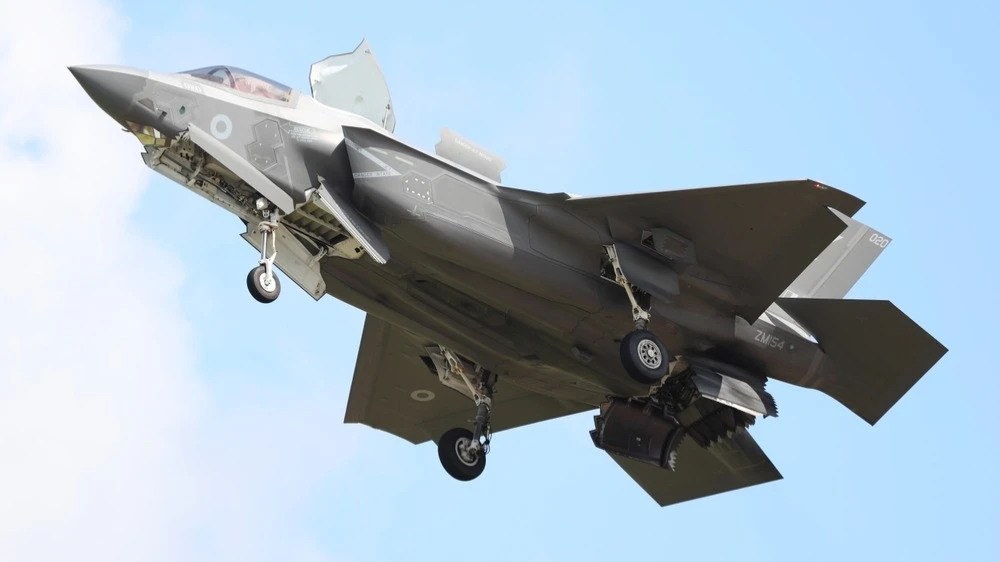
After the report, Lockheed Martin shares rose to a 15-month high / Photo: Taycos / Shutterstock
American defense contractor Lockheed Martin presented a strong financial forecast for 2026 and reported on a new contract with the U.S. Department of Defense. After publication of the report securities of the company added 4.23% (according to data on closing on January 29). For January, they have already risen by 28.7%, draws the attention of MarketWatch. All this may indicate that this month may become for Lockheed Martin securities the best since January 1980, when shares of the defense company added 30.4%, writes MarketWatch.
What Lockheed Martin said in the report
Lockheed Martin reported for the fourth quarter of 2025 on Jan. 29.
- The company's profit amounted to $5.8 per share on revenue of $20.3 billion. Despite the fact that Wall Street expected Lockheed Martin's profit for the reporting period at the level of $5.81 per share, the company's revenue figure, as noted later by the analyst of Vertical Research Partners Rob Stallard, was "good" (analysts laid it at $19.9 billion), writes Barron's. The company's net income grew by 154% over the year to $1.34 bln.
- At the same time, the backlog of orders (the volume of existing but unfulfilled orders) of the defense company has grown to a record $194 billion, said during a teleconference Lockheed Martin CEO James Taiclet, writes MarketWatch. Such results the company was able to achieve due to increased spending by the U.S. Department of Defense under the administration of President Donald Trump, the publication points out.
- For 2026, Lockheed forecasts earnings in the range of $29.4 to $30.3 per share on revenue of about $78.8 billion, broadly in line with current Wall Street expectations. The consensus forecast calls for the company's earnings next year at about $29.5 per share on revenue of $78 billion, Barron's reports.
- The company expects free cash flow to be $6.5 billion to $6.8 billion next year, which is already notably higher than the FactSet consensus forecast of $6.14 billion, MarketWatch writes.
What else has supported the company's stock
On the day of the quarterly report publication, January 29, Lockheed Martin also announced a new agreement with the U.S. Department of Defense. It provides for a fourfold increase in production of THAAD missile defense system interceptors - from 96 to 400 units per year. These missiles are designed to intercept ballistic and hypersonic missiles in the upper atmosphere, Barron's explains. "Agreements like this fully support the [U.S.] Department of Defense's acquisition transformation strategy, and we look forward to continuing our partnership with the U.S. government to finalize the contract and launch a new wave of innovation <...> across the entire defense industrial base," Lockheed Martin CEO James Taiclet said during a teleconference, MarketWatch writes, citing the AlphaSense platform.
He attributed Lockheed Martin's 6% year-over-year sales growth and free cash flow generation above the company's previous expectations to "a record order book of about $194 billion." The key driver of the company's growth in the fourth quarter, he said, was the F-35 fighter jet program.
Following the report, the company's securities jumped 4.23% to $622.51, closing Jan. 29 at a 15-month high, MarketWatch notes.
What are the analysts saying?
Vertical Research Partners analyst Rob Stallard maintained a "hold" recommendation on Lockheed shares and a target price of $530 after the company released its quarterly report, Barron's notes. This target is 15% below the closing price of the company's shares on January 29.
Over the past 12 months, Lockheed securities have lagged the iShares Aerospace & Defense ETF by about 35 percentage points, Barron's notes. "Lockheed Martin stock's lagging performance is largely due to perceived risks to margins and the portfolio, despite the presence of obvious growth drivers," Jefferies analyst Sheila Kahyaoglu wrote.
Investors consider the F-35 program, which accounts for about 25% of Lockheed Martin's business, to be one such risk. The future of manned fighter jets has been hotly debated in recent months amid the military's push for cheaper unmanned solutions. While manned aircraft are expected to remain in service for decades to come, the issue itself continues to weigh on investor sentiment, Barron's writes.
At the same time, Kahyaoglu said the key catalysts for Lockheed stock could be new contracts, accelerating programs - including Patriot missile production - stabilizing margins, and a possible portfolio restructuring that could unlock the "total" value of the business.
Kahyaoglu maintains a "hold" recommendation on Lockheed Martin shares and a target price of $540. This estimate is 13% below the closing price of the securities on January 29.
Wall Street analysts are generally neutral on the company's securities: only eight out of 24 advise to buy them, 14 - to hold and two - to sell.
This article was AI-translated and verified by a human editor