"Just a normal company" at $1 trillion: How OpenAI is making its way to the stock exchange
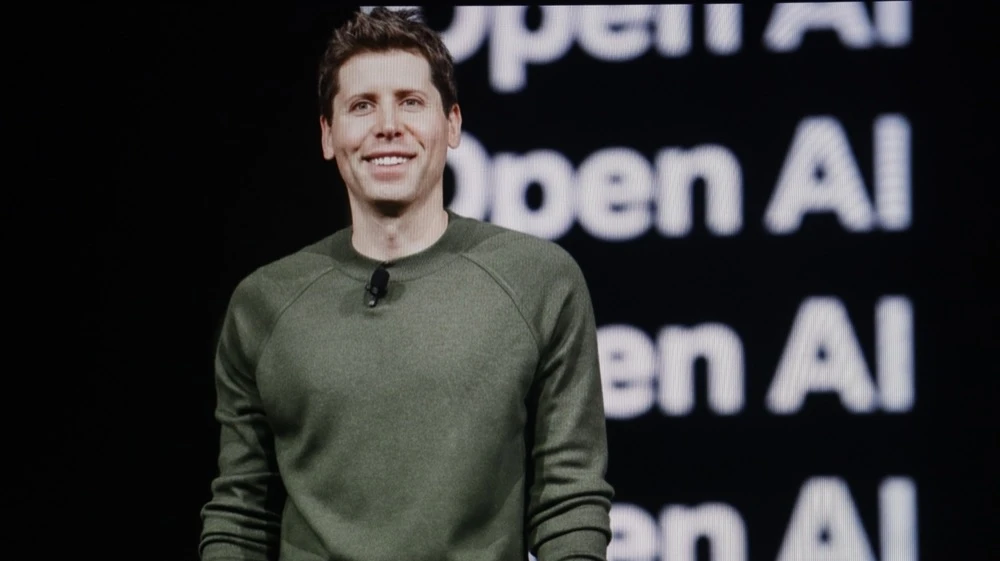
So, it's happened. After a year of discussions, negotiations and even lawsuits, the leading artificial intelligence developer OpenAI has finally restructured and turned into a commercial company. This will allow its CEO Sam Altman to attract new investments and even go public. It may become the largest IPO in modern history.
"You're gonna burn that billion dollars."
To begin with, OpenAI is a very unusual startup that began in 2015 not as a startup at all, but as a non-profit organization founded by enthusiasts building computer AI.
Research Director Ilya Sutzkever and CTO Greg Brockman were in charge of the science part, and the co-chairs were Sam Altman and Elon Musk, the world's richest man, CEO of Tesla, founder of SpaceX and current owner of rival company xAI.
"Our goal is to develop digital intelligence in such a way that it brings the greatest benefit to all of humanity, beyond financial gain," declared the creators of OpenAI, among whom were many followers of the philosophy of effective altruism.
In order to disengage from lowly financial issues for the good of all mankind, they were going to create AI with sponsorship funds. The original statement indicated that the sponsors had pledged $1 billion, although the founders of OpenAI in 2015 believed that "only a fraction of that amount would be spent in the next few years".
However, life was cruel - in fact they only managed to raise $130.5 million, and the AI required more and more computer power and therefore money.
By 2019, it became clear that serious investments would be necessary, but investors could not invest in a non-profit organization - such companies are prohibited from distributing profits among the founders. As a result, a complex scheme was invented: OpenAI established several for-profit companies, but limited their profitability. It set a condition that when a certain level of profitability was reached (100 times the amount invested at the first stage), the profit would not go to investors, but back to the non-profit.
On these shaky and unusual conditions for the market, Microsoft's visionary CEO Satya Nadella agreed to invest the first $1 billion in the then little-known OpenAI in 2019. He recently admitted that even Microsoft co-founder Bill Gates discouraged him at the time: "You're going to burn that billion dollars." However, Nadella insisted on taking the risk. Moreover, over time, Microsoft has brought the volume of its investment in OpenAI to $13 billion, writes Fortune. And it did not fail, at least not yet.
The battle for Normal Co.
As the volume of investments grew, so did the pressure of investors - they wanted to see OpenAI as a normal commercial company, not some strange hybrid with limited profitability. The first information about this appeared in 2024, and in April 2025, the Japanese investment company Softbank directly linked its $30 billion investment to the success of the restructuring.
The case was difficult - Elon Musk tried to stop the process through the court, and in this he was supported by Meta CEO Mark Zuckerberg, who argues that turning OpenAI into a commercial structure will bring down the entire ecosystem of Silicon Valley startups.
Despite all the obstacles, Altman got his way. On Tuesday, October 28, OpenAI announced the success of its restructuring. It now consists of two parts - the non-profit OpenAI Foundation, and the so-called "public benefit corporation" OpenAI Group, a specifically organizational form that aims not only to make a profit, but also to achieve certain socially important goals.
The OpenAI Foundation appoints all members of the OpenAI Group board of directors and can replace directors at any time. The non-profit foundation owns 26% of the shares of the for-profit OpenAI Group, which at the current total valuation of the OpenAI business at $500 billion is approximately $130 billion. Moreover, if the share price of the OpenAI Group grows more than 10 times over the next 15 years, the non-profit foundation will receive an additional stake in the company (the size is not specified).
This makes OpenAI Foundation one of the richest nonprofit companies in the world. It has already announced that it plans to spend $25 billion on AI that can help healthcare, as well as on measures to minimize the most serious risks associated with AI, writes the Los Angeles Times.
Microsoft is not left out in the cold either - it now owns a 27% stake in OpenAI Group with a total value of about $135 billion, i.e. 10 times more than it has invested since 2019. In addition, Microsoft's intellectual rights to OpenAI models and products have been extended through 2032, including those that will be created after General Purpose AI (AGI) is achieved. Research method rights have been extended through 2030, unless AGI is discovered sooner. Finally, OpenAI has additionally committed to buy $250 billion worth of Microsoft Azure cloud services. Microsoft shares rose 4% on this news on the morning of October 28.
OpenAI employees will get a 26% stake in the for-profit company, a group of investors who participated in OpenAI's $40 billion funding round this year, including Japan's Softbank, will get 15%, and other investors will get the remaining 6%, NBC writes.
"We're finally almost almost becoming just a 'Normal Co.' as I call it internally," OpenAI Chief Financial Officer Sarah Fryar said in an interview at a conference in Riyadh. The announced moves will "allow us to continue to raise capital in a much less complicated way," Bloomberg quoted her as saying.
The prince wants to be king
Sam Altman has already made deals to build AI data centers worth over $1 trillion, which has just been joined by another $250 billion commitment to Microsoft. What a truly stark contrast to a company that in 2015 thought it wouldn't spend a billion in a few years.
According to Reuters, OpenAI's revenue this year will reach $20 billion, while the company will incur losses. Obviously, OpenAI will need huge investments to implement its large-scale plans to create giant AI-data centers.
Sam Altman has already said he would like to introduce 30 GW of data center capacity, at a rate of 1 GW per week, with each gigawatt requiring about $40 billion in capital expenditures.
He himself believes (he is quoted by Reuters) that going public is the "most likely" path for the company, given future capital requirements.
The restructuring opens the door for OpenAI Group to launch an IPO. According to Reuters, it could happen in 2026 or 2027. It expects to raise $60 billion at a total valuation of $1 trillion, and then it will become the largest initial public offering in history, the agency believes.
A very audacious plan for a loss-making company, but Altman has ambition.
"If he were dropped by parachute onto an island of cannibals, in five years he would be their king," Y Combinator founder Paul Graham said of the 23-year-old Altman in 2008. Six years later, Altman succeeded Graham as president of a startup gas pedal. Another year later, he co-founded OpenAI.
"The next chapter in OpenAI's life frees up the company to do even more deals and brings this 'prince of artificial intelligence' closer to becoming a full-fledged and shining member of the bigtech's 'Magnificent Seven,'" Yahoo Finance opined.
Unless the case is spoiled by current tech king and bitter rival Elon Musk - his lawyer Mark Toberoff has already promised to overturn OpenAI's restructuring through the courts.
This article was AI-translated and verified by a human editor