Key supplier Nvidia quintuples profits despite war and raw material shortages
SK Hynix has found a substitute for industrial gases from Qatar, and super profits from the AI boom have smoothed out rising energy costs

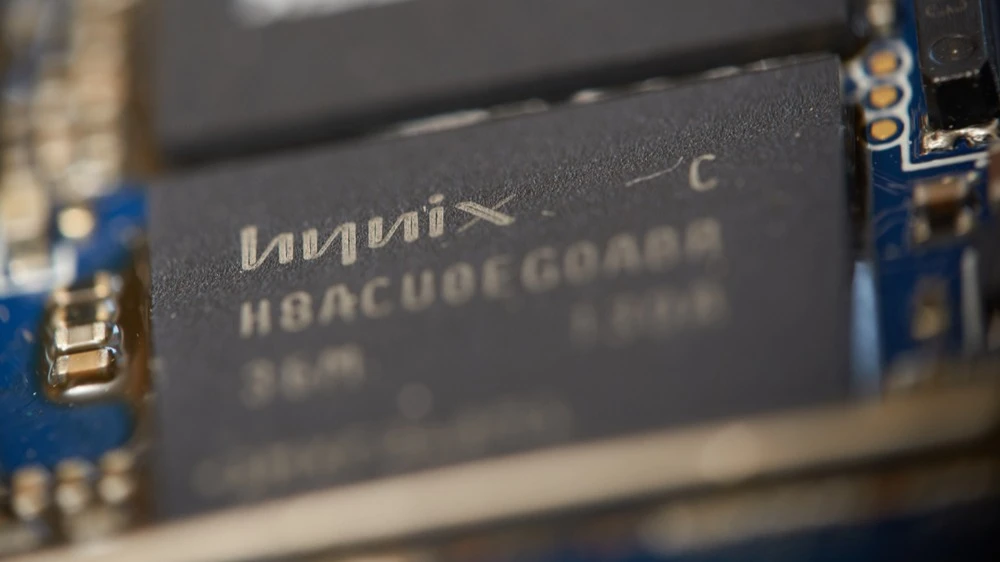
South Korea's SK Hynix is a major supplier of high-speed memory chips for Nvidia chips / Photo: g0d4ather/Shutterstock.com
South Korea's SK Hynix, one of the main suppliers of chips for Nvidia's AI solutions, reported another record quarter despite increased risks from the Iranian war. Super profits from the AI boom compensated the world's second-largest memory chip maker for the costs of the escalating situation in the Middle East.
Details
SK Hynix quintupled its operating profit to 37.6 trillion won ($25.4 billion) in the first quarter from a consensus forecast of 35.7 trillion won, the Financial Times reported. Thanks to strong demand for artificial intelligence technology, the semiconductor giant's January-March revenue nearly tripled to 52.6 trillion won ($35.5 billion); CNBC reported that SK Hynix's revenue fell short of some analysts' expectations. Operating margin, a measure of business efficiency, rose to a record 72%.
SK Hynix's multiple growth in January-March was achieved despite a worsening supply chain crisis caused by instability in the Middle East. The blockade of the Strait of Hormuz has paralyzed helium exports from Qatar, which provides a third of the world's supply of the gas. Helium is needed to dissipate heat in chip production and there are no alternatives. Korea's central bank has already expressed concern about the industry's high dependence on Middle Eastern helium and bromine.
However, SK Hynix executives assured on April 23 that the impact of helium shortage on the company is small thanks to the expansion of its pool of counterparties. "In terms of key industrial gases such as helium and bromine, we have already diversified our suppliers as well as built up sufficient inventories," SK Hynix CFO Kim Woo-hyun emphasized at the presentation of the quarterly report. He stated that due to this, "any short- or long-term impact on [the company's] production capacity will be very limited," the Nikkei wrote.
What the analysts are saying
Macquarie believes the AI boom continues to gain momentum: "Infrastructure remains the main bottleneck as demand for autonomous [AI] has just entered an explosive growth phase," the Nikkei quoted the bank's April 23 report as saying. Analysts noted that rental costs for previous generations of Nvidia chips have jumped nearly 40% in the past five months. This is due to the demand for capacity both for training new neural networks and for the operation of ready-made AI algorithms, Macquarie pointed out.
The structure of the semiconductor market has changed: if earlier it depended on chips for mass consumers, demand for which was growing and falling, now the main driver is specialized solutions for AI, Seoul professor Kwon Seok-joon told FT. The popularity of the latter keeps the market from cooling down and prolongs the current phase of growth in the industry, which "can last until next year, and possibly until 2028," the expert said.
What's going on with the stock
SK Hynix shares jumped by 3.6% shortly after the opening of trading in Seoul. Subsequently, the company's quotations went into negative territory, following the broad correction of Asian stock markets, which retreated from historical highs.
SK Hynix shares have soared 84% since the beginning of 2026 and almost 600% in the last 12 months. Shares of its main competitor, Samsung Electronics, have also risen by more than 80% since January. According to FactSet, stock analysts are on average positive about the current growth potential of both SK Hynix and Samsung shares and expect them to rise 29% on the year horizon.
This article was AI-translated and verified by a human editor