"Less water and coffee, eyes in the monitor": how the war in Iran is changing traders' jobs
According to a veteran commodity trader, during such periods you can lose a million dollars in two seconds if you don't watch the market closely

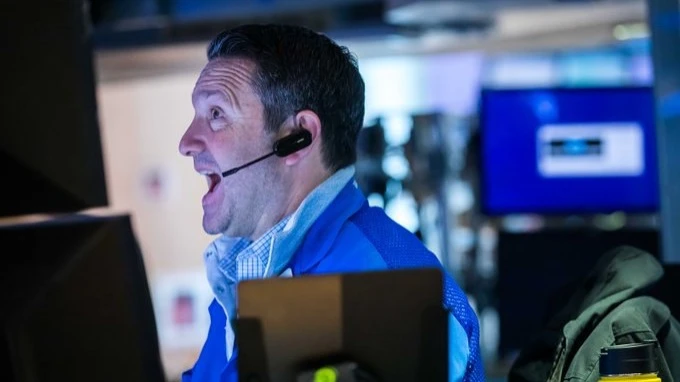
Traders expect the "roller coaster ride" in the markets to last a few more weeks / Photo: X / NYSE
The surge in volatility over the past two weeks due to the war in the Middle East has made investors around the world nervous. Korean stocks suffered a record collapse, European gas prices soared 68% in two days, and the cost of oil hit its highest level since 2022. Traders from different countries shared their experiences with The Wall Street Journal and Bloomberg. Oninvest retells their stories.
"You can lose a million in two seconds."
- On the night of Monday, March 9, Michael Brown, a senior strategist at Pepperstone brokerage in London, woke up at 1 a.m., Bloomberg writes. His phone, lying next to his bed, "buzzed nonstop," sending one notification after another: "Brent price exceeded $100 per barrel," "Brent price exceeded $110 per barrel," "Nasdaq futures fell 2%," "Nikkei index collapsed 5%." Brown turned on his computer and began answering a flood of calls from anxious clients in Asia. "A mild panic was starting to set in," he recounts.
- Gerald Gan, chief investment officer of Reed Capital Partners in Singapore, was awakened that morning by employees in need of urgent guidance. Some of Reed's clients were suffering serious losses. "We need to protect portfolios," they pleaded.
It was the tenth day of the war, and investors were beginning to realize the extent of the problems with energy supplies from the Middle East. It was in Asia, which is heavily dependent on oil and gas imports, that investors were hardest hit, with the region's markets seeing five of the ten biggest stock market crashes in the world this month.
The collapse in South Korean stocks "hit hard" Ghana's portfolio, Bloomberg writes. But the investor says he was able to earn clients a profit by buying oil at about $60 a barrel a few weeks earlier.
Now he is preparing for the fact that the "roller coaster" in the markets will last for a few more weeks. "I told everyone: be careful," says the agency's interlocutor. According to Gan, he starts work at 6 a.m. every day and stays chained to his monitor until about 2 a.m.
- No event - not the Gulf War of the early 1990s, not the 2008 crisis, not a pandemic, not the war in Ukraine - has caused such a continuous barrage of client orders to close positions as the morning of March 9, says Dennis Kissler, a veteran commodities trader at BOK Financial Securities in the US. He said he was in the office from 6 a.m. on Monday, processing orders from investors looking to lock in profits after oil's surge in price. At one point, Kissler was forced to hold conversations on three phone lines simultaneously. By noon, he was hoarse.
The most important thing now is for every trader to be on the job, Kissler tells his team. One of his secrets during such periods is to drink less water and coffee to cut down on trips to the restroom. "And don't take your eyes off the monitor," he admonishes. According to Kissler, in times like these, "if you don't watch carefully and make a mistake, you can lose a million dollars in two seconds."
- "Personally, I like volatility," retail trader John Bevis, 33, of South Carolina, told the WSJ. In recent days, his mornings have gone like this: while still in bed, he checks quotes on his phone and sits down at his computer at about half past 8. Only after reviewing the news and stock futures does he leave his desk to make coffee. Bevis then spends hours at monitors with charts and stocks. His trading strategy, which includes buying energy stocks on a downturn in oil prices and trading an exchange-traded fund on the Nasdaq Composite, is paying off: on Wednesday, he indulged in a macchiato on oat milk from a coffee shop.
Context
In the current volatility, traders are surprised not so much by the speed of quotes movement, but by their ability to rapidly turn in the opposite direction, Bloomberg writes. For example, as was the case when Donald Trump hinted at the possible imminent end of the war shortly before the end of trading: the S&P 500 index, which was in the negative for most of the day, soared, showing the largest growth for the month.
Unlike last year, when Trump's duties triggered a collapse, the market now expects strong volatility to persist for weeks, if not months. A real war, traders note, is much more unpredictable and harder to de-escalate than a trade war, Bloomberg reports.
"At some point it starts to feel like the worst is over and things are normalizing," says Brown of London-based Pepperstone. - But within a minute, the news flow completely changes and your positions are back in the negative. It's like you're back to square one.
This article was AI-translated and verified by a human editor