'Let's go back to the 2000s': why are people buying button phones again?

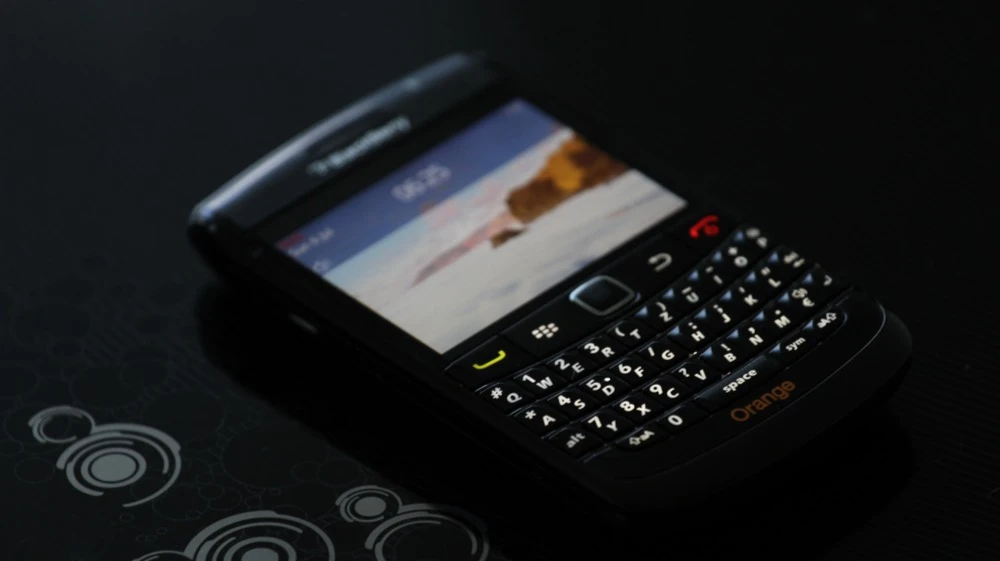
While tech giants like Samsung and Apple are competing with each other, working on improving the performance of gadgets and coming up with new features, button phones are gaining popularity, although they often do not even have the usual Internet access - only texting, calls and, at most, a camera. Why do users increasingly choose them?
Button nostalgia and digital detox
This January, Chilean President Gabriel Borich surprised everyone by demonstrating his flip phone at the Congreso Futuro 2025 event. He said he would use it to detox from social media. And a post by Victoria Zannino on TikTok calling for BlackBerry's return to the market has garnered 549,000 likes and more than 6.2 million views, the New York Times wrote in June of this year. That said, Victoria has just 646 subscribers.
The New York Times and Wall Street Journal, as well as The New Yorker.
This year, Google Trends recorded the year's maximum spike in interest for the query dumbphones (just those simple push-button phones) in May of this year.
Why did people become interested in the simplest phone models? On the one hand, it could be nostalgia for retro devices, as in the case of vinyl records and film cameras. But that's not all it is. More and more people want to have some control over their addiction to smartphones;
The average user now spends about 6 hours and 40 minutes a day in front of a smartphone screen, while an American spends 7 hours. Translated, that's two days a week or a third of a year, according to The Minimal Company website.
U.S. Surgeon General Vivek Murthy has previously warned that the habit of spending a lot of time on social media can take a real toll on the body, from sleep disturbances to worsening mental health.
A recent Cambridge University survey showed that nearly half of British teens consider themselves addicted to social media, and in 2022, six in 10 Americans told Gallup researchers that they use their phones too much, data cited by The New Yorker.
According to a survey by Spanish technology company SPC, conducted with Pantallas Amigas in July 2024, 12% of young Spaniards are considering using phones with limited features, and 19% know someone who has already gone for it. More than half of those surveyed (56%) have thought about a "digital detox", writes the Silicon edition. The survey was conducted as part of a campaign to market the SPC Wild button phone.
"My brain had changed, and I could no longer focus on the current moment - it was like I was used to being distracted all the time," says account manager Carlos Aparicio in an interview with the WSJ. - And I didn't like it." Aparicio says he couldn't even walk his dog without feeling bored; he wanted to pull out his iPhone and start scrolling the screen.
The symptoms are familiar, aren't they? Last year, Oninvest wrote about how tech giants like Facebook are exploiting vulnerabilities in the human psyche, particularly the dopamine reward system, to keep users on their platforms. Dopamine is the hormone of anticipation and curiosity. Every time you see a flashy notification, your brain experiences a small rush of dopamine; when, upon opening another social media post, you discover a like and comment, you get another dose, cementing the positive experience.
In June of this year, Richard Simon, a journalist and director of strategy at Georgetown University Law School released "Unplug," a book about how humanity can change its relationship with smartphones. "The time you spend looking at a screen is time you'll never get back," says one of the book's protagonists in an interview with Simon.
Simon addresses the problem of gadget addiction in the same way as if it were a question of drugs or smoking. He offers an analog of the "12-step" system, which is used when giving up bad habits, such as drinking alcohol, as well as ways to "detox" and "break the relationship" with the smartphone. Simon himself gave up his smartphone for a year and encourages readers to do so for at least 60 days. To reduce the "withdrawal" syndrome, he suggests buying himself a simple button phone, paper maps, a simple camera, and a Mighty music listening device, an analog of the old iPod Shuffle for Spotify users;
Simon is not alone in his ideas, adherents of digital minimalism, which the WSJ writes about, also believe that one way to solve the problem is to abandon familiar gadgets in favor of simplified technologies that can lead to greater productivity and a better quality of life.
While no one is collecting statistics on people who have become digital minimalists, the movement seems to be gaining momentum, according to The New Yorker.
Market for digital detox gadgets
Naturally, business is not standing aside from the growing interest in older versions of phones. Last year, HMD again introduced the legendary Nokia 3210 to the market. The advertising slogan read: "Let's go back to the 2000s, when conversations mattered more than likes and reposts!". The company even coined a new term Newstalgia, combining nostalgia with the word new, i.e. new.
The updated version of the phone has a long-lasting removable battery, a radio and a 2 megapixel camera. Of course, it has the Snake game installed. Первая партия таких телефонов в Китае была полностью раскуплена за два дня после релиза по цене 379 юаней (около $53). In April this year, a limited edition of the same Nokia Barca 3210 phone was released - in partnership with FC Barcelona. Its advertising slogan: "No scrolling, nothing distracting, stay fully in the game."
HMD is now selling several versions of the button phones on its official website, including the Nokia 110, Nokia 225 and Nokia 105.
One of the pioneers and leaders in manufacturing devices for conscious digital consumption is Light Phone, which has released its third generation of devices, the Light Phone III. Light Phone III;
This phone, by the way, costs no cheaper than the latest IPhone - $699 - and is available for pre-order with delivery not earlier than August this year. Black and white screen, 12 megapixel camera, no usual applications and access to Google Play or Apple Store, but there is a Wi-Fi module, GPS and Bluetooth. According to the developers, "the phone, is designed to give you the tools to thrive a conscious and purposeful version of yourself."
The company, founded in Brooklyn in 2014, has so far raised $14.5 million from investors, according toCrunchbase;
Minimal Company, which develops similar phones and uses similar marketing, is releasing units that cost a bit less. The latest model will cost $499. The phone, too, has a black-and-white e-ink screen and a qwerty button keyboard, and it has access to Google Play so you can download the apps you want. "Minimal Phone doesn't lock you out of apps, but inspires you to use them consciously," the company's website states.
В 2023 году она привлекла $719 тыс. от более чем 1000 спонсоров на краудфандинговой платформе Indiegogo,
One of the founders of Minimal Company, Andre Yukna, says he tried to give up mindless consumption of content on social networks and switched to a button phone. But you can't use it to access bank accounts, for example. As a result, he and another company founder, Armen Yousefian, tried to create something between Blackberry and Kindle. On the Minimal Phone, for example, the e-ink screen is convenient for reading, but you can't watch videos on it.
Retail stores selling minimalist phones have started popping up in the US. Daisy Kriegbaum and Will Stults, founders of online retailer Dumbwireless, offer their customers Light Phones, classic Nokia clamshells and push-button phones from Swiss company Punkt Tronics. In addition, there are special Unpluq Tag physical blockers from Rotterdam-based startup Unpluq. It's a 3cm yellow square tag-key that you tap on your phone to block access to websites and apps you choose to restrict your use of. Just leave the tag at home and there will be nothing to distract you at work.
There are ways to reduce activity on a regular smartphone as well - with the help of a special widget that minimizes the filling of the home screen, does not show icons and so on. For example, Minimalist Phone on Android. After installing the program, the screen becomes black and white, the user himself controls the number of necessary applications and their access to notifications. A subscription costs $0.99 per month or $5.99 per year. The Dumbify app offers similar services for iOS for a one-time payment of $4.99.
Apple and Google started offering users ways to track their screen time a few years ago. For example, in 2018, Apple announced Screen Time and Google launched Digital Wellbeing features for Android. These settings were essentially versions of existing parental control features that included setting time limits for certain apps, wrote the Verge. However, these features still don't help reduce screen time, the publication adds. In addition, they cause a lot of complaints from users.
No advertising, no revenue
Will the craze for button phones threaten the business of major smartphone manufacturers? The short answer is no.
Phones with a minimal set of features do not collect data about the user, not everyone has access to the usual market of applications, which means they are not interesting for marketers and big advertisers - they cannot be used for display advertising;
"The average smartphone user is a much more lucrative customer for software venture capitalists because it's nearly impossible to generate ad impressions or collect useful behavioral data with a regular phone," says says Inside The Valley's Jared Brenner, a consultant to technology companies.
While button phones could help with digital detox, "it's difficult for them to achieve high enough market penetration to worry the big smartphone makers," argues in an article by César Corcoles, a professor at the Faculty of Computer Science and Multimedia at the Open University of Catalonia.
Button phone revenue was $2.3 billion in 2024, it will grow 2.3% annually through 2031, according to a report by Cognitive Market Research. With North America accounting for 40% of global sales and Europe accounting for 30%. By comparison, global smartphone sales will total $408 billion in 2024, according to data byTechinsights.
This article was AI-translated and verified by a human editor