"Major oil market disruption": IEA cuts global demand growth forecast by 25%

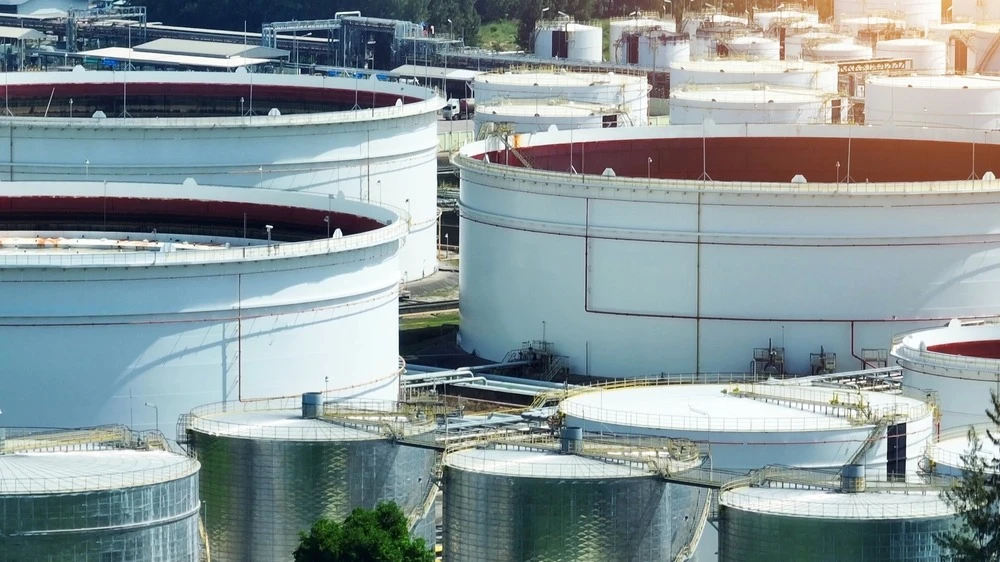
IEA: war with Iran caused the biggest disruption in the oil market / Photo: Andromeda stock / Shutterstock
The war with Iran has caused unprecedented turmoil in the global oil market, affecting 7.5% of the global oil supply and an even larger share of export supplies, Bloomberg writes, citing a report by the International Energy Agency (IEA).
"The war in the Middle East is causing the largest supply disruption in the history of the global oil market," the agency said in its monthly report released Thursday, March 12.
Details
The war in Iran will reduce global oil supplies by 8 million barrels per day as early as March, the IEA noted. Rising oil prices, flight cancelations and economic uncertainty are also beginning to restrain demand, noted representatives of the energy agency. Against this background, the IEA has reduced its forecast of growth in global oil consumption this year by about 25% - to 640 thousand barrels per day. This is the IEA's lowest forecast of oil demand growth for 2026, Bloomberg points out. In April last year, the energy agency estimated consumption growth at about 690 thousand barrels per day.
What else the IEA reported
- A day earlier, IEA member countries agreed to release a record 400 million barrels from strategic reserves to stabilize the market. Specific terms and rates of these deliveries to the market have not yet been specified, writes Bloomberg. 172 million barrels of oil will be sent by the U.S. from its strategic oil reserve, but it will take about 120 days to fully release this volume, the IEA points out.
- Since the conflict in the Middle East began, dozens of tankers have been stranded at a key transportation corridor - the Strait of Hormuz, a narrow water passage off the coast of Iran through which about 25% of the world's oil shipments pass. The IEA estimates that transportation through the strait, through which about 20 million barrels of oil and oil products a day passed last year, has fallen by more than 90% since the escalation of the conflict in the Middle East began, the report said.
- Although Saudi Arabia and the United Arab Emirates can divert some exports through alternative routes, the de facto closure of the Strait of Hormuz has forced Gulf producers to collectively cut production by about 10 million bpd, the IEA said. However, the decline in production in the Middle East is partially offset by increased production outside the Organization of the Petroleum Exporting Countries (OPEC) and its partners, as well as increased production from OPEC+ members - Kazakhstan and Russia, the IEA said.
- The sharp decline in oil supply has cut the IEA's projected global oil surplus in 2026 by more than a third to about 2.4 million bpd.
- The closure of the Strait of Hormuz also jeopardizes about 4 million bpd of refining capacity in the Middle East region, the report said. Limited crude supplies make it difficult for other regions to make up the shortfall, which poses additional risks to the supply of diesel and jet fuel to the market.
What the analysts are saying
The International Energy Agency's decision to release a record 400 million barrels of oil from IEA reserves may only partially calm markets, according to a Bloomberg Intelligence note. "The record IEA reserve release gives time, but at 4 million bpd it could be exhausted in as little as 100 days," BI analysts Salih Yilmaz and Will Hares warned. Long-term "relief" for markets, in their estimation, still depends on the resumption of shipping through the Strait of Hormuz.
Context
Before the Iranian crisis, the IEA predicted a record surplus of oil on the market this year: production growth in the US, Canada, Guyana and Brazil - was expected to outpace the increase in global consumption.
At the time of publication of this material, the international benchmark Brent rose 4.9% to $96.5 per barrel. American oil of Mark WTI added 4.7% and cost $91.4 per barrel
This article was AI-translated and verified by a human editor