Oil soared above $100 per barrel. Why didn't the IEA's plan to lower prices work?
Iran urged the world to prepare for oil at $200 a barrel

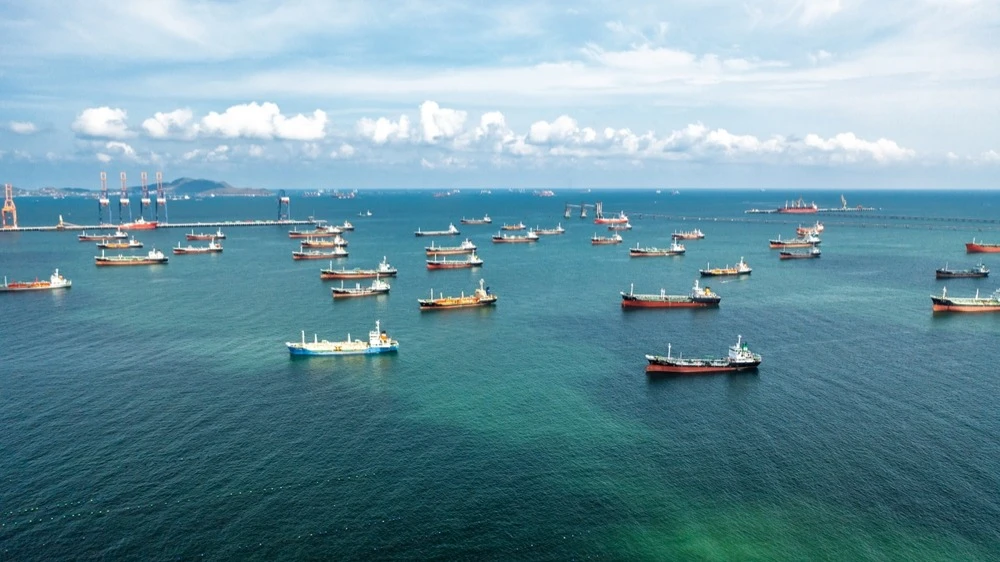
According to French President Emmanuel Macron, the 400 million barrel volume is equivalent to about 20 days of supply passing through the Strait of Hormuz in peacetime / Photo: Sunday Stock/Shutterstock.com
On March 12, oil prices jumped above $100 per barrel. This happened amid reports of new attacks on ships in the waters of the Persian Gulf and the closure of oil terminals. The plans of the US and Western consumer countries to dump a record volume of oil from reserves on the market did not bring much relief to investors.
Details
Both benchmark oil grades rose by 10% on Thursday morning. Brent futures reached $101.59 per barrel, after which they slightly reduced the rally and at the time of publication of this text cost just under $100. WTI contracts - a key benchmark for the US market - were trading at a peak of $95.97. Against this background, stocks went down: Japan's Nikkei 225 stock index fell by 1.5%, South Korea's KOSPI - by 1%. Mainland China's blue-chip index CSI 300 also lost 1%, while Hong Kong's Hang Seng lost 1.3%.
Futures on leading U.S. stock indices also fell in price: futures on the S&P 500 and Nasdaq Composite lost about 0.8%, stock contracts on the Dow Jones - more than 1%.
In the early morning hours of March 12, Iraqi security officials reported that two fuel tankers in its territorial waters had been attacked by booby-trapped Iranian boats. Iraqi authorities said the country's oil ports had "completely halted operations," Reuters reported. At the same time, Bloomberg reported that Oman evacuated all vessels from its key oil export terminal Mina al-Fahal as a precautionary measure.
"Several tankers loaded with Iraqi oil are reportedly now burning in the Persian Gulf off the coast of Basra, spilling flaming oil into the water. This appears to be Iran's direct and forceful response to the IEA's announcement of a massive release of strategic reserves aimed at cooling out-of-control [oil] prices," IG analyst Tony Sycamore wrote.
Context
Iran has stepped up attacks on merchant ships in the Strait of Hormuz, urging the world to prepare for oil at $200 a barrel. On March 11, three ships were reported hit in Persian Gulf waters, and Iran's Islamic Revolutionary Guard Corps informed that its forces fired on ships in the Gulf that disobeyed orders. The US president's speech also added to the uncertainty. On the night of March 12, Donald Trump said the war with Iran had been won, but it was too early to end the operation. "We don't want to leave early, do we? - Trump said. - We have to see it through to the end."
On March 11, the IEA reported that its member countries, led by the United States, will send to the market 400 million barrels of oil from strategic reserves in an attempt to bring down prices that have risen during the Iranian crisis. The volume of commodity intervention will more than double the record of 2022 - then the IEA brought to the market 182 million barrels.
This step can fully compensate for the supply shortfall due to the war only if the conflict is over soon, Capital Economics warned. In the most favorable scenario, the normalization of oil flows will take a month, and the shortfall in supply will amount to about 350 million barrels, the consulting company estimated.
This article was AI-translated and verified by a human editor