"Markets see no path to retreat": analysts - on the risks of a protracted war in Iran
IMF chief Kristalina Georgieva urged central bankers to "think about and prepare for the unthinkable"

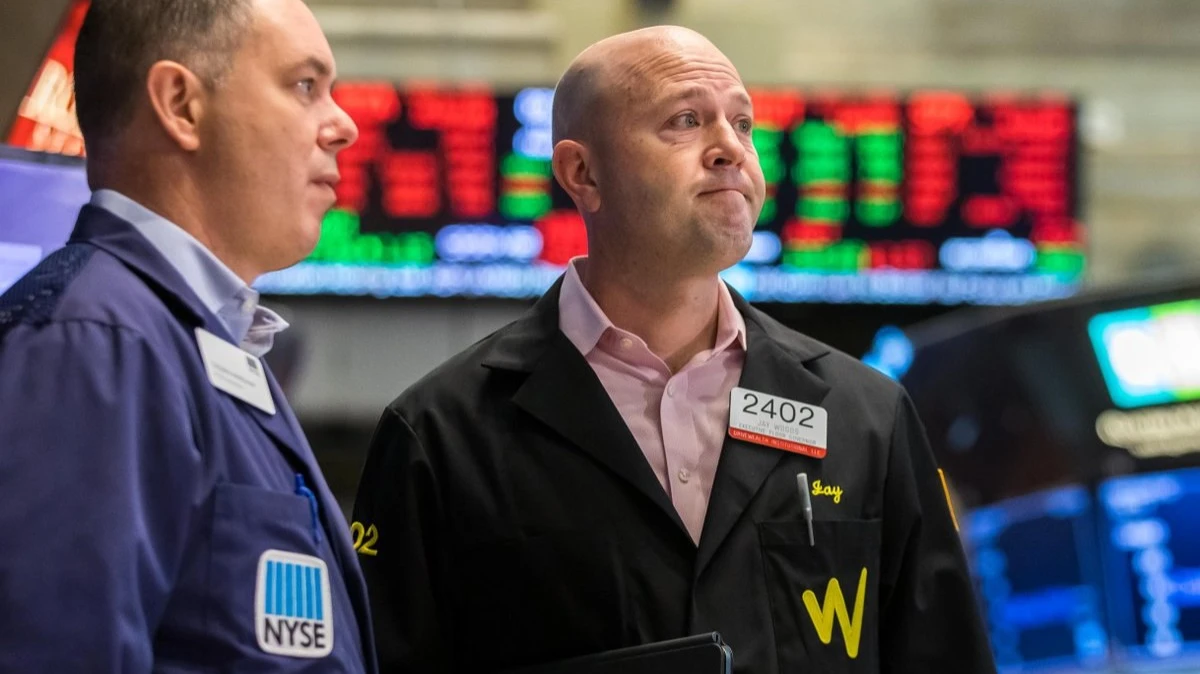
The market is faced with a wide range of possible conflict scenarios, and this alone reduces risk appetite, according to Lombard Odier / Photo: X / NYSE
Futures on U.S. stock indices fell sharply after the rally in oil prices on the morning of March 9. Investors fear that the escalation of the U.S.-Israeli war with Iran will reduce energy supplies and paralyze industry around the world. At the same time, many analysts agree that the conflict has no signs of ending soon, and warn of the risks of further decline in stocks.
- "Such a violent reaction stems from the fact that markets see no obvious path to retreat in the escalating Middle East conflict, which is now a high-stakes standoff where neither side seems willing to blink first," IG analyst Tony Sycamore wrote to clients.
- "Theworst of the stock market reaction is yet to come," believes JonesTrading chief market strategist Michael O'Rourke. - I would expect risk-off sentiment to persist until we get some tangible positive news".
- "Global investors face an extremely wide range of possible conflict scenarios, and this alone encourages short-term risk aversion and a shift to more defensive positions. Volatility is inevitable and is likely to be relatively higher for the broad Asia-Pacific equity market due to its fundamental energy vulnerability," said Lombard Odier senior macro strategist Homin Lee.
- Soaring oil prices and the escalating U.S.-Israeli war with Iran crashed airline stocks in Asia on March 9. "If oil rises in price by 20 percent, jet fuel becomes several times more expensive as it is in even greater shortage," said Subhas Menon, head of the Asia Pacific Airlines Association.
- "Asia is taking the brunt of the sharp escalation in oil prices and there is not much to run and hide," added Vishnu Varathan, head of Asia macroeconomic research at Mizuho.
- "Every additional day of disruption [to Middle East oil supplies] adds to the pressure, and in such a scenario, prices actually have no ceiling in the short term," said Stefano Grasso, a senior portfolio manager at Singapore-based fund 8VantEdge Pte, a former energy trader.
- ING's baseline scenario now assumes four weeks of disruption: two weeks of complete paralysis of energy supplies and two weeks of 50 percent restrictions, Warren Patterson, head of commodity strategy at the bank in Singapore, said. "This scenario does not necessarily mean we will see a complete end to the conflict during this period," he said. - But if U.S. and Israeli strikes undermine Iran's ability to attack ships and enforce the closure of the Strait of Hormuz, flows could begin to normalize." The bank's pessimistic forecast includes a three-month complete shutdown of oil and liquefied natural gas supplies. In this case, oil prices could soar to record highs in the second quarter, ING warned.
- "The longer this goes on, the more exponential the domino-like damage becomes, and that's exactly what oil is now showing the market, which already last week started to allow that things could be much worse," stated Rabobank senior global strategist Michael Avery. - If we are still in the same position next week at this time, the situation could become quite frightening".
- The firm consolidation of oil prices above the $100 per barrel mark has triggered investor fears of renewed inflation and cooling of the global economy. The current rally is more than just a commodity rebound: it acts as a tax on the global economy, forcing central banks to seriously consider a stagflation scenario, said Stephen Innes, managing partner at SPI Asset Management.
- After oil broke through the $100 per barrel mark, Helima Croft of RBC Capital Markets awaits Washington's next move: "So far, neither the White House's policy prescriptions nor the optimistic statements on television have alleviated the market's acute anxiety about shipping paralysis and cascading production stoppages across the [Middle East] region. We believe it is the duration of the [war] that will be the determining factor in the ultimate trajectory of energy prices. In the absence of a clear understanding of what victory looks like, it is difficult to predict whether this conflict will last a few weeks or a few months. Given the course of events, it is unclear whether [US President Donald Trump's] administration has prepared an exit path by getting involved in this next military clash."
- International Monetary Fund Managing Director Kristalina Georgieva on March 9 warned of inflation risks associated with the Middle East conflict. She said a 10 percent increase in oil prices, if sustained through most of 2026, would increase global inflation by 0.4 percentage points. "My advice to monetary authorities in this new global environment is to think about and prepare for the unthinkable," the IMF chief told a symposium of Japan's Ministry of Finance.
This article was AI-translated and verified by a human editor