Insurance is not the main problem. Analysts on Trump's Hormuz security plan

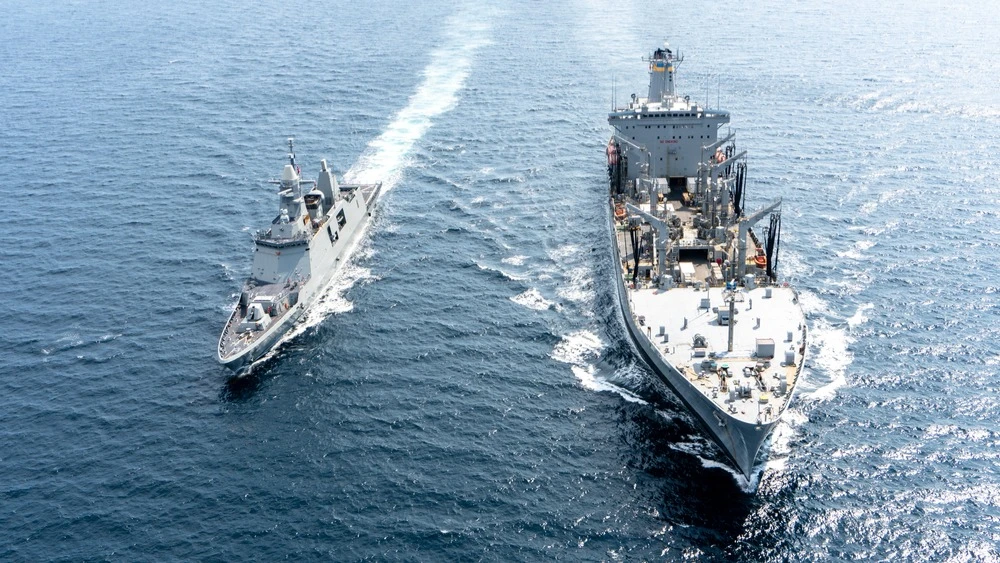
Analysts questioned Trump's tanker plans / Photo: Shutterstock/The Mariner 4291
The conflict in the Middle East has disrupted shipping through the Strait of Hormuz, where hundreds of merchant ships and oil tankers have been blocked. U.S. President Donald Trump has expressed the idea of providing ships with a U.S. Navy escort, and on Friday he ordered the launch of a risk insurance mechanism. Analysts earlier warned that it might not be enough.
Details
Many ships, including oil tankers and container ships, are stuck in the Persian Gulf, and freight rates have risen to record highs. Against this background, Donald Trump has not ruled out that tankers passing through this route will be escorted by the US Navy. In addition, the president ordered the U.S. Corporation for International Development (DFC) to provide risk insurance for the ships. On Friday, the White House said that this program has been launched - DFC will insure losses up to $20 billion on a renewable basis.
However, even before the launch, analysts warned that DFC's capabilities may be insufficient to cover potential losses, MarketWatch writes. JPMorgan estimates that the maximum insurance coverage that may be required for ships currently in the Persian Gulf reaches about $352 billion. This amount includes possible costs of oil pollution cleanup, salvage operations, ship insurance and liability in case of total loss.
The DFC's investment limit is now about $205 billion. The bank estimates that there are about 329 oil tankers in the Persian Gulf, as well as hundreds of container ships and other vessels.
Wolfe Research analysts believe the proposed scheme could be generally legally feasible, as the DFC has broad powers to issue loans, guarantees, investments and insurance. "Will this be enough for maritime industry participants to actually start passing through the strait?" the analysts were quoted by Marketwatch as saying.
Representatives of the insurance market also expressed doubts. Norwegian marine insurance company Skuld said that the US administration's plans are "encouraging", but their practical implementation may prove difficult. The insurer's analysts believe that it is necessary to determine the parameters of insurance coverage, the structure of premiums, the criteria for determining a "reasonable price" and territorial restrictions of insurance. Each of these issues will require separate analysis and agreement, which may take considerable time.
Insurance is not a major concern for ship owners, according to Matt Wright, senior freight analyst at consulting firm Kpler. Tankers are not going through the strait because of physical security concerns, he said. "You need assurance that Iran's ability to continue to wage war has weakened," Wright told CNBC.
Oil market and historical context
Disruptions in shipping through the Strait of Hormuz have affected global energy markets. Brent crude oil has risen in price by more than a quarter since February 27 and exceeded $94 per barrel, while U.S. WTI crude oil has risen by more than a third over the past week.
In the event of prolonged disruptions to shipping from the Persian Gulf, countries in the region could face an inability to store gas and oil, which could eventually lead to a shutdown of some production, JPMorgan Marketwatch quoted analysts as saying.
The situation in the Strait of Hormuz is reminiscent of the events of the 1980s during the Iran-Iraq war, when shipping in the region was also threatened. At that time, U.S. President Ronald Reagan allowed Kuwaiti oil tankers to re-register under the U.S. flag, after which they were given military escort by the U.S. Navy, Marketwatch recalls.
This article was AI-translated and verified by a human editor