Microsoft and Amazon stocks have lost nearly $1 trillion in capitalization. Where are investors going?
Investment capital is flowing into chip manufacturing, retail and oil companies


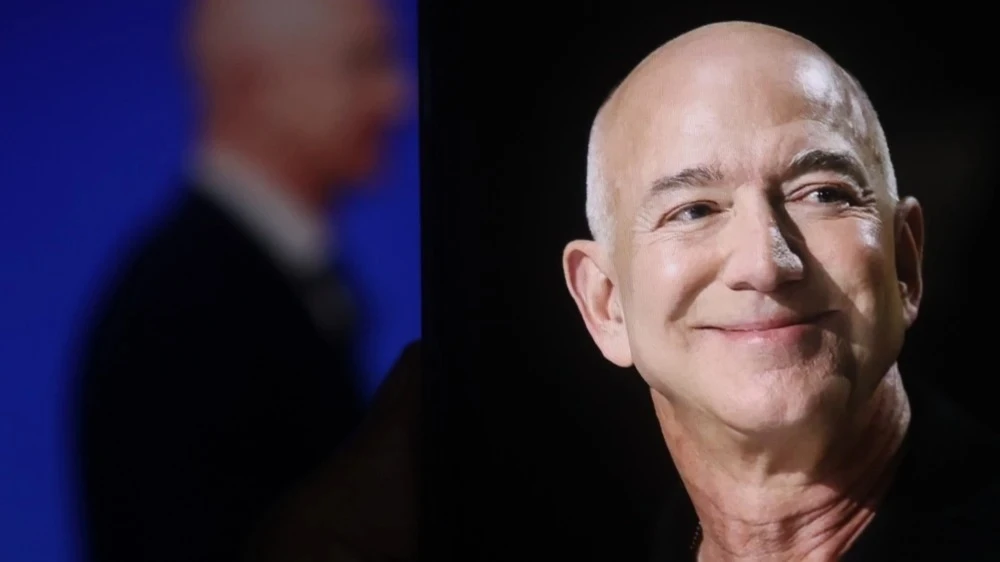
Amazon shares collapsed in February after forecasting a sharp rise in AI capital expenditure / Photo: Shutterstock.com
The combined market value of the two American cloud giants Microsoft and Amazon in 2026 has decreased by almost $1 trillion due to market doubts about the quick return from large-scale expenditures on artificial intelligence. Against the backdrop of falling quotes of the world's most expensive technology companies, investors began to rotate capital into other global blue chips.
Details
Shares of Microsoft, according to data at the close of trading on February 13 (on Monday, February 16, trading on U.S. exchanges was not held in connection with the celebration of Presidents' Day in the U.S.), fell since the beginning of this year by 17.1% (minus $613 billion of capitalization) because of the risks to AI-business and competition from the chatbot Gemini from Google and Claude from Anthropic. Amazon's stock, meanwhile, lost 13.8% of its value, or about $343 billion in market capitalization, amid a surge in capital expenditures. Other tech sector giants were also affected by the decline: Apple fell in price by $256.4 billion (-6.4%), Nvidia - by $89.7 billion (-2%), and Alphabet - by $88 billion (-2.3%), Reuters reported, citing LSEG data.
The correction signals a shift in market sentiment: after years of speculative frenzy, investors have stopped encouraging long-term AI ambitions and are demanding near-term profit visibility, states Reuters.
Capital is flowing into the securities of other companies from the top 20 in terms of capitalization: the shares of electronics and chip manufacturer Samsung Electronics have grown by 50% (+$272.9 billion in market capitalization) since the beginning of 2026, chip equipment supplier ASML - by 30%, semiconductor giant TSMC and oil and gas corporation Exxon Mobil have added 23% each, and the largest retailer Walmart - 20%. Positive dynamics are also demonstrated by securities of the manufacturer of hygiene and health products Johnson & Johnson (+18% to capitalization since the beginning of 2026), oil company Saudi Aramco (+8%) and electric car brand Tesla (+5%), the agency calculated.
Context
Microsoft and Amazon entered a bear market phase in February, falling more than 20% from their recent peaks. The February sell-off revealed a split within the "Magnificent Seven." According to Mike Tracy of Apex Fintech Solutions, the market doubts the return on AI investments by Amazon, Microsoft and Meta, so investors are refocusing on the tandem of Alphabet and Broadcom. The analyst believes that Google's "self-sufficiency" in chip manufacturing makes the company more sustainable than its competitors and justifies the premium in its valuation.
In turn, Bank of America (BofA) analysts led by Michael Hartnett see a fundamental threat to the leadership of the "Magnificent Seven": the forced abandonment of a business model based on easily scalable software in favor of the creation of expensive AI infrastructure deprives the tech giants of investment exclusivity. In the run-up to the 2026 US midterm elections, BofA offers a "buy Main Street, sell Wall Street" strategy, advising a shift into real sector (Main Street) and small-cap companies that could benefit from US President Donald Trump's populist measures.
What other analysts are saying
Nevertheless, out of 60 analysts who watch Microsoft securities, 55 advise to buy the company's shares, five more recommend to hold them, according to MarketWatch data. Analysts are also positive about Amazon's securities: 66 experts advise to buy the company's securities, six - to hold. Both Microsoft and Amazon have "Sell" ratings.
This article was AI-translated and verified by a human editor