Morning in New York: "bears" have come out of hibernation

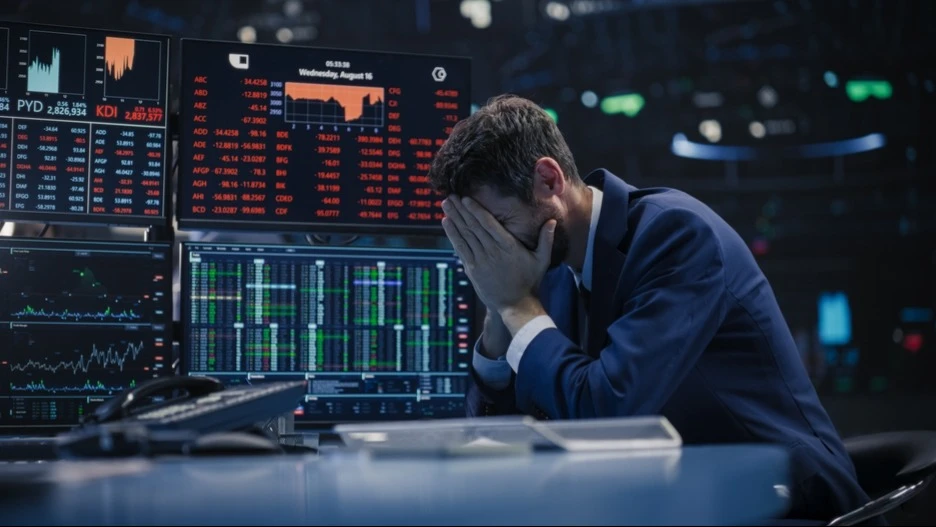
The conflict in the Middle East, entering its second week, remains the dominant factor driving market movements / Photo: Gorodenkoff / Shutterstock
Daily review and forecast of events on the U.S. stock market from Mikhail Denislamov, Deputy Director of Freedom Capital Markets Research.
We expect
The Iranian conflict, entering its second week, remains the dominant factor determining market movements. Major cargo carriers, including Maersk, have officially suspended transit through the Strait of Hormuz, and the number of ships passing through the Strait has been reduced to units per day against an average of 24. Over the weekend, a number of events took place, significantly exacerbating an already extremely tense situation. Kuwait is cutting oil production. Iraq's production also fell from 4.3 million to 1.7-1.8 million barrels per day (bpd). Saudi Arabia intercepted drones heading to the Shaibah oil field with 1 million bpd of reserves. Qatar's energy minister warned that if the blockade continues, all Gulf producers could be forced to halt production within days.
Of interest in today's macro calendar is the February (January: 3.09%) inflation expectations data from the Federal Reserve Bank of New York. In the current environment, this statistic will signal whether an inflation shock is embedded in long-term price expectations.
More than 98% of companies in the S&P 500 have filed corporate reports today. Before the main session opens, ZIM Integrated Shipping (ZIM) will release results, while Hewlett Packard Enterprise (HPE), Casey's General Stores (CASY), Vail Resorts (MTN ) and Voyager Technologies (VOYG) will release results at the postmarket.
Futures on American stock indices show a pronounced decline. We assess the balance of risks for the upcoming trades as negative with increased volatility. The energy shock continues to intensify, and weak labor market data increase fears of stagflation. If Wednesday's CPI statistics and Friday's PCE data come in above expectations, the corrective momentum will intensify. The S&P 500 ended the previous session at 6740, retreating below the previous week's levels.
In sight
- Quotes of APA (APA), Devon Energy (DVN), Diamondback Energy (FANG ) and ConocoPhillips (COP) and others in the oil and gas sector are rising amid a surge in oil prices.
- Shares of United Airlines (UAL), Delta Air Lines (DAL), Royal Caribbean (RCL), Carnival (CCL) and Southwest Airlines (LUV ) are down amid unfavorable energy price performance.
- AppLovin (APP) shares are down about 3% amid an active SEC investigation into the company's advertising practices. Announcements about expansion into AI marketing, the launch of an e-commerce platform for advertisers, and plans to create its own social network after a failed attempt to acquire the assets of TikTok do not offset the ongoing regulatory uncertainty.
- Western Digital (WDC) shares are falling more than 2% on news that top management sold a stake worth about $5.04 million, drawing investor attention for insider activity amid continued volatility.
- According to Politico, a senior OpenAI executive left the company, citing its agreement with the Pentagon.
- The securities of Vertiv Holdings (VRT), Lumentum Holdings (LITE), Coherent (COHR) and EchoStar (SATS) will be included in the S&P 500. Shares of a number of issuers will reallocate between the S&P 100, S&P MidCap 400 and S&P SmallCap 600 as part of the quarterly review. NAPCO Security Technologies (NSSC) will replace Alexander & Baldwin (ALEX) in the S&P SmallCap 600 due to the expected closing of the latter's purchase by a consortium of investors. The changes will take effect before the opening of trading on March 23.
The market on the eve of
March 6 trading on the U.S. stock exchanges ended in a noticeable minus. S&P 500 fell by 1.33%, NASDAQ 100 fell by 1.51%, Dow Jones lost 0.95%, Russell 2000 fell by 2.33%. The large-scale sell-off was caused by the aggravation of the foreign policy situation combined with alarming macro statistics.
All shares of the Magnificent Seven closed in negative territory. Meta (META: -2.38%), NVIDIA (NVDA: -3.01%) and Amazon (AMZN: -2.62% ) experienced the most pressure.
High-tech (XLK: -2.06%), manufacturers of cyclical consumer goods (XLY: -1.81%), as well as suppliers of raw materials (XLB: -1.91%) showed the most pronounced correction. The consumer staples sector (XLP: +0.43%) showed relative resilience. The energy sector (XLE-US: +0.16%) traded in the plus on the back of continued growth in oil prices.
The February labor market report was much weaker than expected. The number of jobs outside agriculture decreased by 92 thousand, unemployment increased to 4.4%. Negatively stock exchange players perceived the decrease in retail sales by 0.2% m/m with the growth of the benchmark group by 0.3%. The market reacted to these releases by selling off risky assets, as investors started to put the probability of stagflationary scenario development into their forecasts.
The situation in the Middle East became an additional catalyst for Friday's sell-offs. On March 6, WTI crude oil rose more than 10% to $90 per barrel; at the intraday high on March 9, WTI futures for delivery in April jumped to more than $119. The announcement of the US plan to allocate $20 billion for ship reinsurance failed to stabilize investor sentiment, as there is little hope for a quick diplomatic resolution of the conflict.
US President Donald Trump criticized the appointment of Mojtaba Khamenei as Iran's new supreme leader. Against this backdrop, speeches by Fed officials reflected growing uncertainty. Member of the Board of Governors Christopher Waller and head of FRB San Francisco Mary Daly emphasized the need to closely monitor the situation on the labor market.
Company News
- Day One Biopharmaceuticals (DAWN: +65.88% at the close of trading on March 6) will be acquired by pharmaceutical group Servier. The approximately $2.5 billion deal will be paid entirely in cash at $21.5 per share.
- BlackRock (BLK: -7.17%) is limiting redemptions of units from its HPS Corporate Lending fund as withdrawal requests reached 9.3% of its net asset value.
- Western Alliance Bancorp (WAL: -8.46%) will not receive the expected payment of $126.4 million on the due date from the counterparty under a moratorium on collection agreement. At the same time, the bank's management noted that the financial impact of this event is limited and confirmed that the company will remain profitable in the current quarter.
- Guidewire Software (GWRE: +4.99%) reported quarterly results and gave a strong outlook. Analysts positively assessed the potential for implementing solutions based on artificial intelligence, which the market sees as a long-term driver of business scaling.
- Rumble (RUM: -12.48%) disappointed investors with weak audience monetization. Despite consistent growth in the number of active users after international investments, the company's net loss for the fourth quarter was significantly higher than expected.
This article was AI-translated and verified by a human editor