National Healthcare IPO: fund investing in senior campuses goes public
The REIT has listed on Nasdaq under the ticker NHP

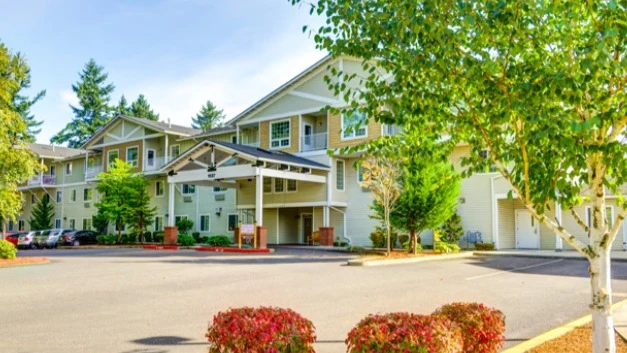
Founded in 2012, New York-based National Healthcare Properties was managed by Healthcare Trust Advisors until its restructuring in 2024 / Photo: National Healthcare Properties
Preliminary trading in shares of National Healthcare Properties, a real estate investment trust (REIT, Real Estate Investment Trust) that specializes in investing in healthcare and senior housing properties in the U.S., has begun on the Freedom client trading system. This is the second REIT to go public in recent weeks, Reuters writes. Later on April 22, National Healthcare Properties securities will appear on the Nasdaq under the ticker NHP. To participate, click on the ticker NHP.
Details
National Healthcare Properties successfully raised $462 million in an IPO. The company placed 38.5 mln shares at $12 per share, which is slightly cheaper than the lower end of the previously announced price range ($13-16 per share).
The listing was organized by Wells Fargo Securities, Morgan Stanley, BMO Capital Markets, Goldman Sachs, RBC Capital Markets and other major investment companies. Underwriters National Healthcare granted National Healthcare a 30-day option to purchase up to 5.77 million additional shares.
National Healthcare Properties, which is a self-managed real estate investment trust, has entered the public markets, betting on growing demand for senior housing and healthcare real estate amid an aging U.S. population, Reuters notes.
The listing of National Healthcare Properties follows the debut of Janus Living (also specializing in senior housing) on March 20, which was well received by investors, signaling renewed growth in the sector, notes Reuters. Janus Living raised $840 million in its IPO.
What the company is notable for
Founded in 2012, New York-based National Healthcare Properties was managed by Healthcare Trust Advisors before restructuring in 2024. However, National Healthcare is now positioning itself as a "self-managed investment trust." The REIT owns a portfolio of assets across the United States. It includes, among others, 37 senior living campuses with 3,615 rooms and 130 outpatient medical facilities, Reuters writes.
Since 2024, the total number of properties in National Healthcare Properties' portfolio has decreased from 202 to 167 (through 2025), according to the company's filings with the U.S. Securities and Exchange Commission. This reduction is due to National Healthcare's strategy of "capital recycling," Seeking Alpha points out: the company is getting rid of healthcare properties and redirecting the freed-up funds to the more promising and highly profitable segment of senior housing.
National Healthcare's revenue in 2025 is $342.3 million, down slightly from $353.8 million in the previous year due to the planned sale of some assets, IPO analyst Donovan Jones noted in a commentary at Seeking Alpha. The company recorded similar dynamics with net operating income, which fell from $132.3 million in 2024 to $128.1 million in 2025. At the same time, the company managed to significantly reduce its net loss: from $190.3 million in 2024 to $57.7 million in 2025.
The bulk of the funds raised by National Healthcare Properties will be used to pay down debt and fund future acquisitions in its senior living campus segment, the company said in a prospectus filed with the U.S. Securities and Exchange Commission.
What the market is saying
The healthcare real estate sector is gaining popularity as a "protective" asset amid general market volatility, Reuters writes. This is facilitated by demographic trends in the U.S. and investor interest in companies considered sustainable.
As the baby boomer generation retires, about 10,000 people are joining the ranks of retirees in the U.S. every day, Jones notes, emphasizing that the senior housing market will inevitably grow under the pressure of this demographic reality. Among National Healthcare Properties' risks, the analyst cites those associated with its high debt load, a problem that an IPO would only partially solve, the analyst says. As of Dec. 31, 2025, the fund's debt ratio, calculated as net debt to total assets, was approximately 45.1%. The fund's net debt reached $988.6 million during the same period, representing total net debt of $1 billion less cash and cash equivalents of $57.6 million, according to the REIT's SEC filings.
Investors should pay particular attention to the RIDEA structure that National Healthcare Properties uses in its senior living campus segment, Jones also says. Unlike a traditional net lease (Triple-Net Lease) model, where the fund simply receives fixed payments from the tenant, the RIDEA structure allows the company to generate revenue from the properties. This means that National Healthcare Properties' revenues are no longer limited to contractual lease payments alone: the fund directly benefits from any improvement in operational performance at its senior living facilities. However, this also creates significant risks, as the company is simultaneously fully liable for any decline in operating profits, Seeking Alpha writes.
Freedom Finance analyst Alem Bektemirov, in his turn, names competition, economic cycles, natural disasters and oversupply on the market as the main risks for National Healthcare Properties' business. Including debt and cash on the balance sheet, he estimates the fund's fair valuation at $923.56 million or $13.62 per share, 11.8% above the offering price.
_______________________
Freedom clients will be able to get access to shares of National Healthcare Properties before the opening of the main exchange session. Trading will begin in the early pre-market format 2-3 hours before the opening of the U.S. exchanges (from 15:30-16:30 Astana time). To participate click on ticker NHP.
This article was AI-translated and verified by a human editor