'No choice but to stay': what Powell said after the Fed meeting
It was probably Jerome Powell's last press conference as head of the regulator

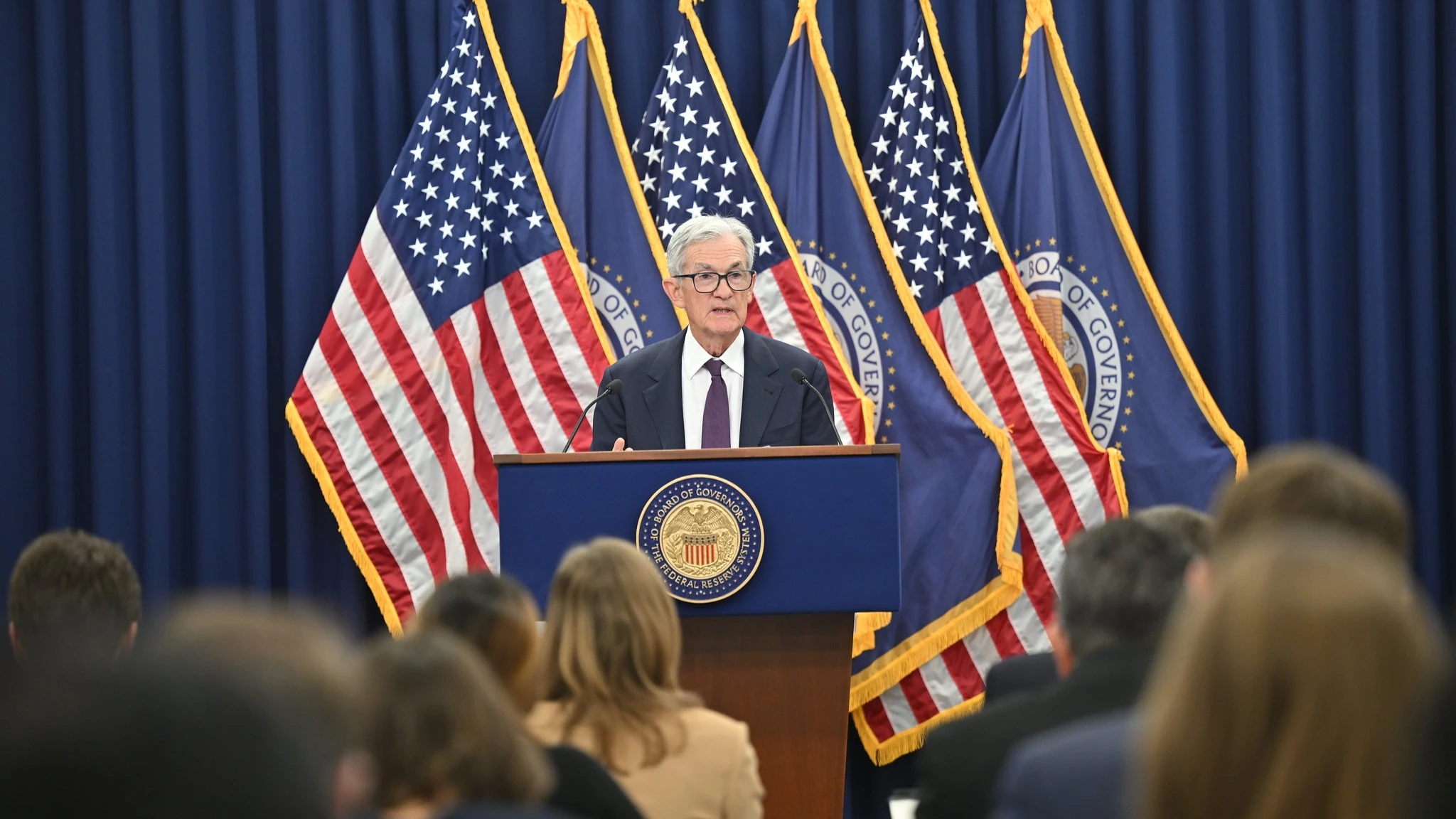
Jerome Powell gave probably his last press conference as Fed Chairman / Photo: Flickr/Federalreserve
Jerome Powell, after the Federal Reserve meeting on April 28-29, gave probably the last press conference as the head of the regulator. His term expires in mid-Ma, after which he will be succeeded, if confirmed by the Senate, by President Donald Trump's nominee Kevin Warsh.
Powell spoke after the Fed's two-day meeting, at which the regulator kept the rate unchanged for the third time in a row. The Fed Chairman welcomed the decision of the US Department of Justice to drop the investigation against him, confirmed that he will remain on the Fed's Board of Governors after the end of the Chairman's term, and commented on Worsh's candidacy. The main statements are in our selection.
About the investigation
"I welcomed the D.C. Attorney's announcement last Friday that she had closed the criminal investigation. However, she noted that she may reopen it. The DOJ provided assurances over the weekend that it will not reopen the investigation unless there is a criminal referral from the Fed's inspector general. And absent such a referral, even if they appeal the recent court decision, they will not, as part of that appeal, seek to reopen the investigation or send out new subpoenas."
About refusing to leave the Fed
"I have said that I will not resign from the [Fed] board of governors until this investigation is fully completed - transparently and definitively. And I stand by those words. I like the recent developments, and I am closely following the remaining steps in the process. [...] After my term as chairman ends on Ma. 15, I will continue to serve as manager for an indefinite period. I plan to remain in the shadows in that position. There is only one chairman of the Fed's Board of Governors. When Kevin Warsh's nomination is confirmed and he is sworn in, he will be that chairman."
"I am concerned about a series of legal attacks on the Fed that threaten our ability to conduct monetary policy without regard to political factors. And I want to emphasize here: this has nothing to do with verbal criticism by elected officials. I've never argued that verbal criticism is the problem. But these legal actions by [President Donald Trump's] administration are unprecedented in our more than 113-year history. And threats of additional similar actions continue."
"I will leave when I feel the moment is right to do so. [...] I am literally staying because of these actions. I've been planning to resign for a long time, but these events that have happened in the last three months have left me no choice but to stay until they pass - at least that much."
About the successor to the Fed chairmanship
"I want to congratulate Kevin Warsh on his advancement through the Senate Banking Committee this morning. This is an important step forward and I wish him success in the process."
"The role of the chairman is to seek consensus. To talk to them [members of the Board of Governors and the Federal Open Market Committee], to understand them, their thoughts, and to be able to bring them together, build consensus, and move forward. And that's what every Fed chairman has to do. And I think Kevin Warsh is actually a pretty good [fit], he has the capabilities, the skills to be very good at that."
About how he'll behave under Warsh.
"I intend not to interfere. I've been a manager for almost six years. As an almost former chairman, I really understand how difficult it is to get consensus among 19 smart people. You work with the chairman, you try to be heard, but you also work with the head and try to support him when you can. When you can't, then you can't. I think that's the line of behavior people tend to take, and it's the same line of behavior I'm going to take."
"I will go back to being a superintendent. I respect the authority of the chairman's office. [...] I propose to be a very constructive participant in the process out of respect for the office of the chairman."
About inflation
"Inflation has increased recently and remains elevated relative to our long-term target of 2%. Estimates based on the Consumer Price Index and other data show that PCE prices rose 3.5% for the 12 months ended March, boosted by a significant rebound in global oil prices as a result of the conflict in the Middle East. Excluding the volatile food and energy categories, core PCE prices rose 3.2% over the 12 months. This relatively high level reflects the effect of duties on prices in the goods sector."
"The economic outlook remains highly uncertain, and the conflict in the Middle East has increased this uncertainty. In the near term, higher energy prices will increase inflation overall. Beyond this, the magnitude and duration of the potential effects on the economy remain unclear, as does the direction of the conflict itself."
This article was AI-translated and verified by a human editor