Novo Nordisk's 5 challenges: what's at the center of investment banks' attention

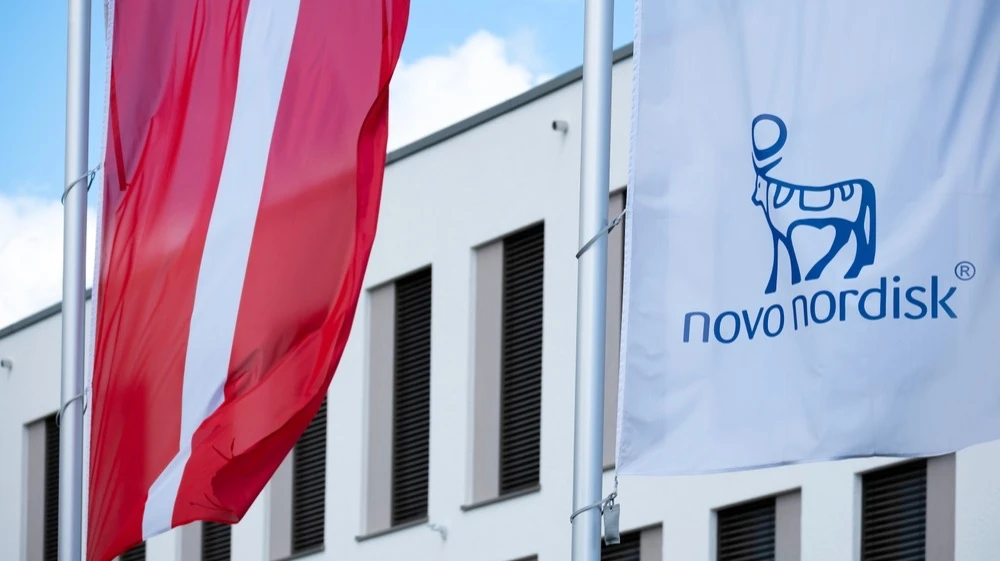
Danish Novo Nordisk will release its quarterly report on Nov. 5.
Shares in what was once Europe's most expensive company have fallen more than 40% since the start of the year. The company cut its 2025 sales growth forecast to 8-14% from 13-21% and appointed new CEO Maziar Mike Dustdar.
His goal is to revitalize sales and reduce investor anxiety that the Danish pharma company is losing ground in the obesity race, which it started.
Dustdar has been with Novo Nordisk for 30 years and his appointment reflects the company's shift to a more pragmatic model - from a research focus to commercial efficiency, writes the FT.
Novo, which is going through hard times, pragmatism cannot hurt. The patent protection of semaglutide, the basis of the Danish pharma giant's hit drugs, is about to expire in several countries. In addition, the company competes fiercely (and not always successfully) with Elly Lily.
What factors will weigh on Novo's performance in the near future? Here's what investment banks are paying attention to.
Forced price reductions
On October 16, US President Donald Trump said the price of a month's course of overweight drugs such as Ozempic could fall to $150 or even lower. UBS points out that forcing drug prices down is one of the main topics of discussion around Novo this year.
The company has three semaglutide-based products: Ozempic injections and Rybelsus tablets for diabetes, and Wegovy injections for weight loss.
There are two series of price negotiations underway right now. One involves procurement under Most Favored Nation (MFN), Trump's price-cutting initiative for the low-income Medicaid social program. The second line of negotiation is for Medicare, the Inflation Reduction Act (IRA) health insurance program for people over 65 and people with disabilities. As a result, prices for all three drugs may decrease for these insurance programs.
The regulator, the Centers for Medicare and Medicaid Services, must release the results of the negotiations by November 30 of this year.
How much could prices fall? Terms will be negotiated separately for each drug, UBS points out in a Sept. 30 note, citing Novo sources. The bank writes that current discounts on insurance programs are already 65% for Ozempic and 56% for Wegovy. Ozempic is likely to see further price cuts in 2027, bringing Novo's best-known drug discount to 72-74%. The impact of the negotiations on Wegovy is less clear, largely because it has little participation in insurance programs.
JPMorgan notes in an Oct. 17 note that Medicaid rebates could cause Novo sales to decline by about 2 percent in 2026.
The impact of IRA and Medicare price cuts could be more significant: although the bank notes that on Medicare, the company already discounts up to 80% off the official price of Ozempic and Rybelsus, an additional price cut in this segment in 2027 would reduce Novo's overall revenue by 4-5 percentage points, JPMorgan says.
It is important to note that the IRA negotiation list for 2027 includes 15 products, but 70% of their costs are for Novo's semaglutide-based drugs. That is why UBS believes that the market is likely to focus on the Danish company after the price caps are published.
Company restructuring
Another important factor that will affect the company's financial position, according to BNP Paribas, is the restructuring initiated by Mike Dustdar.
On September 10, the company announced that it would cut about 9,000 positions out of 78,400 worldwide. This is about 11% of the total staff, writes the FT. More than half of this plan will be in Denmark. This will yield savings of 8 billion Danish kroner (about $1.25 billion) by the end of 2026. The company will use the funds to commercialize Novo's research program in the fight against diabetes and obesity.
The company will write off about 9 billion kronor in the third quarter of 2025, but will save about 1 billion kronor in the fourth quarter. Novo expects its operating profit to grow by 4-10% by the end of 2025, although in August it expected a growth of 10-16%.
Analysts at BNP Paribas believe that one should look at the 8 billion crowns spent from the perspective of 2026, when the restructuring will start to show results. BMO Capital Markets calls Dustdar's efforts "titanic" but does not expect results to improve in the third quarter of this year.
Corporate storm
The reforms initiated by Novo's new CEO have caused unexpected upheaval. Helge Lund, Chairman of the Board of Directors of Novo Nordisk, announced his resignation in October. Along with him, six other board members are leaving. For Novo, what is happening is indeed rare - previously it was known for its stable corporate culture, writes Bloomberg. The agency believes that this will prolong the period of turbulence in the company.
So what happened? Lund said the exodus was preceded by disagreements between the board and Novo Nordisk Foundation, the pharma giant's largest shareholder, over the scope and speed of change at the company.
Interestingly, Lund will be replaced by Lars Rebjen Sorensen, former CEO of Novo and current head of Novo Nordisk Foundation. He accused the Danish drugmaker's management of misjudging the highly competitive US market and reacting too slowly to the sharp slowdown in Novo sales.
On October 21, the company announced an extraordinary meeting of Novo Nordisk shareholders to elect new members of the Board of Directors. The meeting will be held on November 14.
The new governance structure, according to Karen Brenner, a professor of business and law at New York University's Stern School of Business, creates a "unique opportunity" for Novo's largest shareholder to completely revamp the board.
Ozempic vs. Alzheimer's
UBS and BMO Capital Markets also cite the results of a trial of semaglutide for the treatment of Alzheimer's disease as a key influence on Novo's future performance. If successful, this will mean the company's portfolio will expand well beyond obesity and diabetes drugs. The number of people with Alzheimer's disease continues to grow. There are more than 7 million people living with the diagnosis in the U.S., and that number could reach nearly 13 million by 2050, according to the Alzheimer's Association.
Novo Nordisk started clinical trials of oral semaglutide for the treatment of Alzheimer's disease in 2021. The main phases of the human trials (called EVOKE and EVOKE+) ended in September 2025. Each of the trials involves 1,840 patients 55-85 years old with mild cognitive impairment or mild dementia and confirmed amyloid abnormalities. The first results should be released by the end of the year, with final data and official reports by October 2026.
One Novo manager described the trials as a "lottery ticket" in an interview with Reuters because of the uncertain prospects and huge potential. UBS predicts a 10 percent probability of success. That said, the bank calculates it could potentially boost Ozempic's sales by $15 billion (for example, in 2024 they amounted to 120.3 billion crowns, or about $17.4 billion).
"We see little reason for optimism, but our conversations suggest that investors are in no rush to sell Novo shares ahead of this event, so a significant sell-off is still possible if the study fails," UBS wrote.
Morgan Stanley analysts believe that the trial is likely to fail. In late September, the bank downgraded Novo securities from "neutral" to "below market" and the target price - from $59 to $47. This is one of the lowest estimates for the Danish manufacturer among all Wall Street banks.
BNP Paribas does not include revenues from the Alzheimer's drug in its base case scenario. But it writes that if the trials are successful, Novo Nordisk shares could rise by about DKK 40 from the current target price of DKK 375.
New deals
Novo has taken a number of steps this fall, intensifying its competition with Eli Lilly.
Caremark, the pharmacy benefit management arm of CVS Health, has launched a $200 co-pay program for Wegowy starting in 2026. Patients will be able to get the drug cheaper and insurers will be able to save money on treating obesity-related conditions. According to Simply Wall Street, this will give Novo Nordisk a price advantage over Eli Lilly's Zepbound and could provide multi-billion dollar savings through negotiated discounts and favorable pricing terms for patients and insurers.
In October 2025, Novo said it had agreed to buy US biotech company Akero Therapeutics for $5.2 billion, the Danish pharma giant's first major deal under a new CEO.
The deal will add efruxifermin for the treatment of fatty liver disease (MASH) and cirrhosis to Novo's portfolio. MASH is one of the most common complications of obesity. About 40% of MASH patients have diabetes, and more than 80% are overweight or obese.
The FT writes that the company used mostly debt financing for the purchase. Novo admitted that the deal will reduce its free cash flow in 2025, and in 2026 the acquisition could put pressure on operating profit growth.
But that's not all. About a week before the reports were published, Novo Nordisk made a counteroffer to buy US company Metsera for $8.5 billion (including upfront and milestone payments) - the Danish pharma giant is trying to outbid Pfizer's $7.3 billion bid.
According to Reuters, the move signals a more aggressive development strategy for the company. Metsera is one of several companies developing experimental weight-loss drugs, including a drug that can be taken once a month, less frequently than counterparts from Novo Nordisk and Eli Lilly. Paul Major, a portfolio manager at Bellevue Asset Management, said such a drug could help Novo fight its main U.S. competitor more effectively. Marcus Munns, portfolio manager of a mutual fund and Novo shareholder, added that the potential deal would "definitely help the company improve its position in the obesity drug market, assuming successful drug development."
Predictions
BNP Paribas expects Novo to report revenue of DKK 78.7 billion (market consensus DKK 77.4 billion) and earnings per share of DKK 4.37 versus consensus of DKK 5.04. The bank on Oct. 14 raised its target for the company's shares from $50 to $55 and reiterated a "neutral" rating.
But as early as 2026, the bank's analysts warn, Novo's revenue will be pressured by the emergence of generics of semaglutide in Brazil and Canada, where patent protection for the substance expires, as well as by forced price cuts for the company's drugs. BNP Paribas' base case scenario assumes zero revenue growth after 2032.
Out of 32 analysts, 20 now recommend buying Novo shares (Buy and Overweight ratings), 10 - "hold" and two - sell. The average target price of the securities on the stock exchange in New York is $68.25. The growth potential is almost 38% compared to the closing price on October 31.
This article was AI-translated and verified by a human editor