Nvidia shares 'lagging AI market': Wolfe analyst adds chipmaker to his top picks
Shares of AI chipmaker Nvidia rose 36% over 2025, outperforming other AI sector stocks

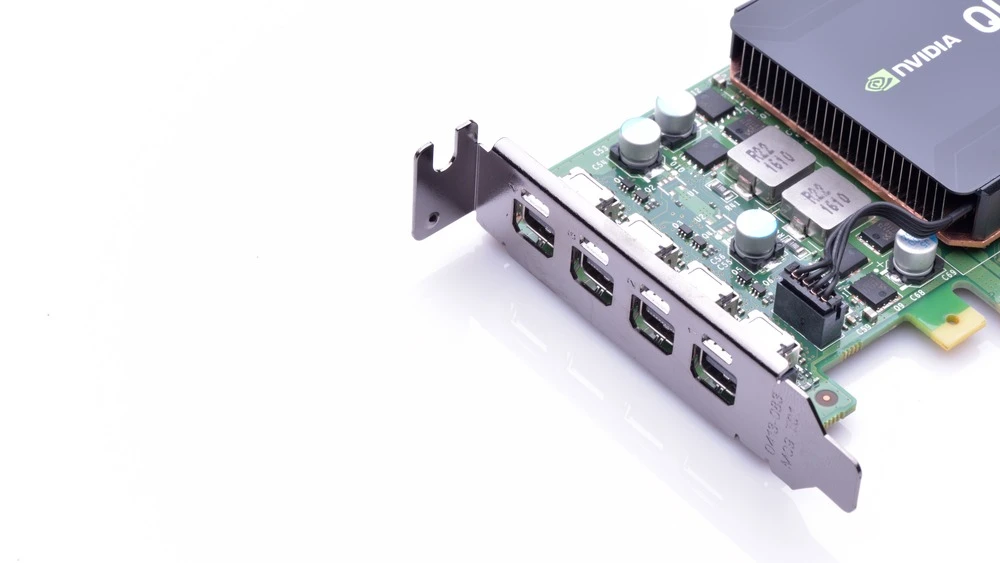
Nvidia's securities are now "lagging the market," according to an analyst at Wolfe Research / Photo: Shutterstock / Daniel Chetroni
Wolfe Research analyst Chris Caso included Nvidia shares in his company's so-called "alpha list" - a list of key investment ideas - pointing out that - as paradoxical as it may sound - according to recent data, Nvidia's securities are "lagging behind the market" for AI, MarketWatch writes. They're up 36% over 2025, while, for example, Micron Technology's securities are up 300%. Caso finds the current valuation of Nvidia stock attractive and sees potential.
Details
"We see three main reasons for this undervaluation [of Nvidia's stock]," explained Caso, "the late launch of the Blackwell platform (the next generation of AI computing platform. - Oninvest), concerns about the sustainability of AI investments in general, and fears about losing market share to specialized AI solutions," the analyst pointed out.
According to Caso, Nvidia's securities now look attractive from a valuation standpoint: they are trading at 23 times the earnings per share that experts predict for the company for 2026 - while on average over the past five years, investors have been willing to pay about 35 such earnings for Nvidia stock. In other words, the stock is now trading cheaper than its historical valuation level, MarketWatch summarizes.
Over the longer term, however, Nvidia's stock remains one of the strongest assets in the market: over the past three years, its value has risen about 1,000%, Kaso adds. By comparison, Micron Technology stock has gained about 500% over the same period, and the S&P 500 index is up about 75%.
What's up with Nvidia stock
At the premarket on January 14, the dynamics of Nvidia shares remained virtually unchanged. According to MarketWatch, the consensus forecast on the company's securities indicates a high degree of confidence of analysts in their future prospects: 63 analysts recommend buying the company's securities, six advise holding and only one advises selling.
Nvidia Growth Factors
Chris Caso attributes the positive valuation of Nvidia stock to the development of its product line. Blackwell is already reaching full capacity, he says, and the company's next AI platform, Rubin, is expected to start scaling in the second half of this year. That said, "Rubin's performance looks compelling," says Caso: performance in AI applications is expected to be five times faster than Blackwell. "Continuous performance spikes allow Nvidia to price profitably and maintain margins," the analyst emphasized.
Nvidia's recent comments on the pricing of its Blackwell Ultra and Rubin platforms "pleasantly surprised" the analyst: the company made it clear that it was able to bring new AI solutions to market without pressure on pricing and keep margins high. Caso saw this as "upside potential" for the outlook, as well as confirmation of Nvidia's continued competitive advantage in the market.
Kaso sees Google's tensor processors as Nvidia's main competitor. However, deploying these chips in data centers for third-party customers, he said, "is likely to be limited in scale."
Against this backdrop, based on Nvidia's own consensus forecast, Caso expects the company's revenue to grow by at least $40 billion in 2026. In October 2025, Nvidia said it had information on Blackwell and Rubin revenue, not including the China business, of more than $500 billion between then and the end of 2025. Last week, Nvidia CFO Colette Kress noted that figure has "definitely grown," Bloomberg wrote.
In addition, Nvidia expects to start selling H200 chips - advanced graphics processing units (GPUs) designed for high-performance computing and AI tasks - in China, which could bring additional benefits to the company, MarketWatch writes.
This article was AI-translated and verified by a human editor