Oil has consolidated above $100. US allies may go to war with Iran, says WSJ
Market prepares for European and US equities to decline after markets open

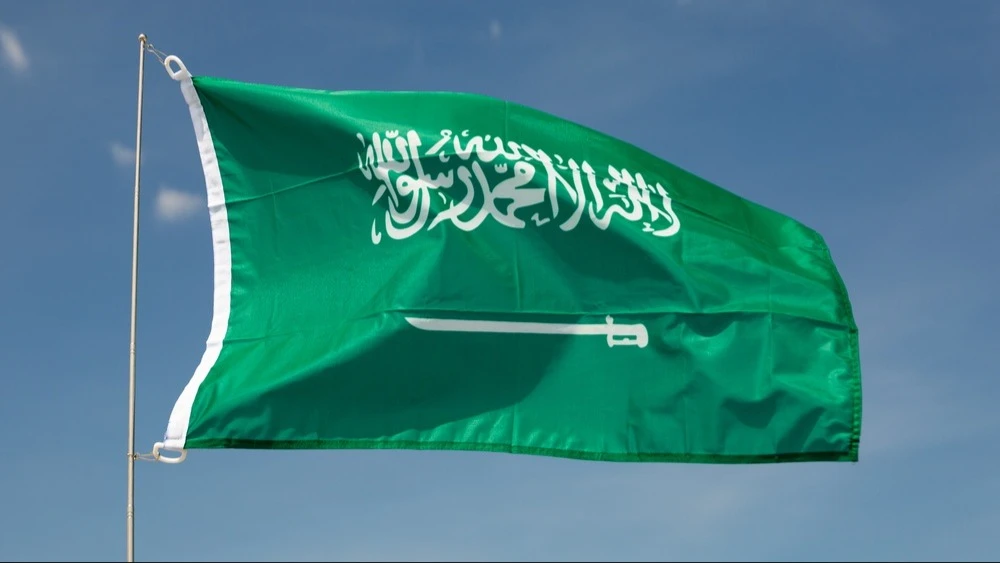
Saudi Arabia's entry into a war with Iran is only a matter of time, says The Wall Street Journal's source / Photo: BearFotos/Shutterstock.com
After collapsing 11%, triggered by Donald Trump's decision to delay a strike on Iran's energy infrastructure, the cost of oil returned to growth and consolidated above $100 a barrel on March 24. Hopes for an end to the Iranian crisis waned after Tehran denied Washington's claims of secret talks and The Wall Street Journal reported that the US' Middle Eastern allies were close to directly entering the military conflict.
Details
Futures for benchmark Brent crude oil grade and contracts for North American WTI rose by more than 4% on March 24 - to $104 and $92 per barrel, respectively. Ali Nikzad, deputy speaker of Iran's parliament, said that the Strait of Hormuz will not return to its previous state and there will be no negotiations with Washington, Bloomberg reported citing the semi-official Fars news agency. Tehran is only studying correspondence received from the U.S. through intermediaries, a senior Iranian Foreign Ministry source told CBS television.
Another reason for the rise in oil prices was the risk of expanding the geography of the conflict. As WSJ found out, the U.S. allies in the Persian Gulf are gradually inclined to enter into a military confrontation with Iran. In particular, Saudi Crown Prince Mohammed bin Salman is now set on rebuilding deterrence capabilities and is close to a decision to join the attacks, the newspaper's sources claimed. One of them said that the kingdom's entry into the war is only a matter of time.
What the analysts are saying
"If Gulf countries join the conflict, it would mean a significant escalation and could change the way the market assesses risk in the short term," said XS.com analyst Linh Tran. - The market remains highly sensitive to the news backdrop, leading to sharp price spikes followed by quick pullbacks."
The constant change in Trump's rhetoric has led to lower trading volumes: amid the chaotic news flow, traders are not ready to take risks, Bloomberg reports. According to the agency's calculations, since the beginning of the war in Iran, Brent futures have experienced four of the six strongest price spikes in the history of trading.
"At its core, the situation is still incredibly fragile or even explosive. It doesn't appear that all sides are on the same page..... Trump can say whatever he wants, but the [Strait of Hormuz] is closed and it will remain closed until all the Iranians agree, and that's where the problem lies," Reuters quoted IG analyst Tony Sycamore as saying.
What about the stock
Asian indices rose on March 24 as part of a catch-up rally following Wall Street. MSCI's broadest index of Asia-Pacific shares outside Japan added 1.2%, Tokyo's Nikkei 225 rose 0.6% and Hong Kong's Hang Seng climbed 1.5%.
However, U.S. futures moved lower, with contracts on the Nasdaq index down 0.6% and the S&P 500 losing 0.5%. Futures on the European index EUROSTOXX 50 sagged 0.9%, and on the British FTSE - fell by 0.8%, reports Reuters.
This article was AI-translated and verified by a human editor