Oil storage tanks full, gas at a three-year high: fifth day of war in Iran

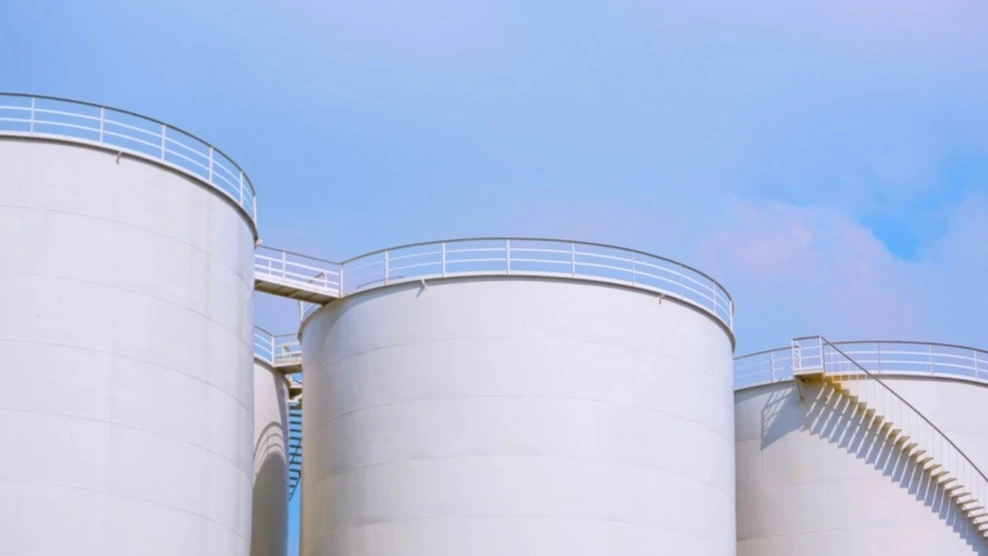
Photo: Kub The Shadow Simple Man / Shutterstock
The escalation of the conflict in the Middle East continues for the fifth day. What is happening in the markets and what analysts say about it - we have collected the main points.
Gas and oil market
- Natural gas prices in Europe have jumped by 70% since Friday, February 27, to the highest level since 2023. LNG prices in Asia have also reached their maximums since September 2023, Bloomberg writes with reference to traders, noting that current gas prices in the region are already more than twice as high as last week. Such dynamics the market demonstrates against the background of LNG production shutdown at the world's largest export plant in Qatar, as well as the actual blocking of navigation through the Strait of Hormuz by Iran. The biggest impact of the situation, said Evan Tan, LNG analyst at ICIS, is likely to be on China and India, which are most dependent on gas supplies from Qatar. They may, Tan suggested, switch to alternative energy sources like coal instead of buying expensive, overpriced LNG shipments.
- On March 4, Mark Brent oil is trading at $84 per barrel (plus 3.27% against the last closing price). WTI costs $73.59, demonstrating growth of more than 2%. Since the key energy export route through the Strait of Hormuz off the coast of Iran remains virtually closed to shipping, large oil storage facilities in Saudi Arabia are rapidly filling up, Bloomberg writes with reference to the company Kayrros, specializing in geospatial analytics.For example, the Ju'aymah terminal on the country's east coast was "rapidly running out of spare capacity" as of March 1, Kayrros co-founder and principal analyst Antoine Half wrote on LinkedIn. Four of six tanks at Saudi Aramco's Ras Tanur refinery - which was shut down this week after strikes from Iran - were filled to capacity, he said. Iraq has also begun suspending oil production at its largest fields - there is enough spare storage at the Al Basra terminal in Iraq for less than two days of exports, Half says. "OPEC's second-largest oil producer has very few reservoirs compared to production and export levels," he explained. If the Strait of Hormuz remains closed, other countries could follow Iraq's example, the analyst suggested.
Stock market
- U.S. stocks after a large-scale sell-off at the beginning of trading on March 3 (the decline in major stock indices exceeded 2%) eventually ended the session with a fall of about 1% (S&P 500 lost 0.9% for the day, Nasdaq - 1%, Dow Jones - 0.8%)."I look at the market reaction and, frankly, I'm surprised: the market reaction was pretty calm [to the escalation of the conflict in the Middle East]," commented Goldman Sachs head David Solomon (quoted by Bloomberg). Now, he noted, it is difficult to make any assumptions about the future of the market: "At the moment, much is unknown," - stated Solomon.
- South Korea's stock market - the best-performing market 2026 before the U.S. war with Iran (posting gains of more than 40%) - was close to its worst two-day collapse since 2008 on March 4. Korea's Kospi index fell 12.6% after sagging 7.2% the previous day. "The movements [of quotes] are too extreme, so forecasting seems almost impossible," said Ahn Hyun-jin, head of Seoul-based Billionfold Asset Management (quoted by Bloomberg).
Impact on the economy
- The escalating conflict in the Middle East and potential disruptions in oil markets create risks of increased inflation, which becomes a new test for central banks around the world, writes CNBC. Higher energy prices will eventually affect consumer and producer prices, especially in countries that rely heavily on oil imports from the Middle East, the channel notes, emphasizing that this could force central banks to reconsider the trajectory of interest rates in a hurry. "The ongoing conflict with Iran strengthens the case for many central banks to keep interest rates unchanged for now," Nomura economists said in a research note.
- The European Central Bank finds itself in a situation that ING economists called "a real dilemma": an oil shock could push already robust inflation upward, while the outlook for economic growth will weaken under the pressure of higher U.S. duties, CNBC noted. "The eurozone economy will have to demonstrate clear resilience for an interest rate hike," the analysts emphasized.
- "The recent situation with Iran has made the [U.S.] Fed even more reluctant to cut interest rates than it was before it happened," economist and former U.S. Treasury and Fed chief Janet Yellen also observed (quoted by CNBC).
This article was AI-translated and verified by a human editor