Panic in Korea's stock market triggered the biggest drop in nearly 20 years
In the anti-leaders were securities of recent drivers of the Korean market - Samsung, SK Hynix and Hyundai

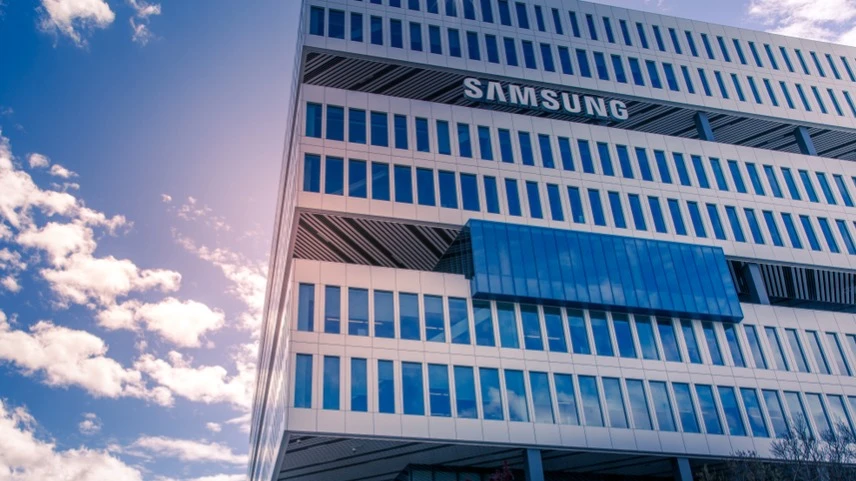
Shares of Samsung Electronics, South Korea's most valuable company, plummeted more than 10% on March 4 amid investors' flight from risk / Photo: Valeriya Zankovych/Shutterstock.com
The Korean stock market, which had been surging before the U.S. war with Iran, was close to its deepest two-day collapse since 2008. Against the backdrop of surging oil prices, traders are cutting overheated positions in the largest and most liquid securities associated with the artificial intelligence boom. The beneficiaries of global instability are becoming relatively cheap securities of industrial companies.
Details
The benchmark index of Korean shares Kospi during trading on March 4 collapsed by 12.6% after a 7.2% slump a day earlier and is heading for a record two-day decline since 2008. The main contribution to the negative dynamics made quotations of the largest corporations that recently pushed the market up - leading suppliers of memory chips for working with AI Samsung Electronics and SK Hynix, as well as carmaker Hyundai Motor, which cooperates with Nvidia and spends billions of dollars on data centers, Bloomberg writes.
What the market is saying
"The [quote] movements are too extreme, so forecasting seems almost impossible - [technical] analysis doesn't help much. Retail investors seem to be hesitant too, buy orders have been melting since yesterday. Although we are selecting quality securities and hedging, this is not a clear opportunity," said Ahn Hyun-jin, head of Seoul-based Billionfold Asset Management.
One of the reasons for the historic decline, investors call the forced closing of positions of traders working in debt (with leverage). The volume of this debt jumped to new highs just before the sell-off, as retail investors were actively betting on continued growth, Bloomberg reports.
"There has been a lot of buying on credit, especially shares of these heavyweight companies, with investors putting up only 30-40% as collateral," said Kim Do-joon, investment director of Seoul-based Zian Investment Management. These positions are undergoing forced liquidation, and if the March 5 collapse continues, no one will "catch the falling knife," the financier warned.
But not all stocks in the Kospi index fell on March 4. Gas supplier Daesung Energy, petroleum products producer Kukdong Oil & Chemicals, petrochemicals producers Korea Petroleum Industries and SH Energy & Chemical, and ocean cargo carrier Heung-A Shipping all jumped 10% or more.
This "could create point opportunities to build positions in companies and industries that are now trading at attractive valuations," according to Matthews Asia portfolio manager Park Seo-joon. "Korean industrials such as defense and shipbuilding may come back into focus as beneficiaries of global instability, limited supply and Korea's growing strategic importance," he said.
Markets have finally begun to take seriously the conflict between Iran and Israel, said Bloomberg head of research Barclays Ajay Rajadhyaksha. According to him, Asian stock markets will suffer the most, followed by European markets and then the U.S. markets. The U.S. is now a "giant energy superpower," while Asian economies such as China, India, South Korea and Japan are more vulnerable.
"Markets are starting to build into prices the risk that this war will not end quickly - as opposed to June 2025, or April 2024, or October 2024. Markets are starting to wake up and realize that this conflict could be very different. We may well still be in this situation in two or three weeks' time," he notes.
Context
In January-February 2026, the Kospi nearly doubled in value, and Korea's stock market overtook Germany and France in terms of capitalization to become the ninth largest in the world. This rise was a direct result of a combination of two factors: corporate reforms to benefit shareholders and the country's growing importance in the global supply chain for the AI industry. As a result, Korean stocks have outperformed larger markets despite the relatively modest size of its own economy, according to Bloomberg.
This article was AI-translated and verified by a human editor