Perfect Corp. strategy chief tells Oninvest about the firm's past, present and future
How the Taiwanese startup landed Chanel and Google as clients and what challenges it now faces from Trump's tariffs
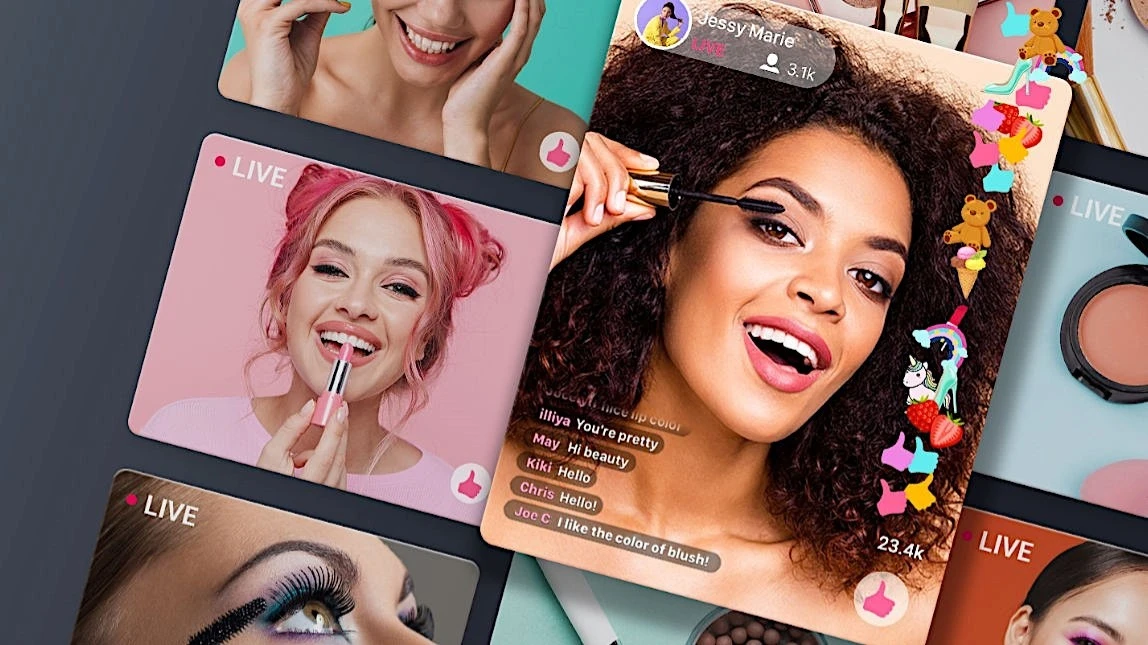
In the App Store or Google Play, hundreds of apps offer users the ability to try on virtual makeup, change their hair color, and experiment with other beauty effects. Perfect Corp. does this for major brands like Chanel, enabling them to showcase how makeup products appear on each customer’s face.
While many apps use artificial filters or playful AR features like Snapchat-style masks, these are not suited for the cosmetics industry. According to Pin-Jen (Louis) Chen, executive vice president and chief strategy officer at Perfect Corp., brands need tools that demonstrate how products apply to a real face, not a digitally distorted one. Chen spoke to Oninvest during the recent LD Micro Forum in New York.
Perfect Corp.’s technology is distinguished by the precision of its algorithms in replicating how makeup looks in real life. The company’s tools aim not to entertain but to simulate product application with accuracy, capturing the exact color and texture of makeup on the skin to match the in-store experience, Chen said.
How it started
Founded in Taiwan in 2015, Perfect Corp. emerged from CyberLink, an IT firm cofounded by Alice Chang and her husband. Chen, one of the company’s earliest employees, began his career at CyberLink in the 2000s as a programmer. As PC sales declined, the team explored opportunities in the growing smartphone market, eventually creating two free apps for photo editing and makeup application. These efforts later evolved into a standalone business when Chang spun off the division into Perfect Corp. in 2015. Chen joined the newly formed company as a marketing and business development manager.
He recalls the early years as particularly challenging, frequently traveling to New York – sometimes up to 10 times a month – to promote the company’s solutions. At that time, Perfect Corp. had little name recognition, and global brands did not associate Taiwan with the beauty industry. It was difficult to break into, with many major players reluctant to work with unproven vendors.
The company’s first high-profile client was Elizabeth Arden, the cosmetics brand often associated with Prince Harry. In 2018, Elizabeth Arden was seeking to modernize and experiment with new technologies. Perfect Corp.’s offering arrived at a pivotal moment, and its leadership embraced the solution, Chen says. That initial engagement helped open doors to additional partnerships in the global cosmetics space.
In October 2022, Perfect Corp. listed on the Nasdaq through a merger with SPAC Provident Acquisition Corp., bypassing the traditional IPO process. The deal valued the company at $1.02 billion, granting it unicorn status.
Today, the company serves a wide range of prominent clients, including Chanel, Estée Lauder, Clinique, and NARS. As of the first quarter, Perfect Corp. had active partnerships with 801 brands, an increase of nearly 9% year over year.
Among its most enduring partnerships is a six-year collaboration with Alibaba, which enables users on Taobao and Tmall to try on makeup virtually. In 2021, Perfect Corp. launched an interactive AR makeup try-on experience with Google. Even retail peers such as L'Oréal rely on Perfect Corp.’s tools for virtual try-ons.
Business model
The business has two main segments: B2B and B2C.
The bulk of revenue comes from B2B contracts with cosmetics brands. Perfect Corp. provides its technology via the cloud, enabling integration into brand websites and mobile apps. Customers can try on products, like different lipstick shades, directly on their smartphones.
The company also generates revenue through consumer subscriptions. Its seven mobile apps and web-based platforms, collectively branded as YouCam, include tools for photo and video retouching, makeup simulation, and virtual nail polish application.
According to Chen, YouCam’s primary audience consists of women under 24. Meanwhile, YouCam Perfect, which does selfie retouching, also sees significant usage by men, who make up 40% of the app’s user base.
Some users have been with the platform since its launch a decade ago. As Chen points out, once users become accustomed to the app, they are more likely to maintain subscriptions. Moreover, as these users grow older, their disposable income increases, allowing for greater spending on beauty in particular.
In 2024, the number of cumulative active subscribers across Perfect Corp. apps reached 1 million, up nearly 15% year over year, according to the company’s annual report.
Perfect Corp. does not break down revenue by segment, but in 2024, total revenue rose 12.5% to $60.2 million, driven by both cloud-based B2B services and consumer app subscriptions. However, net income declined 7.3% to $5 million.
Geographically, the U.S. market generates approximately half of the company’s revenue. Europe, particularly France, accounts for another 25%, reflecting France's concentration of luxury cosmetics brands. Japan is the third-largest market, contributing 10%, while the remainder is spread across other Asian countries.
Impact of Trump's tariffs
Chen notes that most of the company’s clients are multinational firms with global supply chains. The beauty industry overall is mature and growing slowly, except in China, whose market is exploding.
Thus, Trump's tariffs pose challenges for beauty brands. They are pressuring margins for Perfect Corp.’s clients. As a result, brands may seek to cut costs in other areas, including innovation and investment in AI technologies, Chen reckons.
This risk is already materializing. In the first quarter, Perfect Corp. lost three major clients, bringing the total to 148. The company cited increased client churn in North America due to worsening macroeconomic conditions. Investor sentiment reflects these concerns, and the stock is off 26% since the start of the year. Nevertheless, the quarter also delivered signs of resilience. Revenue rose 12.1% year over year to $16 million, and net income surged 246% to $2.3 million. The company attributed the latter result to steady revenue growth and effective cost control, as well as an increase in gains from financial liabilities in connection with outstanding warrants.
That said, "if the global macroeconomy goes into recession, there simply won't be an effective exit strategy," Chen says in response to a question about countering the impact of duties. However, he hopes that will not happen;
Chen warned about the risk of a global economic recession in connection with the tariffs, but he remains hopeful that it can be avoided.
As part of its strategy, Perfect Corp. is focusing on expanding its consumer-facing business. The YouCam app ecosystem is seen as more resilient to macroeconomic shocks and trade disruptions. Subscriptions are sold directly to users at an accessible price point of around $40 per year, which Chen likens to the cost of a single meal for most Americans.
Future plans
Despite its impressive client base, Perfect Corp. remains relatively lean, with a team of around 400 employees, Chen points out. For most of its history, the company has focused the beauty market, but over the past two years it has moved into the fashion segment. This is a logical expansion of the business, as the female target audience of fashion brands and Perfect Corp. overlap.
Earlier this year, Perfect Corp. acquired Wannaby, a Belarusian AR startup that develops virtual try-on tools for shoes and accessories. While the financial terms were not disclosed, Wannaby had previously been purchased by Farfetch in 2022 for $24.5 million in cash and $5.0 million in stock. In May, Perfect Corp. released AI Clothes Try-on, a new generative AI-driven solution to improve the fashion shopping experience.
Chen says the company is now exploring adjacent verticals including skincare, aesthetic medicine, and plastic surgery. However, it has no intention of straying far from its core competencies in AI and AR. Acquisitions will be limited to domains where the company already has expertise.