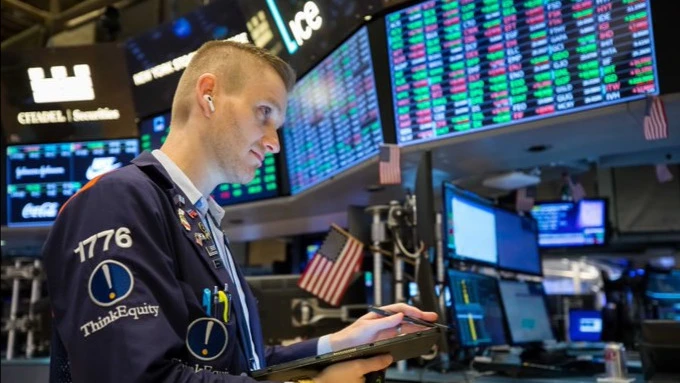
Redburn downgraded Microsoft and Amazon for the first time since 2022. What's his concern?
The analyst of Rothschild & Co Redburn went against the opinion of the majority of colleagues, advising to buy securities of these two companies

Rothschild & Co Redburn analyst Alexander Heissl downgraded the shares of two technology giants - Microsoft and Amazon, abandoning the advice to "buy" them and taking a neutral position. This was reported by Bloomberg.
Details
Heissl worsened his recommendation on the securities for the first time since June 2022, when he began analyst coverage on them, according to Bloomberg. The analyst also reduced the target price of Microsoft shares from $560 to $500, which implies a 1.5% drop in the securities from the last closing price. For Amazon shares, he kept the target at the same level of $250. This assessment implies growth of the company's securities by 7.3%.
According to Rothschild & Co Redburn, the optimistic scenario for generative artificial intelligence no longer looks unambiguous, and the biggest tech companies should be viewed with caution. A common argument in the industry - "trust me, generative AI will be as much of a breakthrough as cloud 1.0" - looks "increasingly irrelevant," Heissl wrote. He added that the underlying economics of this trend are "much weaker than anticipated."
Shares of Microsoft and Amazon were down about 2% in the Nov. 18 premarket.
What influenced the downgrade?
Heissl's decision to downgrade followed a sell-off in the Nasdaq 100 index of technology companies, which has fallen 5.1% since its peak in late October and lost nearly $1.8 trillion in capitalization. Investors sold off AI-related stocks amid concerns about their overvaluation, Bloomberg explains.
Tech companies are spending tens of billions of dollars to expand their AI infrastructure. But investor concerns about how quickly assets such as GPUs and servers are depreciating have intensified in recent weeks, the agency notes.
Heissl also noted the higher risk of companies overbuilding capacity "because Gen-AI is now running on overly heavy and inefficient infrastructure, whereas first-generation cloud services only started to scale once they became sufficiently optimized."
"The marginality of generative AI already implies longer amortization periods - five to six years versus three years in the early cloud era. When compared directly, this means that the capital intensity of generative AI is significantly higher, while the pricing power is noticeably weaker," said Heissl.
What other analysts are saying
Investor Michael Burry, famous for predicting the 2008 mortgage crisis, said last week that "understating depreciation by extending the life of assets artificially boosts profits." This, he said, is "one of the most common tricks of modern times."
By downgrading Microsoft and Amazon stock, Heissl went against the opinion of most of his peers. More than 90% of analysts who cover these stocks advise them to buy. Moreover, according to data compiled by Bloomberg, the securities do not have a single "sell" recommendation. The Windows developer, for example, has 71 ratings equivalent to "buy" and two "hold" tips, while Amazon has 80 "buy" ratings and five "hold" recommendations.
This article was AI-translated and verified by a human editor