Shares of memory makers in the U.S. and Asia fell due to Google's new development
Micron shares fell more than 7%, SanDisk lost more than 10%, but analysts believe the market reaction is excessive


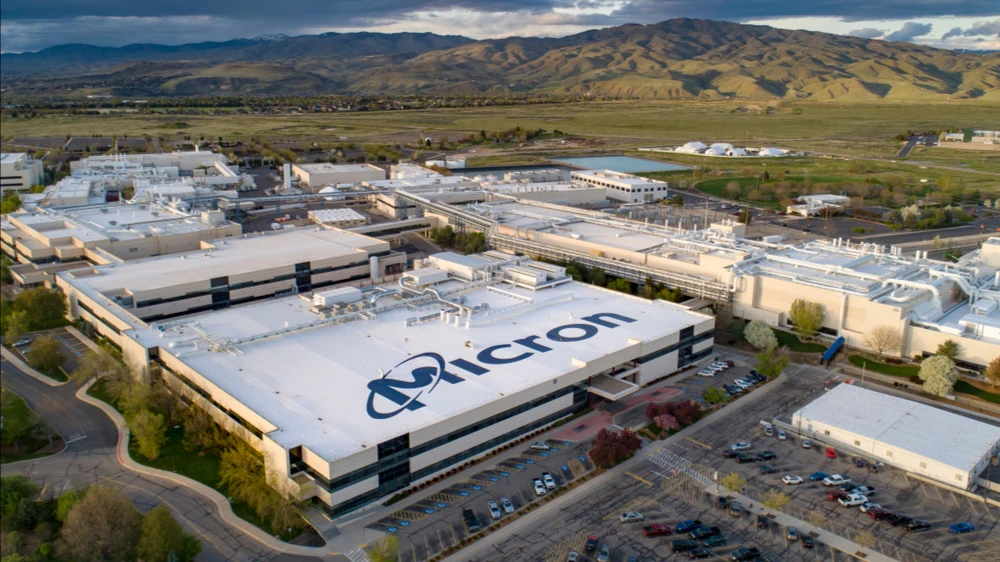
Shares of memory manufacturers fell due to fears that Google's new development will reduce demand for chips / Photo: unsplash.com / Pawel Czerwinski
Shares of memory manufacturers in the U.S. and Asia on March 26 for the second day in a row show a decline: such dynamics they show against the background of a new development of Google, capable of reducing the memory capacity by six times to run large language AI models. Investors fear that the new technology could weaken demand for memory chips, but analysts consider the market reaction excessive, CNBC writes.
Details
In the U.S. during the trading on March 26, shares of Micron Technology fell by 7.2%, SanDisk at the moment sagged by 10.1%, and Seagate securities fell by 8.3%. While at the end of the session in Seoul, SK Hynix securities lost more than 6%, and Samsung Electronics - fell by 4.7%.
The market reacted to Google's March 24 introduction of its new TurboQuant technology, which can significantly reduce the memory requirements for AI models. TurboQuant in question is a compression method that, according to the company, can reduce the amount of memory needed to run large language AI models by at least six times. The technology optimizes the cache, allowing for less storage of previous computations and more efficient AI.
Context
The memory market has been booming in recent months amid the growth of AI infrastructure: major cloud providers, including Amazon and Google, plan to spend about $650 billion on data centers and the purchase of processors and memory chips, Bloomberg writes. Strong demand for memory and limited supply have already led to a sharp rise in the prices of products and shares of manufacturers of such chips: the securities of Samsung Electronics for the year rose by almost 200%, and Micron Technology and SK Hynix - more than 300%, notes CNBC.
But Google's new development has investors worried that memory compression technologies like TurboQuant could alleviate shortages in the memory market, reduce the need for chips and potentially lead to lower memory chip prices, Bloomberg writes.
What the analysts are saying
Analysts, however, consider fears of a decline in demand for memory to be exaggerated, Bloomberg notes. Thus, Morgan Stanley analyst Sean Kim noted that Google's technology is likely to have a positive impact on the industry, as it solves the problem of using a large data cache in the AI industry and, as a result, can increase the efficiency and profitability of AI implementation. Along with this, Kim referred to Jevons' paradox, an English economist's concept about coal mining. According to him, the more efficient the technology becomes, the higher the demand.
The same position is held by analysts of JPMorgan - in their opinion, investors can fix profits in the securities of memory chip manufacturers on the background of news about the development of Google, but in the short term there is no threat to memory consumption, Bloomberg quotes them.
Optimizing memory usage may, conversely, lead to more memory usage as models become more complex, SemiAnalysis analyst Ray Wang noted in an interview with CNBC.
The impact of Google's development on demand will be limited due to continued supply shortages, CNBC quoted Ortus Advisors analyst Andrew Jackson as saying.
At the same time, as CNBC notes with reference to the investment company Quilter Cheviot, a significant part of the fall in shares of memory manufacturers is due to profit taking after a strong rally in the sector: "Investors were already looking for reasons to take profits," says Ben Barriger, head of research at Quilter Cheviot. The innovation from Google, he believes, has added to this pressure, but "this technology is an evolutionary rather than a revolutionary step", says the expert: "It doesn't change the long-term demand picture in the sector. In a market ready to reduce risks, even a minor development can be seen as a signal to ease the pressure," Barriger said.
This article was AI-translated and verified by a human editor