Space, robots and biotech: which technologies will drive markets in 2026

There is one problem with new technologies - they are, in fact, new. Only those who can prove their maturity reach the stock exchange. Based on the results of the turbulent year 2025, I tried to find out which public companies may become beneficiaries of scientific and technological progress in 2026.
New Old: Space
The development of space technology has already given mankind such benefits of civilization as, for example, publicly available navigators. My youngest daughter looks at me with horror when I tell her that drivers used to look up street names on paper maps when trying to get their bearings in an unfamiliar neighborhood.
Elon Musk's SpaceX satellite internet is now triumphantly marching around the planet, available in every corner of the Earth. According to Business Insider, in 2025 "space" Internet traffic has more than doubled, as well as the number of Starlink subscribers - increased from 4 million in September 2024 to 9 million in December 2025. To accomplish this, SpaceX maintains a constellation of 9,000 satellites in low-Earth orbit linked by high-speed laser communications.
SpaceX, according to media reports, is going for an IPO in 2026 with plans to raise about $30 billion at a valuation of $1.5 trillion, which would be "the largest stock offering in history"
In early 2025, together with the American operator T-Mobile, Starlink launched direct to cell service, which allows you to communicate with satellites from an ordinary smartphone, and in places where cellular communication is completely absent. All this gave Starlink the reason to call itself the world's largest 4G operator in terms of coverage, and its satellites - space cell towers.
However, the time of Musk's undivided space power is probably coming to an end and he will face competition as early as 2026: Jeff Bezos's company Amazon announced in November that it was taking under its brand a project to create a similar satellite internet system, which was called Project Kuiper and has now become Amazon Leo. The company now has 180 satellites in orbit, with plans to deploy 3,000. And Amazon Leo promises customers some incredible speeds, already comparable to fiber optics - up to 1 gigabit per second.
Another player in direct to cell is Texas-based AST SpaceMobile. On December 24, it successfully launched the seventh and most advanced satellite of its network with an antenna area of more than 200 square meters into orbit. The company promises to build a constellation of 45-60 satellites by the end of 2026 that will be able to receive and transmit high-speed signals to the average smartphone. It has already signed agreements with giants like AT&T Verizon, and Vodafone. The company's stock is up 270% over 2025.
But it's not all space news - in late 2025, leading tech companies Nvidia, Google, Amazon and SpaceX announced plans to build huge data centers in space, where, powered by free solar energy, a computationally insatiable AI could work.
Google intends to do this in partnership with satellite monitoring company Planet Labs. The latter's shares more than tripled in 2025.
All these projects will require a huge number of space launches in addition to satellites. Elon Musk's SpaceX is the leader here again. The Falcon 9 rocket with a reusable first stage accounted for more than 50% of global launches in 2025. However, there is also competition here - Bezos's space company Blue Origin is developing a super-heavy rocket NewGlenn.
Rocket Lab's Electron small disposable rocket has been launched into orbit 21 times, which is comparable to the annual number of launches of the entire country of Russia. In addition, the company is developing a reusable medium-class rocket called Neutron, a direct competitor to SpaceX's Falcon 9.
In early December, analyst Cantor Fitzgerald named Rocket Lab and "space hauler" Intuitive Machines as companies with a 60% growth potential in 2026. The latter's attempt to send cargo to the Moon in the spring of 2025 was unsuccessful.
Battle of the robots: How China and the US are dividing the market
Morgan Stanley predicts that by 2050 there will be about 1 billion humanoid robots in the world, which will form a market of $5 trillion. A third of them - more than 300 million - will work in China, in the U.S. Only 78 million. The introduction of robots will accelerate only in the late 2030s and 2040s, Morgan Stanley believes. Everything will happen as early as 2026-2028, researchers from Future Markets parry.
In September, Elon Musk wrote that 80% of Tesla's value would be driven not by electric cars but by humanoid robots called Optimus.
According to Musk's plans, production should reach 1 million per year within five years. Sina News China sources reported that Zhejiang Sanhua Intelligent Controls received a huge order from Tesla for robot actuators - for 5 billion yuan (about $700 million), which could be a sign of the start of mass production of Optimus.
Chinese robot manufacturers aren't standing still either.
Shenzhen-based UBTech Robotics said in November it had begun commercial production of its Walker S2 robots, having amassed an 800 million yuan (more than $110 million) order book. The company's stock has roughly doubled over 2025, although it remains unprofitable for now, the South China Morning Post reported.
JPMorgan estimates that Chinese component suppliers Leader Harmonious Drive Systems and Jiangsu Hengli Hydraulic could also be beneficiaries of the robotics boom.
Interesting things can happen outside the humanoid robot market as well, it is worth paying attention to the service segment, says Dmitry Pozdnyakov, analyst at Freedom Broker.
According to the International Federation of Robotics (IFR), the market for professional service robots is growing steadily, with the key "points of attraction" remaining solutions for cargo movement and internal logistics, as well as robots for professional cleaning. In parallel, the trend towards subscription and rental instead of purchase is growing: the Robot-as-a-Service (RaaS) model lowers the entry barrier for customers and accelerates the spread of automation. A pool of public companies worthy of investors' attention has already formed in this segment.
Dmitry Pozdnyakov considers the following companies as promising:
- Serve Robotics is betting on autonomous "sidewalk" robots for food and small parcel delivery, augmenting the hardware with a proprietary fleet management platform and scaling through integrations with delivery services. A key partner is Uber Technologies. The company's commercial model is built around RaaS and recurring payments for service and operations.
- Richtech Robotics covers "in-house service" needs for restaurants, hotels and medical facilities. The product line includes autonomous mobile robots for delivery and logistics, cleaners and robotic bartenders ADAM and Scorpion. The ecosystem is managed through its own AI Cloud Platform, and the company is gradually shifting its focus towards the RaaS subscription model.
- Tennant is a major player in the professional cleaning equipment market. The technology partnership with Brain Corp emphasizes that autonomous cleaning has already become a mass practice with real commercial implementations, rather than an experimental solution "for demonstrations".
Wall Street star: artificial intelligence
In 2025, AI will drive the market mostly indirectly, affecting the value of both the largest technology companies involved in the race - Alphabet, Microsoft, Meta, Tesla - and chip and data center equipment manufacturers - Nvidia, AMD, Broadcom, Marvell Technology and Micron. Fidelity analysts remain optimistic about them in 2026, The Street writes.
The main driver of the AI market remains OpenAI CEO Sam Altman's drive to build more and more data centers (DCs) for his seemingly completely insatiable ChatGPT AI. He even briefly made Oracle founder Larry Ellison the richest man in the world thanks to these promised payments, but Oracle's stock has since plummeted 40%.
I think the market has gone crazy. At the beginning of the year, if we met with a representative of a company, its shares would immediately skyrocket by 15-20%
OpenAI has already committed $1.4 trillion in funding for these data centers. When asked by BigTechnology podcast host Alex Kantrowitz how and why the company is going to pay such amounts with expected revenue of $20 billion this year, Altman replied that the company doesn't have a problem with profitably monetizing existing capacity - it has a problem with a shortage of it.
Prominent short-seller Michael Burry compared OpenAI to Netscape, the company that pioneeredthe Internet boom in 1995 but ultimately lost out. It was sold to AOL, and its flagship product, the Netscape Navigator browser, was no longer supported in 2008.
However, unlike Netscape, most "pure" AI companies, including OpenAI, remain non-public. The only exception is Palantir - Wedbush analysts predict a good year 2026 and a capitalization of $1 trillion in 2-3 years.
In 2026, the market may change - OpenAI, its main competitor Anthropic and AI startup Cohere are talking about an IPO, so retail investors will also have the opportunity to participate directly in the AI boom (or bubble).
I'm waiting for Anthropic IPO - revenue is slightly lower than OpenAI, but it costs 2 times cheaper, grows faster and revenue is higher quality due to focus on B2B segment. The company has found its niche - AI coding and B2B as well as branding - "you pay for quality"
Atlas Capital investment director Askar Akhmedov's AI shortlist for 2026 includes several current leaders.
- Alphabet. In addition to Gemini 3.0 AI, the company has its own TPU AI processors, GCP cloud platform, and Gemini integration into Google Docs, Android, and YouTube. And there may be AI-assisted augmented reality glasses coming - Google DeepMind head Demis Hassabis has already hinted at this.
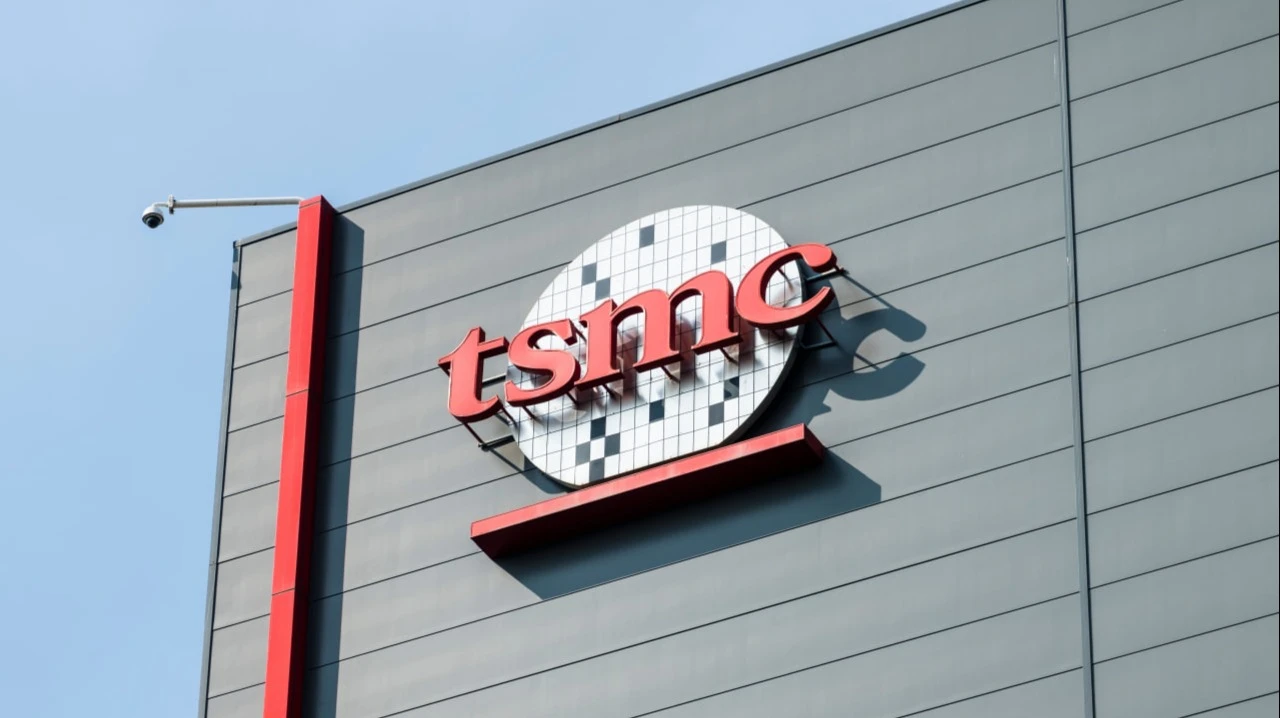
- TSMC. Nvidia is trying to defend its monopoly in AI gas pedals. Broadcom and Alphabet sell chips/compute for Meta and Anthropic, AMD concludes contracts with OpenAI. But whoever develops the chips, everyone goes to manufacture them in TSMC fabs. Neither Intel nor Samsung can offer quality and reliability on N2 technology comparable to TSMC.
- Semiconductor stocks - AMD, Nvidia, Broadcom, Micron, etc. The supercycle for chips and networking equipment continues and therefore the recent correction has made some stocks very attractive.
Genome editing
In the spring of 2025, the global media space was rocked by a startup called Colossal Biosciences, which announced that it had "resurrected" the direwolf (Aenocyon dirus), a large predator with light-colored fur that became extinct about 10,000 years ago.
Critics, however, argue that it is not a lute wolf, but a slightly genetically edited common wolf.
Without going into the essence of this dispute, I would like to note that the very possibility of editing the DNA "molecule of life" is an incredible fiction that has already become a reality. In particular, Colossal uses the CRISPR/Cas technique, which allows cutting out sections of the genome and inserting other sections in their place, i.e. literally making cut/copy/paste.
The potential possibilities are breathtaking. As we learned in November, at least three startups have already launched in Silicon Valley to explore the possibility of editing the DNA of human embryos with the ultimate goal of creating "designer" babies - free of genetic defects and perhaps even with enhancements. However, they will have to overcome a huge number of both scientific and regulatory hurdles. The creation of such children is banned in the United States and China.
But for patients already born with certain pathologies, drugs are already being produced. CRISPR Therapeutics and Vertex Pharmaceuticals are jointly promoting Casgevy, the first officially approved therapy for sickle cell anemia using CRISPR/Cas technology.
In May 2025, it became known that in the United States CRISPR/Cas helped to cure a child with a severe genetic defect of the liver for the first time in the world by editing its cells directly in the body. In addition to doctors and scientists, the project involved some commercial companies that provided their developments for the rapid manufacture of individualized therapy. In particular, the biotech divisions of the medical company Danaher. Bill Gates reportedly holds its shares in his portfolio.
For investors, the risks in the gene-editing industry remain high, says Freedom Finance Global analyst Aydin Seitzhapbar. It's expensive, complicated and not always successful - so after a patient died in a phase 3 trial of a cell therapy from Intellia Therapeutics (NTLA), one of CRISPR Therapeutics' closest competitors, the FDA suspended approval for the study
However, the chances of a turnaround in the sector in 2026 remain. Vertex expects an acceleration in revenue growth from Casgevy due to the expansion of its treatment center network, completion of infrastructure work and potential expansion of indications to children 5-11 years old in H1 2026, which could markedly increase the addressable market. The medium-term outlook for CRISPR Therapeutics also looks encouraging. The company is gradually shifting its focus from ex vivo cell therapies (editing cells outside the body and then returning them to the patient) to in vivo editing (making genetic changes directly inside the body), which is critical in terms of scalability, cost and logistics.
Investments in gene editing are suitable for those who are prepared for high volatility and waiting for catalysts for several years, concludes Aydın Seitzhapbar.
Slimming aids
As expected, diabetes and obesity drugs based on glucagon-like peptide (GTP-1) analogs, which became blockbusters in the early 20s, are only growing in popularity in 2025.
McKinsey estimates that obesity affects 900 million people and will be associated with a loss of $2.76 trillion in global GDP by 2050 due to the impact of obesity on the workforce and productivity.
According to Morgan Stanley Research Center, the global market for such drugs could reach $150 billion by 2035, versus $105 billion projected earlier.
In 2025, the intrigue revolved around the fierce competition between the main producers of GPP-1 - Danish Novo Nordisk and American Eli Lilly. Novo Nordisk clearly lost, falling in capitalization by almost 40%, while Eli Lilly rose almost as much, becoming in November the first pharma company with a capitalization of more than $1 trillion (now slightly less).
At the end of 2025, Novo Nordisk received approval in the U.S. to sell Wegovy pills, the first ever oral obesity drug based on GPT-1. All GPT-1 weight loss drugs were previously injectable. Yes and the price has dropped significantly - it is expected that a one-month course of pills can be bought in the United States as early as January 2026 for $149, writes CNBC. The price of injections previously reached $1200 per course. Eli Lilly is preparing its response, but is several months behind its competitor.
The first does not mean the best, says Freedom Finance Global analyst Aydin Seitzhapbar. Eli Lilly's development has the main advantage of scalability and production speed due to the chemical profile of the preparpate, which reduces the risk of shortages that previously significantly limited the market for injectable GLP-1. In addition, Eli Lilly's tablet is easier to administer than Novo Nordisk's product. In addition, the Danes have significant amounts of semaglutide in their composition, which limits the flexibility of scaling up production.
In this race, we favor the US-based Eli Lilly. In the medium term, the market for GLP-1 tablets and injectables may expand significantly due to the entry of new players... The key period for the GLP-1 industry will be 2027, when the results of the most significant clinical trials are expected to be published. If the current development timeline is maintained, this is when the market will receive Phase 3 data on a number of promising candidates: MET-097i from Pfizer, VK2735 from Viking, GSBR-1290 from Structure Therapeutics, and MariTide from Amgen.
Goldman Sachs analysts predict that by 2030 Eli Lilly diet pills with sales of $13.6 billion will take 60% of the market for such drugs, Novo Nordisk will earn $4 billion and take 21% of the market, and the remaining 19% will go to other new drugs.
This article was AI-translated and verified by a human editor