Stocks could fall 30-40%, says Mark Mobius. Why is he waiting for the AI bubble to collapse?
The emerging markets investment guru predicts a downturn in the artificial intelligence market and advises looking toward China and other Asian countries


Legendary investor and Mobius Capital Partners founder Mark Mobius said in an interview with Bloomberg Television that a major correction is looming in the artificial intelligence market. He said overheating and record capital expenditures make a downturn inevitable, though he did not question the long-term value of the technology. At the same time, Mobius, who has worked in emerging markets for more than three decades, says global changes in trade are shaping new growth points, with Asian countries emerging as beneficiaries of manufacturing relocation and supply chain realignment.
The AI bubble we've been waiting for
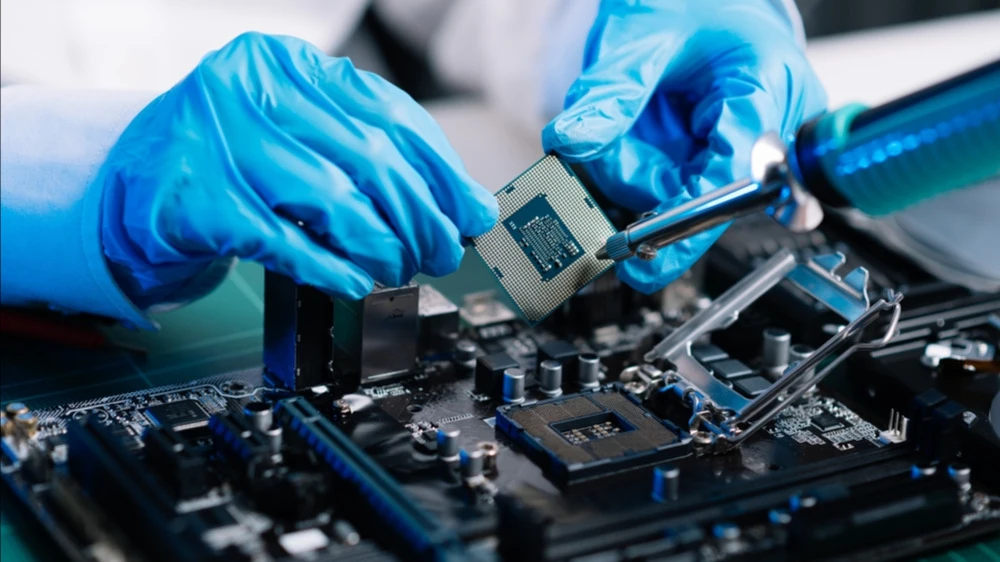
According to Mobius, the rapid growth of US indices and technology companies was accompanied by a "dangerous euphoria", when investors stopped paying attention to the real valuation of assets. The artificial intelligence sector, where companies are directing record capital investments, is particularly overheated.
"If you look at this segment, there's too much froth," he says. - Companies are spending trillions of dollars on AI infrastructure, and those numbers are just exorbitant."
The investor believes that these investments are ahead of monetization opportunities: many corporations are building data centers and purchasing equipment ahead of time, and the return on such investments is not yet obvious. In his opinion, such a large-scale discrepancy between real profits and expectations cannot persist for long: "And when I speak of a correction, I mean a 30-40% drop.
Mobius believes the correction in the AI company market will be short-lived: "That's the beauty of bear markets. Bear markets are much shorter in duration than bull markets, and that's why long-term investors, if they last, tend to stay ahead." He says these are the periods when the best entry opportunities form, "When prices are down 30-40%, we enter the market with open arms - we buy a lot."
China: changing course
Against the backdrop of an overheated AI sector and high valuations in the US market, Mobius is turning his attention to Asia - especially China, where, according to him, a new growth point is forming. He believes the country is beginning to see a political and economic reversal that could change the way investors view the market. "There is a big shift happening within the Chinese Communist Party. The course is becoming much more friendly and open, and that makes me more optimistic about the country."
Mobius notes that the Chinese market has shown strong momentum in recent months, "Surprisingly, it is outperforming India. I have always been a big supporter of Indian growth, and now China is outperforming India. And in fact, if you look at the recent numbers, the Chinese market as a whole is outperforming the US market." The main sources of China's growth, he said, are growing technological self-sufficiency and the development of high-tech industries. "If you look at China's electric car market, it's incredible. I drove a Rolls-Royce and then a BYD - and the BYD was better. Technology in China is constantly improving and the country is climbing the technology ladder."
According to the investor, these internal changes coincide with an important foreign policy signal - a softening of the line in relations with the United States. The meetings between Xi Jinping and Donald Trump, he says, showed China's readiness for a more constructive dialog, and Mobius calls the fact that the topic of Taiwan was not even mentioned during the talks a sign of change.
He believes the combination of technological advances and warming foreign policy is setting the stage for a revaluation of Chinese assets in the next year or two. "People will take time to adjust, investors will take time to adjust, many are still skeptical of China, but I think if current trends continue, that will change," he says. Mobius sees the main risk as a possible return of China to the tough rhetoric that characterized the beginning of Xi Jinping's rule: "If that happens, it will be a different game. But I don't think it will happen."
Emerging markets get a chance
Mobius says the changes taking place in China are just part of a broader process: relocating production facilities and reshaping supply chains are shaping new growth centers in emerging Asian markets.
"Because of U.S. trade policy, many nations will produce and export what China has been producing and exporting," he says. - Malaysia, Thailand, Taiwan, Korea - they all benefit from this transformation.
The investor believes that emerging markets gain a structural advantage: the reallocation of production capacity creates sustainable demand for the region's industrial and technological products and paves the way for long-term growth.
Mobius sees India as one of the key growth centers. The country's economy is growing at more than 6% a year, with corporate profits supporting investor confidence. According to him, India's potential is huge, but to realize it, the country needs to develop the production of hardware - electronics and components that form the basis of global supplies. This will make the economy more balanced and strengthen the country's position in export markets.
The investor points out that many foreign companies want to enter India but are stopped by incredible bureaucracy. "Investing in India is an extremely complicated process. It takes months. We worked for nine months to get approval for one of our funds," he says.
He sees cooperation with China as one possible way to accelerate development. "Yes, relations between the countries are uneasy, but Chinese technology and manufacturing expertise can help India export products around the world," Mobius notes. China, he adds, is also interested in such partnerships: if direct exports to the U.S. are limited, Chinese companies can set up factories in India and from there enter the U.S. market.
Among other investment areas, Mobius highlights South Korea, one of the most attractive locations after Taiwan. He points to the technology sector, healthcare and the consumer goods industry, including cosmetics. "In these industries, Korea is performing well," Mobius says.
Mobius also points to positive dynamics in Malaysia, Thailand and Taiwan, where industrial production is growing against the backdrop of strengthening local currencies. These trends, in his opinion, confirm: Asia is forming a new growth axis for global investors.
Dollar for dollar
According to Mobius, the success of emerging markets largely depends on the external context - the dollar exchange rate and central bank policies. He sees the strengthening of the U.S. currency as an advantage rather than a threat: "A stronger U.S. dollar is great for emerging markets because they can export and earn more dollars," the investor says.
According to him, the index of the U.S. currency after the decline "has started to turn around and has a great potential for growth". This trend is supported by the Trump administration's economic policy aimed at improving the balance of payments and increasing tariff revenues, which strengthens confidence in the dollar and the U.S. economy.
Mobius also draws attention to the divergence of monetary cycles: Asian central banks are ready to cut rates following the Fed, and this will be an additional stimulus for the growth of regional economies. However, he adds, the US influence on global markets remains decisive: "The US market represents about 70% of all equity investments in the world. So you have to watch the US market. If it goes down, everyone will suffer," says the investor.
This article was AI-translated and verified by a human editor