'Summit as a deadline': what the market expects from Trump's first trip to China in nine years

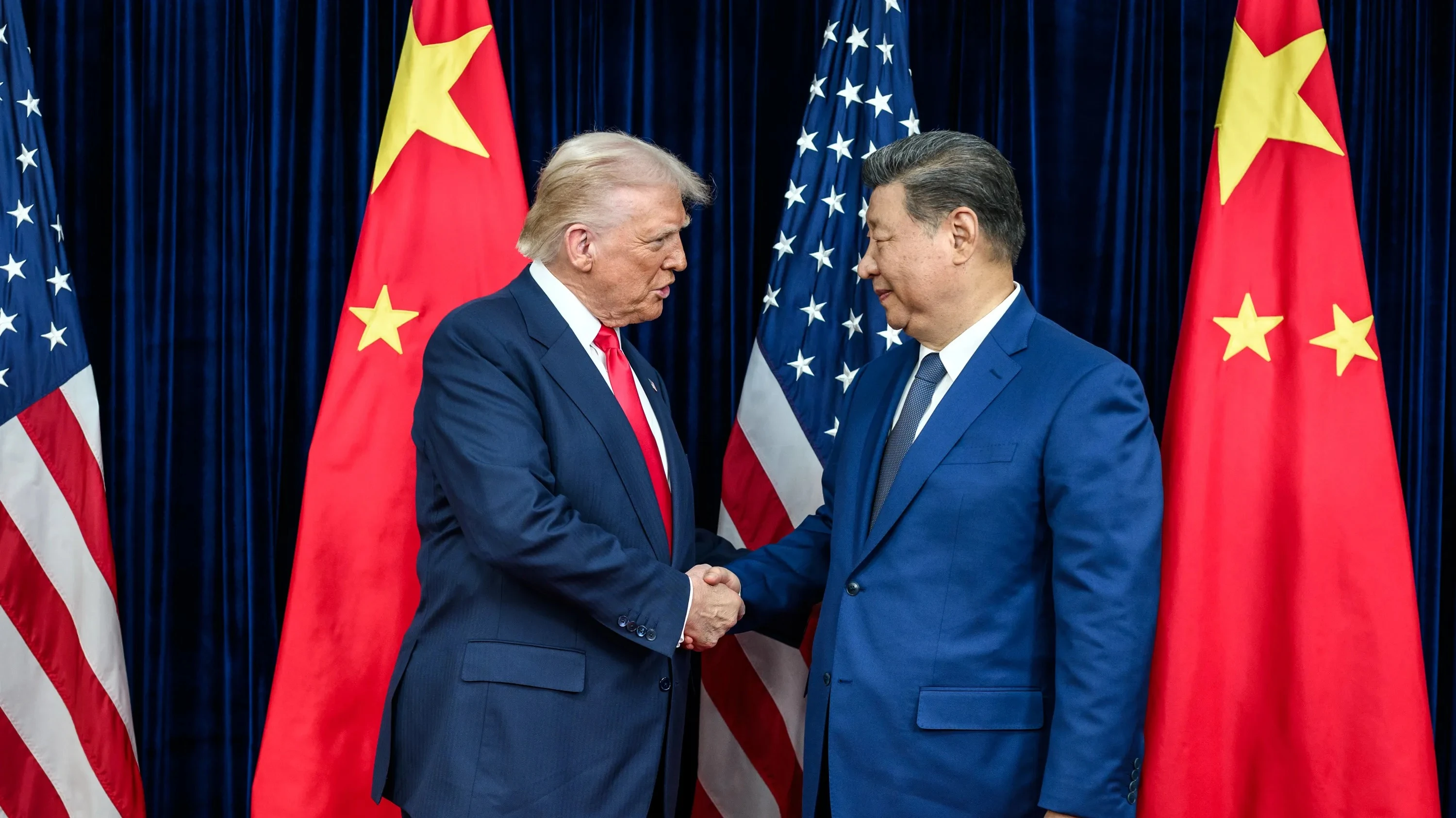
Trump's first official visit to China since 2017 aims to discuss duties, new aircraft and chip contracts and the situation with Iran and Taiwan / Photo: whitehouse.gov
US President Donald Trump will travel to China this week for a state visit for the first time since 2017 - amid ongoing disputes over import duties, rare earth metal supplies and war with Iran, Seeking Alpha writes. Who will represent American business at the summit and what is expected of him on Wall Street?
In what context the summit will take place
Trump's meeting with Chinese President Xi Jinping at the May 14-15 summit will be a continuation of attempts to stabilize relations after last year's trade war, during which the U.S. imposed draconian duties on Chinese imports and Beijing restricted exports of rare earth metals. The two sides have already discussed agricultural and chip shipments in October 2025, but much of the trade and geopolitical differences remain unresolved, Seeking Alpha noted.
One of the key topics will be Iran: China remains the largest buyer of Iranian oil, while Washington recently imposed sanctions on five Chinese refineries for processing raw materials from Iran, Seeking Alpha recalls. The talks are also expected to raise the issue of relations with Taiwan, following the largest arms deal in the island's history with the United States for $11 billion.
Who will go with Trump to China
Along with the officials, a business delegation is heading to China. The list of top executives invited by the White House includes Elon Musk from Tesla, Tim Cook from Apple and executives from Boeing, BlackRock, Goldman Sachs, Blackstone, Citigroup, Meta Platforms, Cisco Systems, Visa and Mastercard, Bloomberg reported citing a source.
The delegation does not include Jensen Huang, CEO of Nvidia, the world's most valuable company and manufacturer of advanced chips, the agency's interlocutor said. Huang's absence may become an obstacle in the realization of Nvidia's plans to export processors to China, Bloomberg writes. Earlier, the head of Nvidia said that the Chinese market is capable of reaching sales of $50 billion.
In turn, Boeing, according to Bloomberg sources, is preparing to conclude in Beijing one of the largest deals in its history - an order for 500 737 Max airplanes. And Tesla is seeking to stabilize its business in the world's largest car market amid fierce competition with BYD and other domestic manufacturers. Shipments of electric vehicles from Tesla's Shanghai plant, which serves both local and export markets, rose 36% year-over-year in April. Tesla expects to get an additional boost later this year if Chinese regulators approve its autonomous driving technology, Bloomberg notes.
What the stock market expects from the summit
Investors link the upcoming meeting between Trump and Xi Jinping with possible progress in negotiations on Iran and the unblocking of the Strait of Hormuz, through which much of the world's oil supplies pass, CNBC notes. Additional expectations of the market were given by China's calls for Tehran to seek a diplomatic solution to the conflict before the summit.
However, if the spill remains closed, the stock market could face renewed pressure.
"The market sees this summit with China as a sort of deadline," CNBC quoted Horizon Investments head of investments Scott Ladner as saying. - If the Strait is still closed by the summit, the market will have to build a longer period of uncertainty into prices."
Goldman Sachs analysts believe that the upcoming summit will center around three topics: trade, technology and geopolitics. In the trade sphere, they expect to discuss duties, trade imbalances, energy, rare earth metals, procurement agreements and foreign direct investment, Investing reports. On the technology front, new contracts in semiconductors and AI. In the political sphere, Taiwan and Iran will be touched upon. At the same time, the priorities of the parties diverge: Washington emphasizes trade and geopolitics, Beijing - on technological limitations, industrial competitiveness and Taiwan, analysts at Goldman Sachs wrote.
In the baseline scenario following the summit, Goldman Sachs expects China to increase purchases of U.S. agricultural products, energy resources and industrial goods in exchange for a partial easing of technology sanctions and a possible moderate reduction in duties. However, the bank assesses the likelihood of a "grand bargain" at the end of the meeting as low - the structural contradictions on the issues of technological leadership, national security and Taiwan are too deep.
Investors are approaching the Trump and Xi Jinping meeting cautiously rather than aggressively, Goldman writes. The bank's measurements show that bilateral tensions are not the dominant factor affecting Chinese equities right now. That said, investors do not appear to be taking meaningful positions in anticipation of a major positive surprise from the summit.
This article was AI-translated and verified by a human editor