"Temporary insanity": why does Howard Marks think there's no market bubble yet?
The situation is not the worst possible, but it is time for investors to worry, says co-founder of Oaktree Capital Management
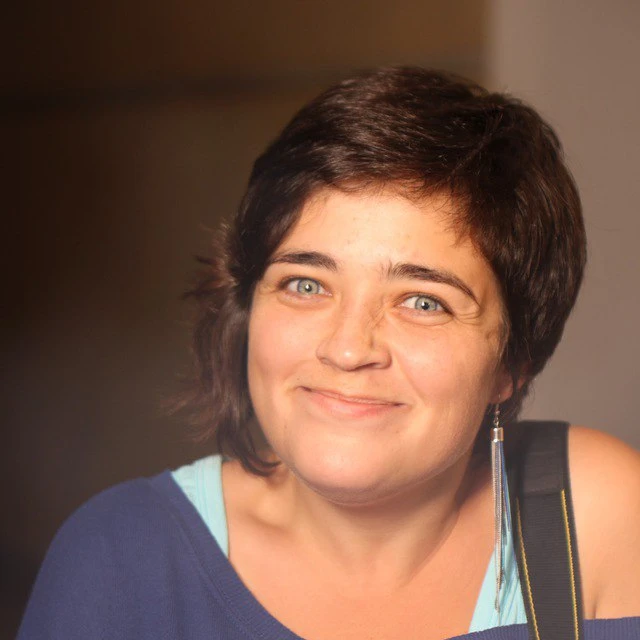
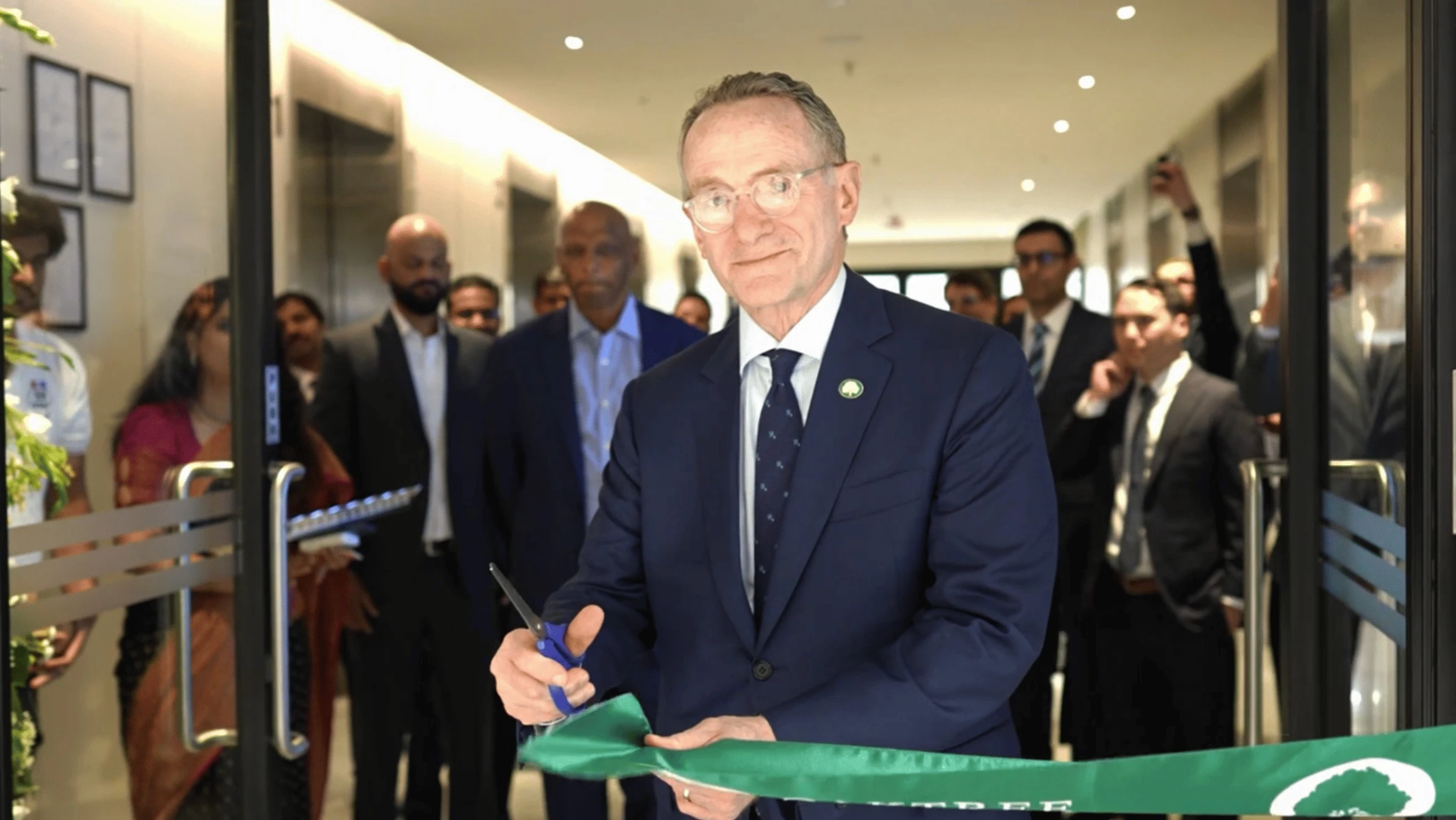
Legendary investor and co-founder of Oaktree Capital Management Howard Marks met with private investors during a trip to Korea and explained why high market valuations are alarming to him even though he still doesn't use the word "bubble," what to do about risks that can't be calculated, and how investing is always good, sometimes great and never terrible.
AI bubble: disturbing, but throwing yourself off the roof is not worth it
In January 2000, Marks issued a famous note called bubble.com, where he warned of overreactions in technology stocks. In January 2025, he published On Bubble Watch, a note about optimism in the market. "My formulation was 'exorbitant, but not crazy.' And after that, of course, the market went up another 15%. A few months ago, I released a text called The Calculus of Value, where I wrote that we have moved from the 'overvaluation' stage to the 'alarming' stage. I believe there is too much optimism built into prices right now."
The average P/E for the S&P 500 is quite high by historical standards, Marks says. The index's dynamics are increasingly dependent on the Magnificent Seven, which account for about 40% of its weighting and most of its growth. Additional pressure on the market comes from big bets on artificial intelligence and ramping up capital spending.
"The situation is worrisome, but not the worst I've seen. I think the market could go even higher. And while I don't use the word bubble. A bubble is a mania. It's temporary insanity. I'm not seeing that yet. We're not in the business of investing in tech stocks or AI, though, so maybe I'm missing something. Or perhaps it's a localized mania in a particular sector. But I do think it's something to be concerned about."
AI optimism
In the late 1990s, Marks recalls, the market was convinced that the Internet would turn the world upside down. Shares of companies in the new sector were rising rapidly - and it ended in a massive dotcom bubble. "There's no question that the Internet has changed the world. And yet, the vast majority of Internet companies from the 1999 model ended up depreciating to zero."
In one of his memos, Marks quoted Warren Buffett: the Internet increases efficiency, but it does not automatically mean that companies' profitability will increase. The situation is similar with AI: "The probability that AI will change the world is close to 100%. But the probability that investing in any single AI company or sector today will be profitable is much lower than 100%.
According to Marks, in phases of rapid growth, the market tends to set excessive expectations: investors attribute future success to the current leaders and overestimate the chances of those who remain on the periphery for the time being.
"It is pointless to deny the fact that optimism is high today. I cannot say for sure whether it is excessive, but it is definitely high. We have to recognize that we cannot predict the future. And because of such high uncertainty, you should diversify your investments."
Risk can't be measured...
In a 2006 memorandum on risk, Marks emphasized: no number can describe it in advance. Models give volatility, the market likes to work with historical series, but, according to him, this has nothing to do with real risk.
"The real risk that matters is the risk of irrevocably losing money forever. And that's impossible to calculate. Here you find a stock or a building or a company you're thinking of buying. The probability that you will lose money or that the investment will succeed is in the future. You can only estimate it, but you can't measure it in any way.
Uncertainty does not disappear after the transaction, Marks says. A price increase in hindsight says nothing about the quality of the decision: a successful dynamic can be the result of sound judgment as well as chance. So risk, he emphasizes, is neither volatility nor a number in a model, but an elusive part of the investment process that cannot be reduced to a metric.
Marks explains risk through the analogy of an insurance company: the insurer knows in advance that some policies will have to pay out money and builds this into the model. Losses are spread across a broad portfolio, and insurance premiums are designed to cover future losses and ensure profits. This is the same way Marks designed high-yield bonds.
"We've had defaults every year for the last 47 years, but they've been below the market average. And even after writing off the losses, we still had a solid return because we were getting a risk premium that was more than commensurate with the risk. That's the point: identify what the risk is, calculate it, and figure out if the reward for taking it is adequate. You need to be really diversified and you need to do your own 'homework' to understand the risk."
... but it can be controlled
"We are not able to foresee the future better than our competitors," says Marks. - Our advantage comes from understanding risk, taking it into account and - hopefully - managing it skillfully. So if we can get returns comparable to the market but with less risk, I think that's a significant achievement. Historically, we have performed better than the market in bad times - that is, when we need it most, because that is when clients want to be sure they have made the right decision.
When Marks and his comrades created Oaktree, they articulated their investment experience: avoiding peak-to-fail cycles and striving for a smooth, predictable trajectory; working in less efficient markets where information is unevenly distributed and a careful investor has a chance to gain an edge; focusing on narrow segments; avoiding macro forecasts and trying to catch the perfect moment to enter and exit. But the main point remains risk control: "Our motto is: 'If we avoid losers, the winners will take care of themselves'".
Marks recalls chatting with a journalist from the Financial Times: "We went to my favorite Italian restaurant in New York, not far from our office. And I told the journalist that dining at this restaurant is like investing with Oaktree: always good, sometimes great and never terrible. I wish I could be "great" always, but it's impossible. The future is too hard to predict, and there is too much randomness in our world for every action to produce a brilliant result."
Most of Oaktree's funds, Marks says, have shown "good" returns of about 8-12% a year, with individual strategies yielding 20-30%, but the fundamental result remains the same: "We've never had a fund lose money." Marks is convinced: if, even in years without outstanding performance, a strategy remains "just good" and never once fails "terribly," decade after decade that adds up to a strong track record. And the only way to keep that trajectory going is to control risk.
About the other optimism
Investing, Marks emphasizes, by definition involves trust - both in the future and in the person to whom you are giving capital. An investor parting with money today expects to get more later. Without basic optimism, this model simply doesn't work.
"My biggest mistake as an investor is that I wasn't optimistic enough. My parents lived through the Great Depression, and they instilled in me the ideas of 'Don't put all your eggs in one basket' and 'Save for a rainy day.' And I grew up very conservative."
Marks believes that a long horizon works in the investor's favor: over time, economies expand, corporate profits grow, and market participation yields results. Fluctuations are inevitable, but they do not cancel out the basic logic of holding positions rather than trying to guess entry and exit points.
"I would encourage all of you to invest and stay in the market, but also diversify. Remember: we concentrate our investments to take advantage of what we think we know, and diversify to protect ourselves from what we don't know."
This article was AI-translated and verified by a human editor