The $25 trillion market: how to make money from humanoid robots

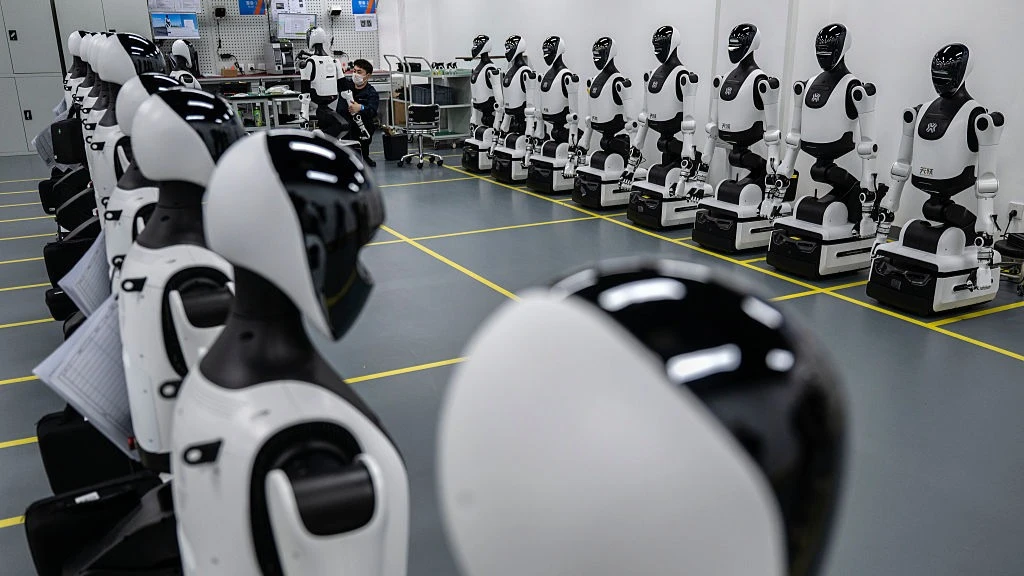
The year 2026 will be a watershed year for the humanoid robot market, with several companies unveiling models capable of working in manufacturing. Photo: Kevin Frayer/Getty Images
Unitree Robotics has filed for an IPO in Shanghai, expecting to raise 4.2 billion yuan ($610 million), the world's second-largest company in terms of humanoid robot shipments. The listing should show how much investors trust the future of robotics. Roman Mighty, looked into where the humanoid robot industry will make its profits - and how to be the first to capitalize on it?
One robot per person
Morgan Stanley estimates the market for "physical AI" - robots and automation - at $25 trillion by mid-century. - The bank's report (available at Oninvest's disposal) says that the number of robots operating on the planet will grow to 6.5 billion, which is more than the entire population of the Earth in the early 2000s.
The bank includes all types of robotics in the report: of the 6.5 billion, the document says, 34% will be small drones, 29% home robots, 14% humanoids, 13% professional service robots and 8% autonomous vehicles, mainly cars.
Software companies will enter physical manufacturing markets, foreign manufacturers will open factories in the US to protect themselves from protectionist measures, while the mass deployment of robots in China will continue. This will entail the development of the market for components, software, and rare earth metals.
Among the losers are workers in the world of the physical economy.
Now AI is devouring the jobs of office workers; tomorrow it will replace laborers, drivers, and couriers.
Anything that can be automated will be automated.
Robots have muscles. The money's already there
In the production price of a humanoid robot, about 40% to half of it is spent on actuators, according to a February report by J.P. Morgan (available at Oninvest). These devices convert electricity into mechanical movement and are actually the muscles of the robots. The Unitree G1 humanoid is 35 kilograms of electronics, most of which are supplied by OEMs. A huge increase in demand awaits motor suppliers - 27 billion units are needed by 2050, and 5.7 billion cameras. UBS and J.P. Morgan highlight several suppliers of these devices, as well as batteries and chips for peripheral computing: China's Tuopu, Sanhua and Inovance, South Korea's Hyundai Mobis and Germany's Schaeffler.
Actuators require gearboxes - and banks are paying attention to this stage of the production chain as well - China's Leaderdrive and Kedali, Japan's Harmonic Drive and Nabtesco. By 2050, robot manufacturing will require about 1.7 million tons of neodymium magnets - and their market alone could grow to $167 billion by 2050. The biggest manufacturers right now from publicly traded companies are China's JL Mag Rare-Earth and Ningbo Yunsheng. But the component market is as important as it is boring to an outsider. The public interest is now attracted to other manufacturers - humanoid robots.
Kung fu and sales
Not so long ago, humanoid robots competed in presentations to get up quickly from the floor - after the Unitree and AgiBot promotional videos, this seems like a bygone age. Chinese robots in their commercials perform kung fu exercises, as if combining stereotypes about traditional and modern China.
While viewers debate whether such exercises are worthwhile, and whether some of the videos use AI special effects, the market is taking on new leaders: two Chinese manufacturers accounted for more than half of global sales of humanoid robots in 2025, according to calculations by Barclays and UBS - and it's a market growing at breakneck speed.
In 2024, the total global sales of humanoid robots, according to UBS estimates, did not exceed 2200 units, in 2026 the figure will grow to 50 thousand, predicts Deutsche Bank. Now humanoid robots bring companies almost zero revenue, but by 2040 it will amount to $2 trillion, and by 2050 - $7.5 trillion, according to a report by Morgan Stanley.
For this breakthrough to happen, it is not only the physical body, but also the software vendors that need to make the breakthrough. So far, it has not yet reached a tipping point where one universal model could reliably perform any task in the real world, notes Deutsche Bank. The market lacks the "ChatGPT effect" - a breakthrough by one player that could be picked up by competitors.
Chinese Sputnik
The mass introduction of robots and their replacement of humans in production could lead to serious political upheaval in the future. But the robot market is already highly politicized. China has made the physical AI market its national priority. And the rest of the world risks catching up - if Chinese companies manage to start the planned mass production already this year. Morgan Stanley calls it the "Sputnik effect" - the launch of the first Soviet satellite in 1957 shocked Western society and showed Moscow's advantage in this field. Back then, the American economy managed to pull itself together and win the space race - but will it do so now?
The US is apparently already ready to intervene in this market directly - the US government is preparing a working group on robotics, Politico writes, President Donald Trump may issue an executive order to support the industry, and US Commerce Secretary Howard Lutnick is actively meeting with CEOs of robot manufacturers.
The suppliers of processors for humanoid robots, NVIDIA, AMD and Intel, have already felt the effects of the Trump team's attention. They have faced conflicting demands to supply processors to foreign markets, and in August, nearly 10% of crisis-hit Intel was taken over by the government.
Already with the current tariff policy of the White House, localization of production becomes a key condition for work in the American market, warns J.P. Morgan. Tesla and private Boston Dynamics and Figure AI form the big three U.S. manufacturers that major suppliers are targeting - Chinese companies are moving production to third countries to avoid becoming a victim of geopolitical risks.
China has a lot to answer for in the area of regulation - the country controls almost the entire global market for rare earth metals. Without them, robots cannot be produced - just as they cannot be produced without American processors.
$100 billion for Project Prometheus
Jeff Bezos is entering the market from the other side. Late last year, it was revealed that he had created the Project Prometheus fund, which is supposed to use AI for design and manufacturing in the aerospace, automotive and computer industries. To do so, he traveled to the Middle East in the months before the war and recently to Singapore, sources told The Wall Street Journal. The billionaire plans to buy up companies in traditional industries and modernize them with new technologies.
If established, the fund will be one of the largest in the world, after the Vision Funds of Japan's SoftBank and Masaesi Son.
Is there any way to follow Bezos' strategy without having $100 billion in your pocket?
The trillion-dollar question
Ani Kelkar of McKinsey predicts that the number of humanoid robots working in factories will reach 5 million by 2040, with 200 now employed in manufacturing.
Rita Liu of ARK Advisory Group recommends looking at companies that don't so much make robots as invest in the companies that make them - like SAIC, Huawei and CATL.
According to Barclays, defense companies will be able to earn money on the introduction of robots - so far humanoid machines have not received mass introduction, while a couple of "terminators" were sent for testing in Ukraine.
Citi analysts note the aforementioned Schaeffler, it can provide at least 50% of the materials needed for humanoid robots, and is also introducing them into production: The startup Agility's Digit robot recently began working at that German company's U.S. factory; the starting wage for a human here is $20 an hour. Costs for the entire time the robot is in operation will be $10 to $25 an hour, but it could come down to $2-$3, Agility co-founder Damion Shelton told WSJ.
Elon Musk believes that only China has serious competitors for his robots from Tesla:
I think China will be by far the biggest competitor in the humanoid robot market. China is extremely good at scaling and manufacturing, and strong in AI - the models produced there are already quite good and improving rapidly
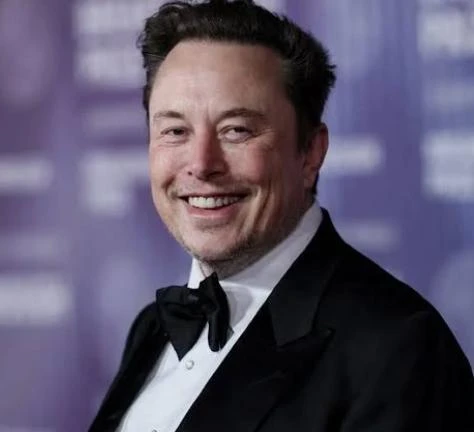
Tesla has suspended production of the Model S and X models for the sake of the Optimus project - the plant in Texas has been expanded to produce humanoid robots. Optimus is also being trained there.
Investment analyst Joey Frenette believes this is a reason to take a more optimistic view of Tesla's stock, although he admits that it remains to be seen how quickly robots will get truly widespread practical use:
For the average retail investor, there's one problem: we probably haven't had first-hand experience with next-generation robots. While AI was very popular before we all had a chance to try GPT-3.5 about three years ago, it's hard to grasp the scope of what the future holds until you get hands-on experience. [...] At this point, it seems a bit far-fetched that a domestic robot would be able to take over all the household chores, cooking, delivering packages and the like. Whether Optimus can make a difference, however, is the trillion dollar question.
Musk promises to start selling Optimus to consumers in late 2027.
This article was AI-translated and verified by a human editor