"The AI bubble is deflating but not bursting": major US indices collapsed on Friday

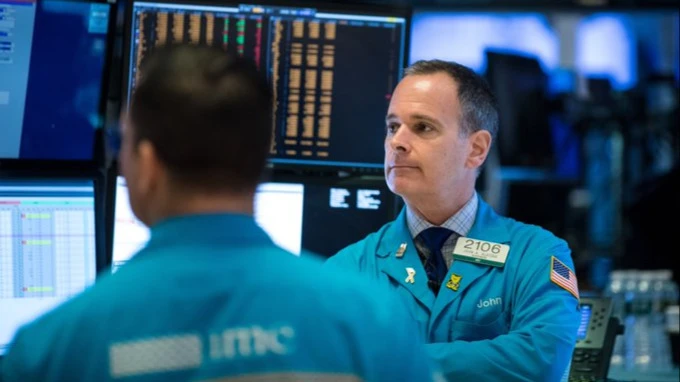
U.S. stocks fell sharply on Friday, December 12, amid the ongoing sell-off of securities related to artificial intelligence. The main catalysts of the sector's decline were Oracle, which became a kind of indicator of the boom in the AI-industry, and rival Nvidia chipmaker Broadcom, whose order volume turned out to be worse than some investors expected. Doubts about the prospects of the two companies have brought concerns about the valuation of the tech giants back to the market.
Details
- The broad market index S&P 500 fell on December 12 by 1.1% after updating the historic high the previous day. At the end of the week, the index lost 0.6%.
- The Nasdaq Composite index of the technology sector collapsed by 1.7%, becoming an outsider for the second day in a row. The decline in quotations of Broadcom, AMD, Palantir, Micron, as well as Alphabet, Nvidia and Oracle outweighed the positives from the growth of individual securities. At the end of the week, the Nasdaq Composite lost 1.6%.
- The blue-chip index Dow Jones Industrial Average declined by 0.5% on Friday. It was supported by interest in shares of companies from the financial, industrial and medical sectors, including Visa, UnitedHealth and Nike - as part of the rotation of capital from AI-bonds. The Dow remained in positive territory this week, up about 1.1%.
- The Russell 2000 index of small-capitalization companies fell 1.5%. Despite the decline on Friday, it outperformed the market on the week, adding 1.2%.
What influenced the stock
S&P 500 and Nasdaq Composite indices were under pressure due to the fall in shares of chipmaker Broadcom - after the publication of the quarterly report they lost more than 11%, showing the worst decline since January, Bloomberg calculated . With strong results and the company's forecast - investors were disappointed with the volume of its order book, the agency wrote the day before. Some analysts linked the sell-off to concerns about Broadcom's margin squeeze, CNBC explained .
At the same time, shares of cloud services provider Oracle, whose collapse after a mixed report caused a rotation of capital from the AI sector on Thursday, also fell in price on Friday. The market was reacting to a report by Bloomberg sources that the company intends to finish building data centers for OpenAI - one of its key customers - in 2028, rather than 2027 as previously planned. Following this publication, Oracle's shares fell 6.5%, forcing the company to issue a retraction. Quotes slowed down the fall and ended the session in the minus by 4.5%.
Friday's trading dynamics thus continued Thursday's trends, when investors - after the U.S. Federal Reserve rate cut - actively moved into cyclical stocks more sensitive to the state of the economy, while locking in profits in AI securities, CNBC noted.
What the analysts are saying
- "It's a day where value stocks outperformed growth stocks," Argent Capital Management portfolio manager Jed Ellerbrook told CNBC. - Investors are definitely nervous when it comes to AI. It's not that they're outright pessimistic, but I think they're cautious, tense and hesitant."
- Profit taking on Friday after the S&P 500 and Dow Jones indexes hit new highs on Thursday was not unexpected, according to Louis Navellier, chief investment officer at Navellier & Associates. "The bubble around AI is deflating but not bursting, " Bloomberg quoted Navellier as saying. In his opinion, increased concerns about OpenAI agreements could hamper further market growth.
- Charles Schwab head of trading operations and derivatives strategist Joe Mazzola warned the agency of a pause on Wall Street "after the recent feverish pace." "There are few major reports and macro data, the weekend is ahead, and investors are increasingly looking toward the labor market report due out on Tuesday," he reminded.
- "With no negative catalysts on the calendar, many are counting on a Christmas rally," said Karen Georges, fund manager at Ecofi Investissements in Paris. According to her, investors are actively looking at the year's outsiders: "It's a good time to diversify your portfolio," she emphasized.
This article was AI-translated and verified by a human editor