"The Communist Party doesn't want a repeat of this": why China has started to actively cool the market

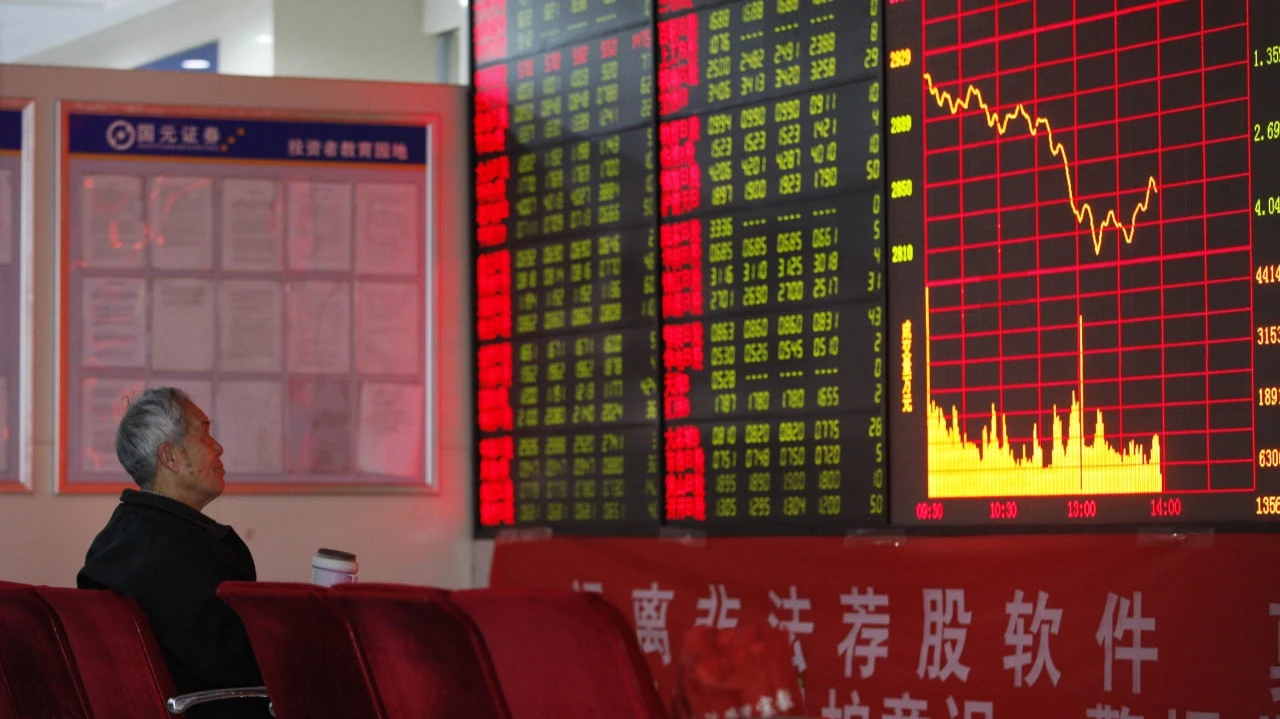
In the short history of the Chinese stock market, there have already been two bubbles - in 2007 and 2015. In less than five recent months, it has risen by only 25% (even less than, for example, the U.S. market), but there are clear signs of speculative frenzy. The authorities are concerned about a possible repetition of the situation, when the rapid rise will turn into an equally impressive collapse.
Curb the hype
The Chinese stock market has been rising continuously since April when US President Donald Trump, who initially raised duties on China to more than 100% several times, took a pause for talks.
At the end of June, the US and China announced a trade truce. As a result, the Shanghai Composite rose 25.4% from its April low and reached a ten-year high on August 25. (For comparison, the U.S. S&P 500 added 30.7% over the same time period through the peak on September 4.)
Chinese regulators have started considering a number of measures to cool the market, whose capitalization has increased by $1.2 trillion (about 10%) since the beginning of August, Bloomberg reported citing people with knowledge of the matter. They said the options proposed to the country's leadership in recent weeks include lifting some restrictions on short selling and measures to curb speculation.
Authorities fear that a sharp turnaround in the market could lead to big losses for retail investors. This could be a particularly sensitive blow in a situation when the main asset of the Chinese - real estate (which accounts for almost 80% of household assets) - has been falling in value for more than four years.
Wu Qing, chairman of the China Securities Regulatory Commission, said in late August that he was determined to ensure stability in the stock market and encourage "long-term, value and rational investment."
Beijing has made it clear that it prefers a "slow-growth bull market" that will deliver sustained wealth gains and long-term growth in household consumption.
Recent reports indicate "growing discomfort with the surge in retail investor activity," which has translated into a significant increase in open accounts and margin trading (where shares are purchased with borrowed money rather than their own), Bloomberg quotes Homin Lee, senior macro strategist at Lombard Odier, as saying, "It would not be surprising if the authorities intervene, in part by allowing institutional investors to resume short positions in the mainland market and by knocking online platforms on the head
Regulators have already enlisted financial institutions to try to curb the speculative frenzy. Banks have been instructed to investigate cases of leveraging online lending platforms to invest in stocks, and brokers have been instructed to limit advertising of 24-hour trading account opening services, sources told Bloomberg. Social networks were warned not to spread information about the bullish trend on the stock market, reaching a new high in margin trading, the flow of money from bank deposits to the stock market.
More than 400 mutual funds announced in August that they would restrict or suspend accepting funds, and even companies that had benefited from the boom began warning investors about the risks. For example, last week, Cambricon Technologies, a company developing chips for artificial intelligence, which became one of the objects of speculative trading, announced this. Its shares have risen 134% in a month since July 28 on expectations that authorities will support the domestic AI sector, which is struggling with U.S. restrictions. Meanwhile, the CSI 300 index, which includes Cambricon shares, has added only 8% over the same period.
Cambricon's share gains significantly "exceeded those of most peer companies and related indices," it said. "There is a risk that the share price may have deviated from the company's current fundamentals and investors trading the shares may face significant risks," Cambricon said, after which its shares fell 9% in momentum.
"The Maids Index."
Regulators and experts are worried about the situation on the market because of memories of two bubbles that rapidly inflated and burst in about two years.
Thus, in the 14 months through October 2007, the Shanghai Composite rose 270% (at that time, the government website Eastday, citing the Shanghai employment service, reported that Shanghai hotels were short of maids: 10% of them quit and went to trade stocks), and then in 12 months it lost all that growth, falling 73%.
The authorities did nothing then, and the bubble imperceptibly deflated. China's stock market is traditionally loosely linked to the economy: GDP grew by 14.2% in 2007 and by a respectable 10% in 2008, given the global financial crisis that erupted that year.
There was a bubble in 2015, but it was smaller: in the same 14 months before the peak in June, the Shanghai Composite rose 155%. But when it began to deflate, it worried both bureaucrats and foreign participants, because by that time there were already many more local and international investors in the Chinese market.
When the index fell 30% in less than a month after reaching its peak, Beijing suddenly began spending billions of dollars to support the market. These events triggered massive sell-offs in global equity and commodity markets. By that time, the Chinese economy was already showing signs of a sharp slowdown, and in August Beijing even devalued the yuan, which further spooked global markets.
As a result, the Shanghai Composite lost all growth by the beginning of 2016, and for the next almost 10 years it traded in a range of about 2500 to 3700 points. It was only during the current upswing that the index broke out of this "sidewall", rising to the level of the fall of 2015.
Evidence of a bubble
The current market situation resembles past bubbles in some respects, though not on the same scale. According to the exchanges, retail investors opened 166% more new accounts this August than in August 2024.
And, for example, in 2007, 22 million brokerage accounts were opened between January and May - four times more than in all of 2006, according to China Securities Depository & Clearing.
Previous bubbles coincided with "extremely aggressive leveraging by retail investors" - and, in fact, were largely caused by it, says Jon Treacy, publisher of Fuller Treacy Money, an investment newsletter. More recently, he says, there have also been reports that people have been actively using, for example, credit cards to buy stocks.
The volume of margin lending transactions reached a record high of 2.28 trillion yuan ($320 billion) on September 1, slightly exceeding the 2015 high, Bloomberg notes: during August, margin positions grew uninterrupted except for three trading days. And trading volume on exchanges in mainland China exceeded 3.1 trillion yuan ($434 billion) on Aug. 27, the second highest in history.
"I remember I was in China in 2007, and when you went to a store, there was no one to serve you because everyone was watching stock quotes on TV screens (this was before the smartphone era). It was clear evidence of a bubble," Tricey told me. - I think the Communist Party doesn't want that to happen again, so now they've started to act, even though the market has been rising much more moderately so far.
This article was AI-translated and verified by a human editor