The crypto market may be waiting for a reversal. How should an investor prepare for this?


Retail investors are slowly returning to the cryptocurrency market, one reason why some analysts believe it is on the cusp of a turnaround / Photo: Michael Förtsch / Unsplash.com
Bloomberg believes that a bullish trend has begun to form in the cryptocurrency market. Elena Nefedova, Head of the Investment Department at Astero Falcon, tells us what signs there are that it may be on the verge of reversal and what investors should pay attention to in this regard.
Is cryptozyme coming to an end?
Last two weeks for the crypto market can hardly be called calm - bitcoin fell below $70 thousand, rose (last Wednesday, March 4, the price jumped to $74 thousand) and fell again. On March 13, it is trading around $71.3 thousand.
Overall, bitcoin's correction has lasted for five months. During this time, it has lost more than 40% of its peak values of October 2025.
But now there is reason to believe that it is in a potential reversal zone. This is evidenced by past data - historically, such collapses have preceded significant rallies. Since 2014, bitcoin has recovered to a new all-time high four times after each correction in the 40-50% range.
As Bloomberg recently noted, a bullish scenario is now beginning to loom behind the market volatility in the crypto market - and it doesn't necessarily require a short-term price acceleration. Wall Street is no longer trading cryptocurrency, but building infrastructure around it, regardless of the dynamics of its value, the agency wrote.
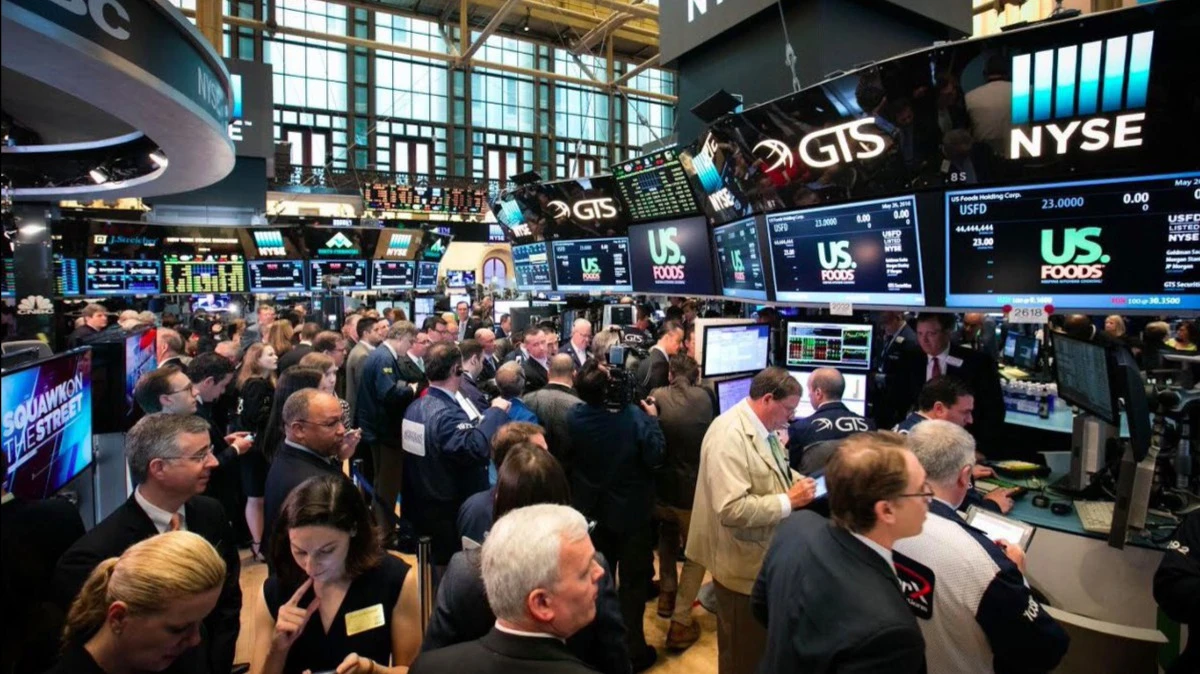
What are we talking about? For example, Intercontinental Exchange, which owns the NYSE, acquired a stake in crypto exchange OKX in March (the deal valued the latter at $25 billion). And the Kraken cryptocurrency exchange became the first digital company with a master account with the Federal Reserve, which allows it to reduce interaction with correspondent banks.
In addition, Bloomberg writes, retail investors have begun to return to crypto-ETFs.
What other signs of market recovery are there and which companies should investors pay attention to?
Look at Strategy, the largest corporate holder of bitcoin. Its stock performance relative to bitcoin is often a leading indicator of a crypto market reversal. And periods when Strategy's shares begin to outperform BTC have historically coincided with the end of correction phases in cryptocurrencies.
For example, during the 2022 bear market, Strategy securities traded at a discount of up to 70% to the net asset value of bitcoins. As the bitcoin price recovered, this discount gradually disappeared and was replaced by a premium, which then continued to widen.
Now is probably the beginning of one such period: bitcoin's dynamics are outperforming the market (adjusted for extreme volatility), and Strategy stocks are growing faster than BTC itself.
In November 2025, Strategy's capitalization fell below the value of the bitcoins on its balance sheet for the first time since January 2024, reflecting pronounced investor pessimism and a correction in the cryptoasset market. Over the past month, however, the dynamics have changed, with bitcoin adding just over 3.5% (through March 13), while Strategy's shares rose 8.9% over the same period (to close on March 12) and the S&P 500 Index fell 2.3%.
Why does Strategy stock behave this way? The reason is built-in leverage: the company buys bitcoins not only with equity, but also with debt. In 2025 alone, Strategy has raised $25.3 billion - $17.8 billion through common stock, $5.5 billion through preferred stock, and $2 billion through convertible debt.
The company bought nearly 18,000 bitcoins worth $1.28 billion in the first week of the war in the Middle East, and now has 738,731 BTC on its balance sheet.
Therefore, a revaluation of these assets - be it a decrease or increase in the price of bitcoins - directly affects a company's capitalization and can lead to stronger stock performance compared to BTC itself.
In addition, it is worth paying attention to Coinbase securities. It is the largest crypto exchange in the U.S., it is among the five largest in the world in terms of spot trading volume (about $1.88 billion per day).
The company controls approximately 65% of the crypto trading market in the US, and its platform holds more than 12% of all crypto assets in the world.
Coinbase directly benefits from the growth of activity in the crypto market: as trading volumes increase, commission income grows proportionally. Since the bulk of the company's revenue is generated by trading commissions, periods of new user influx and increased market activity usually lead to accelerated revenue and profit growth, which can outpace the dynamics of bitcoin itself. If the cryptocurrency market recovers, Coinbase is likely to be one of the beneficiaries of this process.
At the same time, Coinbase is gradually diversifying its business. The company is actively developing institutional custodial storage, staking, subscription services and infrastructure for Web3, which forms additional sources of revenue and reduces dependence solely on bitcoin dynamics. In 2021, trading commissions account for more than 80% of revenue. In 2025, the share of trading commissions from retail investors decreased to 46% of revenue, but the share from institutional investors increased, and most importantly, the subscription and services segment grew.
Coinbase's stock has fallen more than 50% since its highs in July 2025. Last summer, when bitcoin was consistently above $100, Coinbase traded with a P/S ratio of about 10 and EV/EBITDA of about 40. Now those ratios are 7.94 P/S (over the past 12 months) and 26.93 EV/EBITDA.
Meanwhile, the company's annual revenue rose 9% to $7.2 billion. The regulatory backdrop has also improved: in February 2025, the SEC dropped its prosecution of Coinbase - with no fines and no business restrictions.
Small cap for cryptocurrency investor
Looking towards small-cap companies, here investors can look at Hyperliquid Strategies. Its main strategy is to accumulate and hold HYPE tokens, which form the basis of the ecosystem of the decentralized trading platform Hyperliquid.
In 2025, the platform processed about $2.95 trillion in total trading volume and generated about $844 million in revenue. The maximum daily trading volume reached $32 billion and open interest (total number of open positions) reached $16 billion. The user base more than quadrupled over the year, from 300,000 to 1.4 million users, reflecting the rapid growth of the ecosystem.
HYPE token plays a role in this system comparable to the role of Ether in the Ethereum network: it is used to pay for transactions, interact with applications and operate the platform infrastructure. HYPE is currently one of the top 15 cryptocurrencies, with a market capitalization of $9.6 billion.
That said, the token has shown notable resilience during the current cryptozyme, with HYPE up more than 30% since the beginning of the year, while bitcoin is down about 22%.
Hyperliquid Strategies shares allow you to gain exposure to HYPE through the traditional exchange infrastructure.
The company now owns approximately 18.2 million HYPE tokens with a total value of about $683 million. In addition, it had about $282 million in cash on its balance sheet at the end of 2025 with zero debt.
The current market capitalization of the company is about $667 mln. However, warrants should be taken into account in the capital structure: if their holders exercise them, the number of shares will increase. This will reduce the difference between the market price and the company's net worth. Therefore, the investment attractiveness of the security is more related to the potential for further growth of the HYPE token and the entire Hyperliquid ecosystem.
Does not constitute an investment recommendation.
This article was AI-translated and verified by a human editor